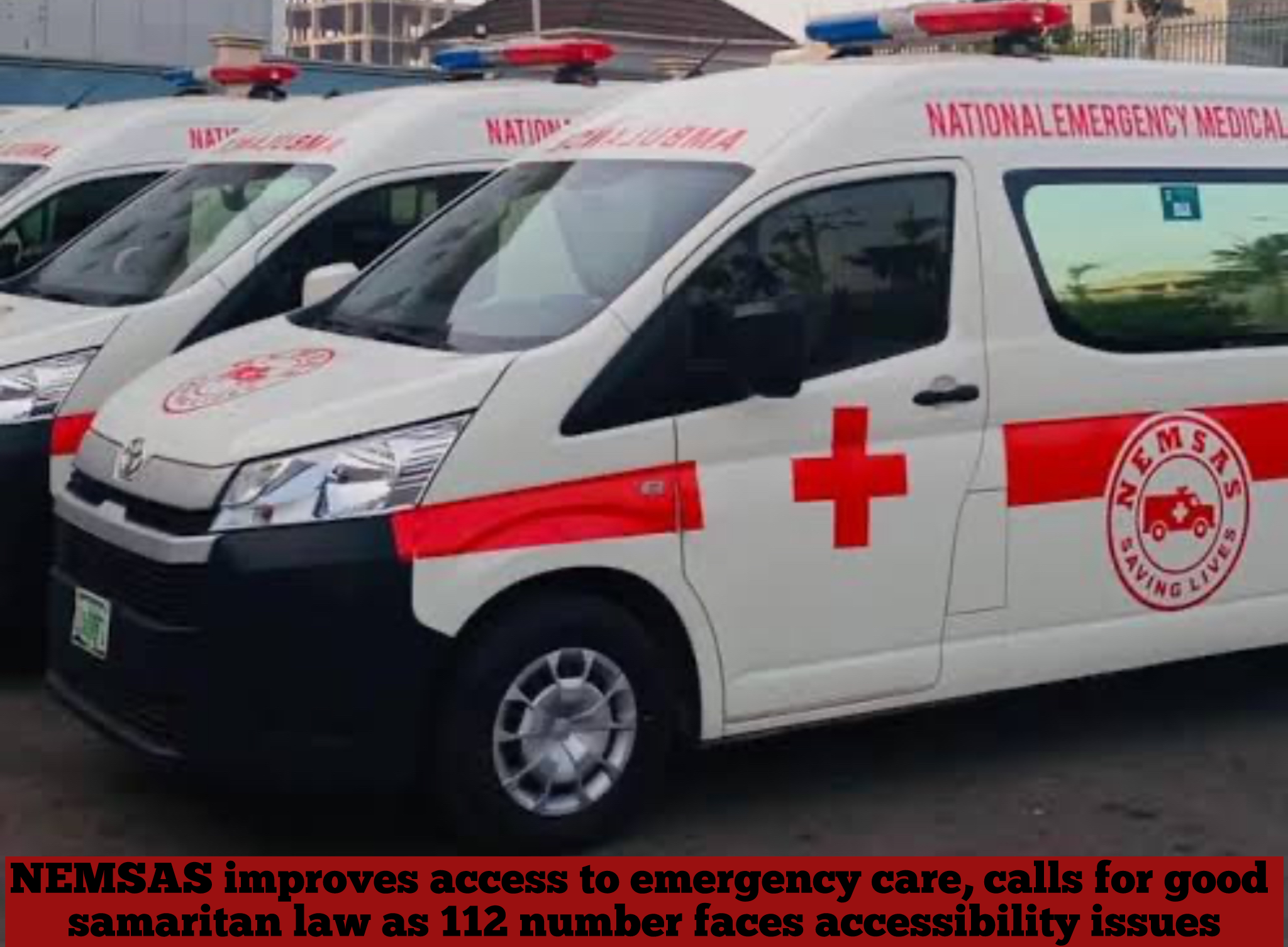
The National Programme Manager of the National Emergency Medical Services and Ambulance System (NEMSAS), Dr. Emuren Doubra, has highlighted the agency’s footprint across Nigeria, adding that no state is without NEMSAS-supported emergency medical service (EMS) structures.
Speaking in Abuja on the state of emergency medical services in the country, Doubra explained that while recent discussions acknowledged NEMSAS’ role within the EMS ecosystem and the Federal Government’s broader vision, they did not fully capture the extent of the agency’s interventions at the state level.
According to him, NEMSAS has supported states in establishing EMS frameworks to manage ambulance services and provide free emergency care for indigent citizens through public, private state facilities and, in some instances, federal tertiary health institutions.
He disclosed that 33 states and the Federal Capital Territory currently have State Emergency Medical Services and Ambulance Systems with varying numbers of ambulances, while 21 states are fully operational and others are close to commencing services.
In the three states yet to establish such systems, designated federal tertiary health facilities are serving as interim EMS coordinating centres pending full setup.
Doubra acknowledged that ambulance distribution is not yet equitable nationwide and that available units are insufficient to meet growing demand. However, he stressed that operational ambulances are present in supported states.
While emphasising that all states have access to emergency medical treatment funding under the Basic Health Care Provision Fund (BHCPF), the NEMSAS chief also raised concerns about accessibility and awareness of Nigeria’s national emergency number, 112.
According to him, “a recent survey conducted in collaboration with the National Health Fellows (Cohort 1) across the 774 local government areas revealed that about 80 percent of states have access to the 112 emergency number. However, many users experience difficulty reaching it on the first attempt, and public awareness remains low.”
He called on the Nigerian Communications Commission (NCC) to strengthen functionality and awareness of the 112 emergency number across all telecommunications networks, noting disparities in performance among service providers.
Doubra further advocated for the enactment of a Good Samaritan Law to protect individuals who assist victims during emergencies, citing instances where helpers faced challenges with law enforcement authorities.
He also highlighted NEMSAS’ Rural Emergency Service and Maternal Transport (RESMAT) programme, as a complementary initiative designed to reduce maternal and newborn mortality by addressing delays in reaching health facilities during obstetric emergencies.
“The programme is currently operational in 123 local government areas. As of December 2025, more than 40,000 pregnant women from hard-to-reach communities have been transported to health facilities for delivery. An additional 11,200 women experiencing obstetric emergencies were conveyed to Comprehensive Emergency Obstetric and Newborn Care (CEmONC) facilities under the National Health Insurance Authority, while 1,680 newborns with medical emergencies were successfully transported for treatment,” he added.
Doubra emphasised the need for stronger collaboration among emergency response agencies nationwide and urged stakeholders to adopt a constructive and optimistic approach toward strengthening emergency medical services in Nigeria.