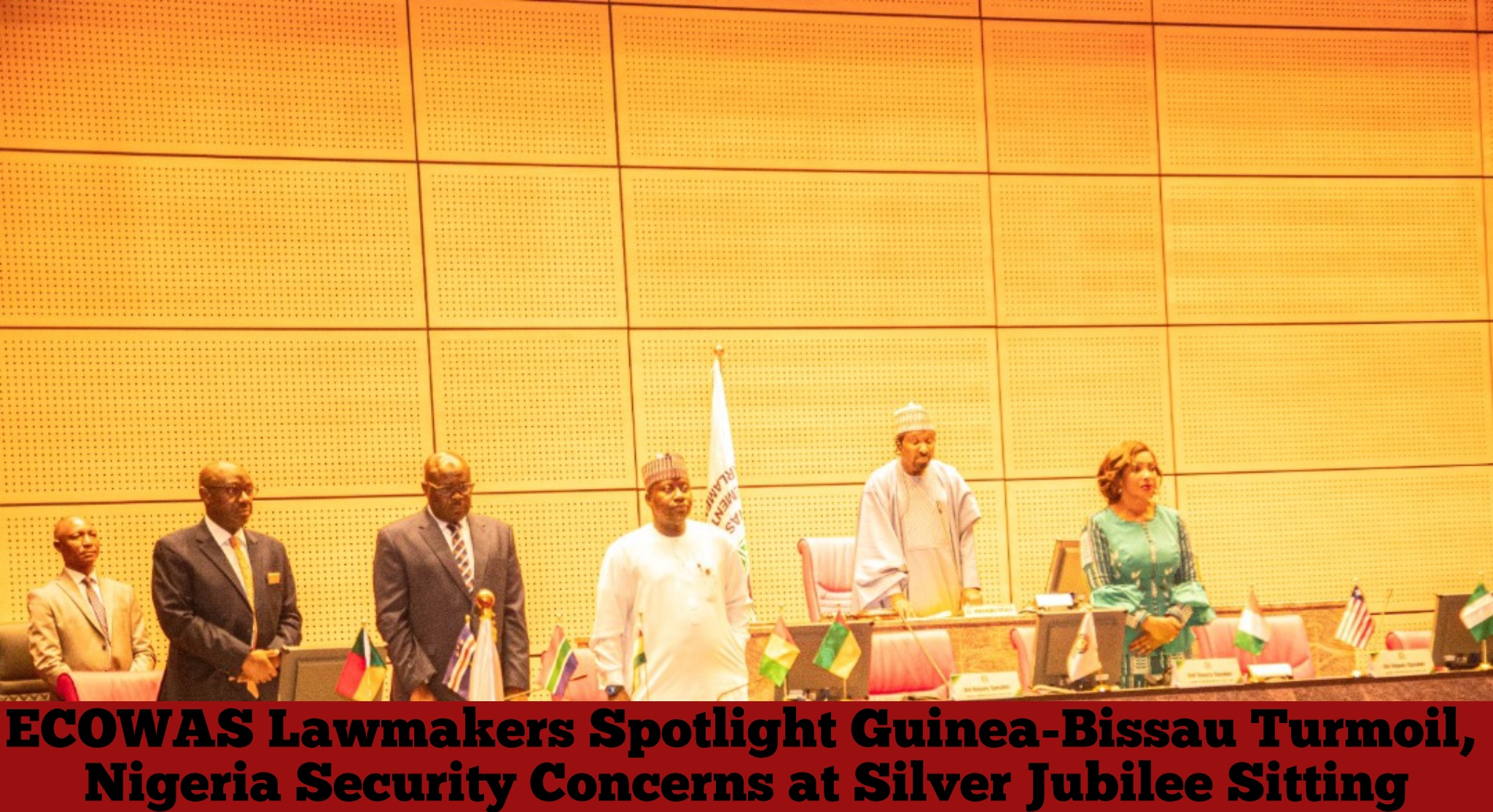
Lawmakers at the ongoing Second Ordinary Session of the ECOWAS Parliament have expressed deep concern over the worsening political and security situation in Guinea-Bissau and Nigeria, calling for urgent regional action to stabilise both countries.
The 2025 session, holding in Abuja, also marks the Parliament’s 25th anniversary, with activities including the presentation of country reports, scrutiny of the 2026 budget and meetings of Standing, Joint and Ad hoc Committees. Legislators are also scheduled to engage institutional partners in interactive sessions.
During deliberations, members warned that the escalating security threats—particularly in the host country, Nigeria, and in Guinea-Bissau—required immediate attention.
Addressing the plenary, the Speaker of the ECOWAS Parliament, Hadja Memounatou Ibrahima, represented by the First Deputy Speaker, Senator Jibrin Barau, condemned the political instability in Guinea-Bissau.
“The unlawful seizure of power in Guinea-Bissau is unacceptable,” Barau said.
He reaffirmed the Parliament’s commitment to protecting democratic values in the region.
“The ECOWAS Parliament remains a symbol of the people’s representation at the regional level,” he added, assuring members that the situation in Guinea-Bissau would be thoroughly debated on Wednesday.
Nigerian representative Senator Osita Izunaso highlighted both the strides and persistent challenges facing the Parliament, noting the need for deeper institutional reforms to strengthen regional governance.
Similarly, Liberian lawmaker Thao Womgbe commended the progress ECOWAS had made in governance and integration, urging citizens to remain resilient in the face of external commentary.
“The Commission has evolved significantly in terms of governance and integration,” Womgbe said.
He encouraged Nigerians to view recent pronouncements by the United States President as a wake-up call rather than a criticism.
As part of activities marking the Parliament’s silver jubilee, the ECOWAS Female Parliamentarian Association (ECOFEPA) convened a special sitting to deliberate on proposals for reserved seats for women across national parliaments in West Africa—an initiative aimed at improving gender representation in the region’s political landscape.