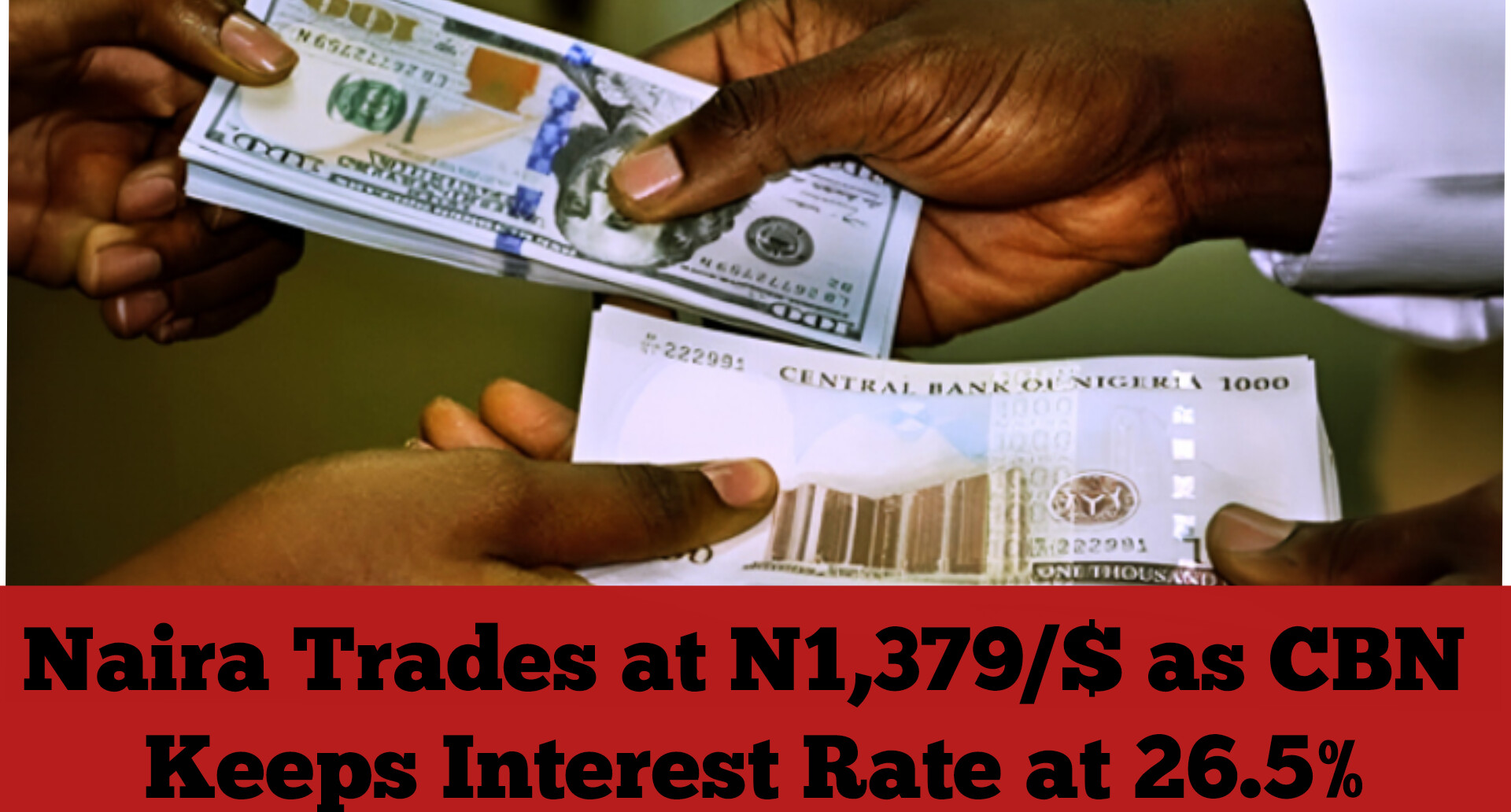
The Nigerian currency opened at N1,379.05 per dollar trading at the official window of the Nigerian Foreign Exchange Market (NFEM), reflecting continued stability amid tight liquidity conditions.
Data from the Central Bank of Nigeria showed that the exchange rate fluctuated within a narrow band during the morning session, touching a low of N1,376.02 before rebounding slightly.
The naira was quoted at about N1,377.04 to the dollar, underscoring cautious market sentiment.
The apex bank maintained its previous closing rate near N1,384.29, marking a slight depreciation compared to the February average of N1,364.74.
Activity in the parallel market mirrored movements at the official window, with the U.S. dollar trading between N1,385 and N1,395. The spread between both markets hovered between 1.2 per cent and 1.5 per cent, indicating a relatively stable arbitrage margin.
A currency dealer in Abuja said, “The market is relatively calm this morning. We are seeing steady supply, and the gap between the official and parallel markets remains narrow.”
Another trader noted that, “Demand pressure is still high, especially from importers, but the CBN’s framework has helped moderate volatility.”
Analysts say several macroeconomic factors are influencing the exchange rate trajectory.
The Central Bank of Nigeria recently retained the Monetary Policy Rate (MPR) at 26.50 per cent following aary 50-basis-point cut, a move aimed at balancing inflation concerns with economic growth.
Foreign reserves remain at robust levels, giving the apex bank sufficient capacity to intervene during periods of thin liquidity.
Meanwhile, Nigeria’s crude oil production, currently averaging 1.46 million barrels per day, continues to provide a steady stream of foreign exchange inflows, helping to offset rising import demand as the first quarter advances.
An economic analyst at a Lagos-based investment firm said, “Oil receipts and improved reserve buffers are giving the CBN more confidence in managing volatility. However, sustained FX stability will depend on consistent inflows and disciplined demand management.”
Market watchers expect the naira to trade within a controlled band in the near term, barring any external shocks to oil prices or global financial conditions.