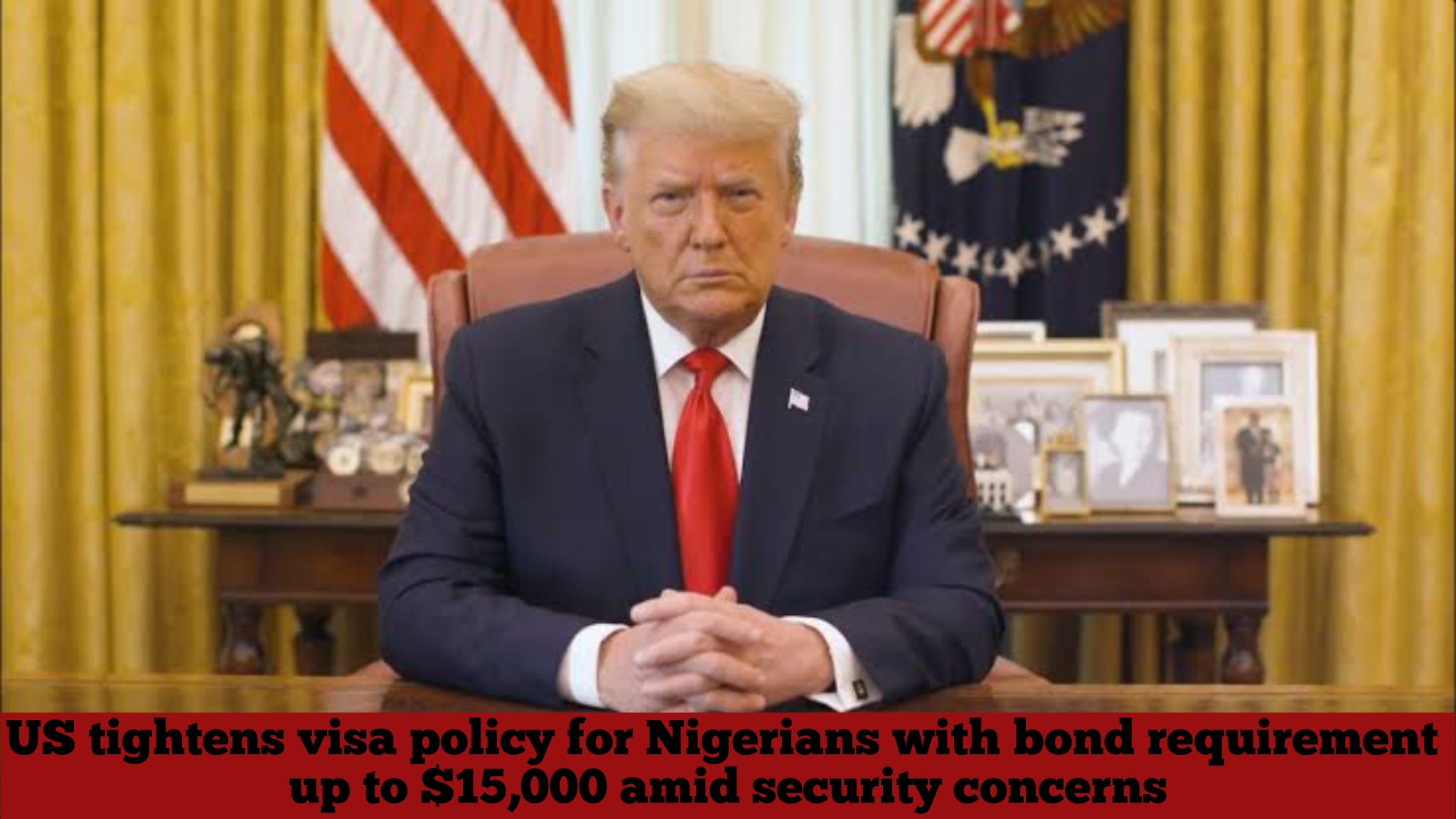
The United States has announced new travel requirements for Nigerians applying for B1/B2 visas, mandating the payment of visa bonds of up to $15,000.
According to a notice issued by the US State Department, the policy will take effect in Nigeria on January 21, 2026,l.
Visa bonds serve as financial guarantees and are imposed on applicants from countries classified by the US as “high-risk.”
The updated list includes 38 countries, 24 of which are in Africa, with Nigeria among those affected.
Under the new policy, Nigerian applicants who are otherwise eligible for B1/B2 visas, covering business and tourism travel, may be required to post a bond of $5,000, $10,000, or $15,000.
Applicants must also submit Department of Homeland Security Form I-352 and formally agree to the bond conditions through the US Treasury’s Pay.gov platform.
The State Department clarified that posting a bond does not guarantee visa approval. Payments made without explicit instructions from a US consular officer are non-refundable.
Visa holders subject to the bond requirement must enter the United States through designated airports, including John F. Kennedy International Airport (New York), Boston Logan International Airport, and Washington Dulles International Airport.
Bond refunds will only be issued after the Department of Homeland Security confirms that the traveler has departed the US, the visa expires without use, or entry is denied at the port of arrival.
The announcement follows earlier partial US travel restrictions on Nigeria, which came into effect on December 16, 2025, alongside similar measures affecting 14 other countries, most of them in Africa. US authorities cited security concerns, including the presence of extremist groups such as Boko Haram and ISIS, as well as high visa overstay rates among Nigerian travelers.
The partial suspension applies to both immigrant and non-immigrant visa categories, including B1, B2, B1/B2, F, M, and J visas, which officially took effect on January 1, 2026.