Extraordinary session focuses on staffing gaps, institutional credibility, and fallout from Burkina Faso, Mali, and Niger’s withdrawal
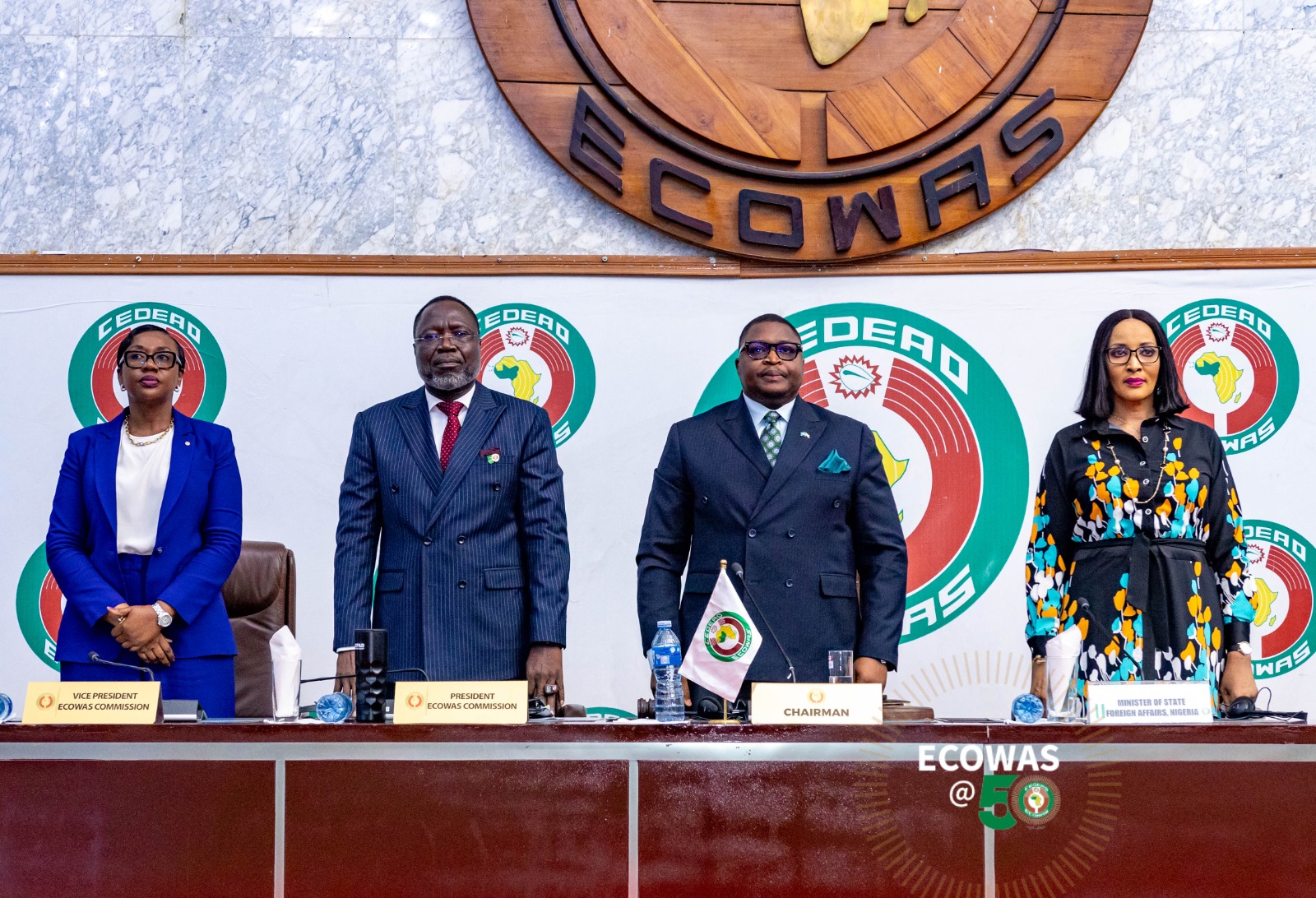
The Economic Community of West African States (ECOWAS) Council of Ministers has opened an extraordinary session in Abuja, focusing on pressing institutional issues such as recruitment, staff distribution, and the operational impact of the withdrawal of Burkina Faso, Mali, and Niger from the regional bloc.
Declaring the session open, Nigeria’s Minister of State for Foreign Affairs, Ambassador Bianca Odumegwu-Ojukwu, reiterated Nigeria’s commitment to ECOWAS’ unity and effectiveness.
“We reaffirm Nigeria’s unflinching commitment to the unity, stability, and development of our regional community,” Odumegwu-Ojukwu said. “This exercise is essential to ensure that all existing vacancies are duly filled, enabling the organisation to operate at its optimal capacity.”
She conveyed greetings from President Bola Ahmed Tinubu, assuring member states of Nigeria’s ongoing support for ECOWAS’ vision of regional integration and economic progress.
Staffing Crisis and Reform Agenda
In his address, President of the ECOWAS Commission, Dr. Omar Alieu Touray, underscored the urgency of overhauling the organisation’s recruitment process, citing challenges in handling the volume of applications and the limitations of current recruitment mechanisms.
“This extraordinary Council is born out of necessity,” Touray stated. “Our recruitment process has been constrained by regulations that hinder administrative efficiency. The volume of applications is beyond the capacity of existing recruitment firms, hence the need for international partners to assist with an end-to-end process.”
He emphasized the need to equitably redistribute vacant positions previously held by staff from Burkina Faso, Mali, and Niger, while maintaining the principles of merit and competence.
“Our goal is to achieve equity, ensure quality, and consolidate solidarity within our community,” Touray said, announcing plans to deploy a more transparent e-recruitment system.
Calls for Transparency and Fairness
Also speaking at the session, Alhaji Timothy Kabba, Sierra Leone’s Minister of Foreign Affairs and International Cooperation and current Chair of the ECOWAS Council of Ministers, stressed the importance of integrity in the recruitment process.
“Our decisions must be grounded in due process, transparency, and equity,” Kabba said. “This is crucial for strengthening our institutional credibility and ensuring that every member state feels represented in our shared vision.”
Representing ECOWAS Chair and Sierra Leonean President Julius Maada Bio, Kabba also highlighted the broader regional context, citing persistent challenges including terrorism, climate change, and displacement.
“We are meeting at a moment of challenging trends in the region,” he added. “Yet, through dialogue and unity, we can safeguard the future of our region.”
Strengthening Regional Cooperation
Kabba emphasized that ECOWAS must deepen its cooperation with the African Union, the United Nations, and other global partners to confront security and development issues head-on.
“ECOWAS must survive, thrive, and deliver on its promise of peace, integration, and prosperity,” he declared. “We bear the solemn responsibility to translate multilateral ideals into concrete action for our people.”
Our Diplomatic Correspondent, Sandra Chukwugekwu, reports that the meeting drew participation from ministers, ambassadors, and ECOWAS commissioners across West Africa. It is expected to conclude with policy resolutions on recruitment reform and equitable staff representation among remaining member states.