
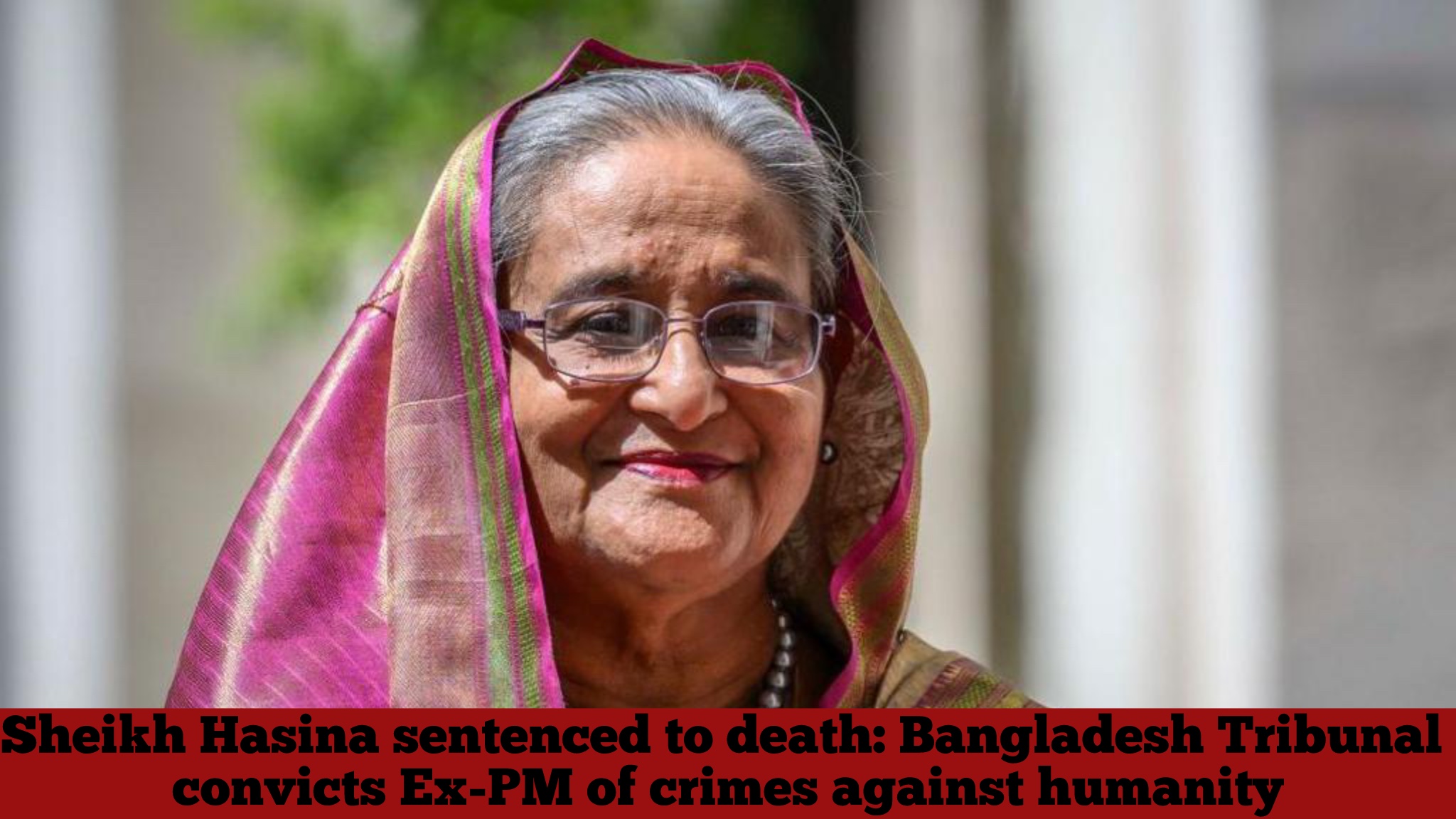
Bangladesh’s former Prime Minister, Sheikh Hasina, has been sentenced to death after a special tribunal found her guilty of crimes against humanity linked to last year’s deadly student-led uprising.
The verdict, delivered in her absence, marks one of the most dramatic and controversial rulings against a Bangladeshi leader since the nation’s independence.
Hasina, who has been living in exile in India since fleeing Bangladesh in August 2024, was accused of authorising a violent state crackdown on protesters.
According to the findings of the tribunal, she allegedly ordered bomb attacks from helicopters and approved the use of lethal close-range weapons during efforts to suppress the demonstrations.
The United Nations estimated that up to 1,400 people were killed in the unrest, while Bangladesh’s interim government reported more than 800 deaths and at least 14,000 injuries. What began as protests over government job quotas spiralled into one of the bloodiest episodes in the country’s history.
Reacting from India, Hasina condemned the ruling as “biased and politically motivated,” maintaining that she never issued orders to harm civilians and would be willing to face what she called a “proper tribunal.”
The court also issued a death sentence to former Home Minister Asaduzzaman Khan, who is also in India, while a former police chief who cooperated with investigators received a five-year sentence.
The judgment arrives just weeks ahead of Bangladesh’s February parliamentary elections, intensifying political tensions and prompting renewed diplomatic strain with India.
Dhaka has formally requested Hasina’s extradition under an existing bilateral treaty, while New Delhi maintained that it would review the verdict and remained committed to constructive dialogue.
As news of the sentence spread, protesters gathered outside the preserved home of Hasina’s late father, Bangladesh’s founding leader, calling for the historic building to be demolished.
The ruling has further deepened divisions across the country, raising fears of renewed unrest as the election season approaches.
