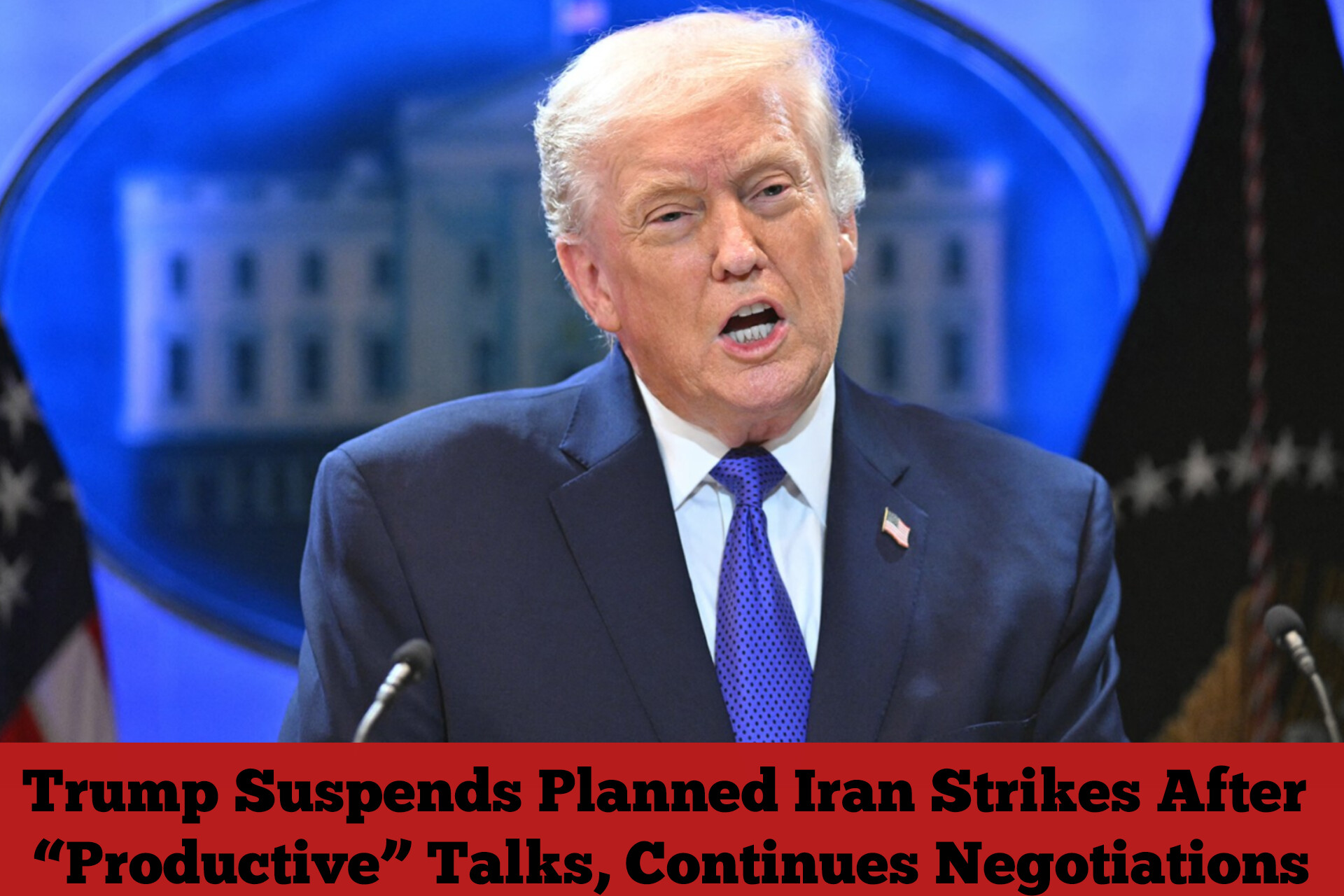
U.S. President Donald Trump has ordered a temporary halt to planned military strikes on Iranian energy infrastructure following what he described as “very good and productive” talks with Tehran, signaling a possible diplomatic breakthrough in escalating Middle East tensions.
In a post shared early on his Truth Social platform, Trump said both sides had made significant progress over the past 48 hours.
“The United States and Iran have had, over the last two days, very good and productive conversations regarding a complete and total resolution of our hostilities in the Middle East,” Trump wrote.
He added that, based on the tone of the discussions, he had directed a pause in military action.
“I have instructed the Department of War to postpone any and all military strikes against Iranian power plants and energy infrastructure for a five-day period, subject to the success of the ongoing meetings,” he stated.
The decision comes just hours before the expiration of a 48-hour ultimatum issued by Washington, demanding that Iran reopen the strategically critical Strait of Hormuz.
Trump had earlier warned that the United States would “obliterate” Iranian power facilities if access through the vital oil transit route was not fully restored.
The diplomatic pause follows months of intensifying conflict across the Middle East, widely referred to as Operation Epic Fury.
The confrontation began last year with a large-scale joint U.S.-Israeli offensive targeting Iranian nuclear sites, missile installations, and senior leadership figures. Since then, hostilities have escalated sharply.
Iran has reportedly launched retaliatory missile strikes on U.S. military bases in the Gulf and on Israeli cities, while also disrupting global shipping by effectively closing the Strait of Hormuz—one of the world’s most important oil corridor
The disruption has pushed global oil prices above $126 per barrel, triggering widespread volatility in international markets.
Beyond the geopolitical and economic fallout, the conflict has taken a significant human toll. Reports indicate that more than 2,000 people have been killed across Iran, Lebanon, and Israel since the escalation began.
Despite the temporary suspension of planned strikes, tensions remain high. Iranian officials have warned that any further attacks could lead to the mining of the Persian Gulf, while Israeli forces continue operations in Lebanon.
Diplomatic engagements between Washington and Tehran are expected to continue throughout the week, with global attention focused on whether the talks can yield a lasting resolution.