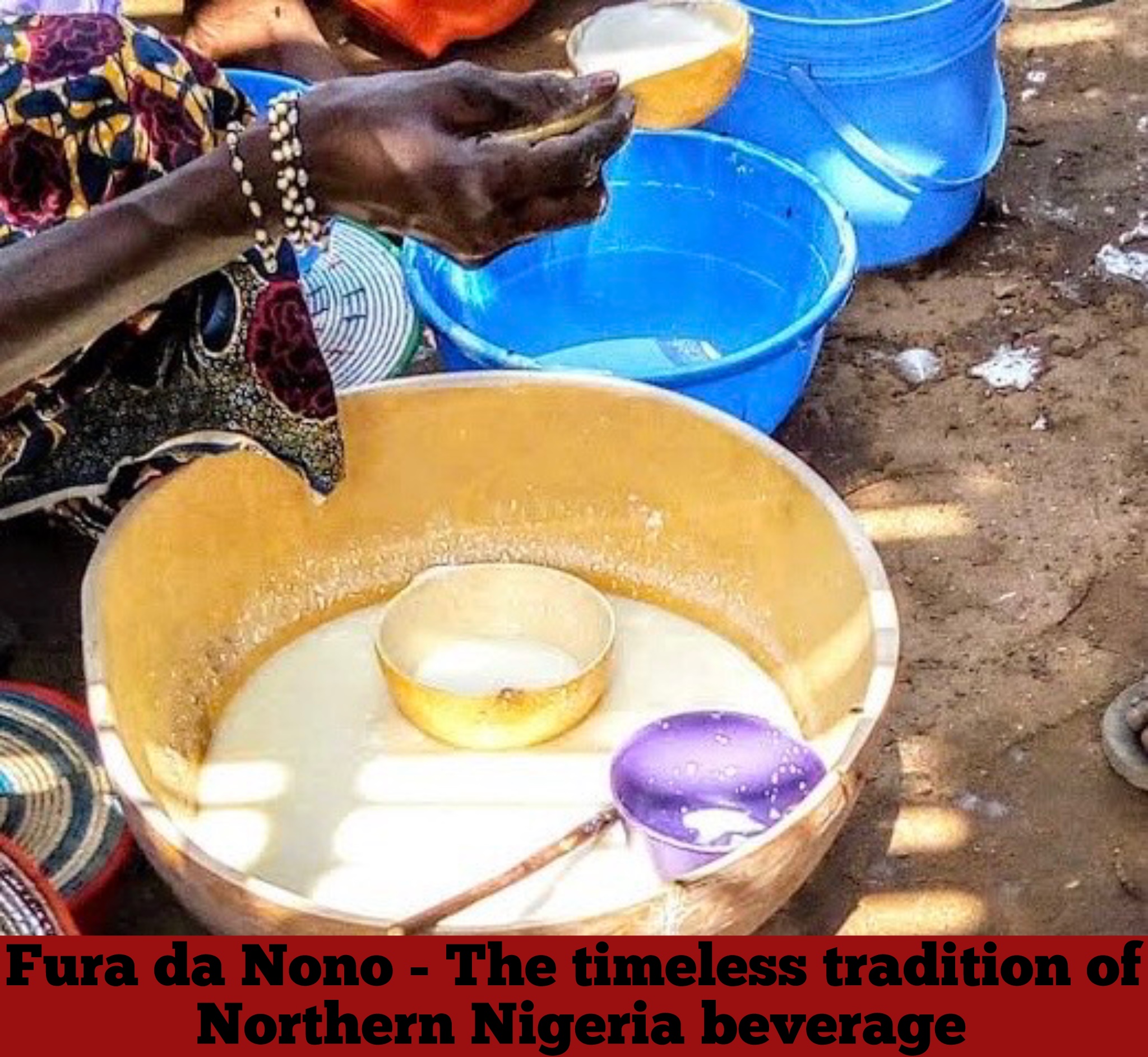
For generations, Fura da Nono has been more than just a drink in Northern Nigeria it’s a symbol of culture, community, and nourishment.
In Niger state, where traditions thrive alongside modern lifestyles, this creamy blend of millet and fermented milk has continued to unite people across classes and ages, offering comfort, energy, and a taste of home.
Fura is a light, sweet porridge made from millet or sorghum flour, typically enjoyed with a variety of toppings like milk, sugar, or nuts. While Nono is a fermented milk drink similar to yogurt. It is made from the milk of cows, goats or sheep.
Its origin dates back to the 15th century when Fulani nomads, known for their expertise in dairy farming and processing, introduced the practice to the region. It became a staple food among Fulani nomads, due to its simplicity to prepare and its nutritional benefits.
Served cold, creamy, and refreshingly tangy, Fura da Nono remained one of the most cherished traditional drinks in Northern Nigeria.
Despite the growing popularity of soft drinks, yoghurts, and imported beverages, many Niger residents still prefer this indigenous drink, not just for its taste, but for its cultural and nutritional significance

Traditionally, Fulani women played a significant role in the preparation and sale of fura and nono, who had long been the custodians of the recipes and techniques, as well as passed them down through generations.
At Manigi market in Mashegu Local Government Area of Niger state, vendors lined up with their huge calabashes filled with freshly prepared fura da nono.
A fulani vendor, Kumba Balami, who said she inherited the business from her mother, mentioned that it was no longer productive as it used to because availability had become inconsistent due to its rising costs.
Balami explained that “last year, a typical calabash (kwarya) of nono was priced at N500, but now it is sold between N1,000 and N2,000.“
Also, 28-year-old Abdukadir Yusuf who had just bought a calabash of fura da nono, said he drinks it almost every day.
“It keeps me full for hours and gives me strength, especially when I have a busy day at work. It’s natural and affordable not like the processed drinks that only satisfy for a few minutes.”
Similarly, Muhammad Maitama, a student at the University of Abuja, described the drink as “a perfect refreshment after lectures. It is both food and drink and when I take a calabash of fura da nono, it keeps me full. I don’t get to spend money for lunch,” he explained.
However, the rising cost of the beverage has put a strain on this tradition. Abdu Auwal, a panel beater in Dutse metropolis, shared that what used to cost him N500 for a calabash of cow milk had skyrocketed to N2,000 for the same amount.
Auwal expressed frustration over the hike in price, and urged the government to intervene before the situation worsenened.
Some civil servants, explained that the drink carried a sense of nostalgia and identity.
For Patrick Moyo, “I grew up in Kaduna state and We used to drink fura da nono almost everyday in my neighbourhood” he recalled.
For Chibueze Nwiboko, “during the days of my National Youth Service Corps in Borno state, it connected me to the culture. I became addicted and now I’ve introduced my children to it. They love it more than bottled drinks.”
Meanwhile a computer operator at a business centre, Blessing Iria, added that, “It’s cheaper and more filling than other drinks. When I’m on duty all day, it gives me energy and keeps me refreshed.”
According to a nutritionist at Limi Hospital, Abuja, Dr. Agatha Eya, fura da nono is a powerhouse of nutrients. When prepared hygienically and consumed fresh, it is rich in protein, calcium, and probiotics that aid digestion and strengthen bones. The fura made from millet provides carbohydrates, fiber, and essential minerals like iron and magnesium. When combined, they form a balanced meal rich in energy and beneficial bacteria,“ she explained.

Experts believe that beyond its nutritional value, fura da nono holds deep cultural symbolism. It is traditionally associated with hospitality and communal sharing among Hausa and Fulani communities.
With increasing demand, some entrepreneurs are now modernise production by introducing pasteurized versions which are packaged for wider distribution across the country.