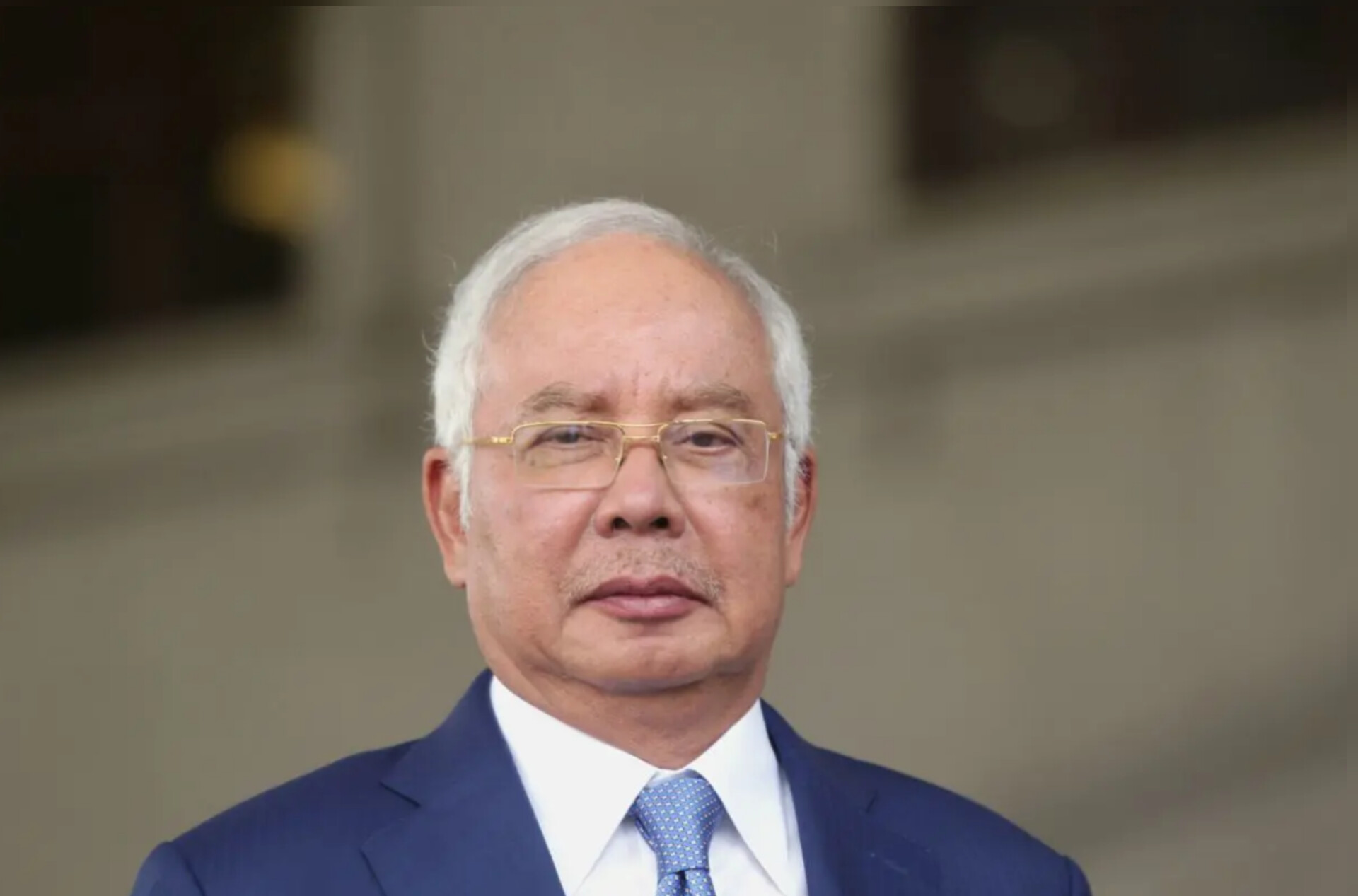
A Malaysian court on Friday found former prime minister Najib Razak guilty of abusing his power to siphon billions of ringgit from the scandal-hit 1Malaysia Development Berhad (1MDB) sovereign wealth fund and laundering the proceeds, deepening the legal woes of the once-powerful leader.
Presiding Judge Collin Lawrence Sequerah convicted the 72-year-old on all four counts of abuse of power and 21 counts of money laundering, involving about 2.28 billion ringgit ($554 million). Sentencing, expected later on Friday, is likely to add years to the six-year prison term Najib is already serving in a separate 1MDB-related case.
In court, Najib dressed in a navy blue suit and white shirt sat slumped as the verdict was read.
Prosecutors said Najib exploited his roles as prime minister, finance minister and chairman of 1MDB’s advisory board to move vast
sums from the fund into his personal accounts more than a decade ago. Investigators allege the money financed luxury real estate, a superyacht and high-value artworks.
Delivering the ruling, Judge Sequerah rejected the defence’s claim that Najib had been deceived by his close associate Low Taek Jho, widely known as Jho Low.
“The evidence clearly points to the fact that this was no coincidence but was evident of a relationship in which Jho Low operated as a proxy or agent of the accused with regard to the running of the affairs of 1MDB,” the judge said.
He added that the argument Najib was “misled and duped by management and by Jho Low is unmeritorious.”
Judge Sequerah also dismissed claims that Middle Eastern donors were responsible for funds entering Najib’s accounts, describing the explanation as a “tale that surpassed even those from the Arabian Nights.”
The prosecution presented bank records, documentary evidence and testimony from more than 50 witnesses. During closing arguments, Deputy Public Prosecutor Ahmad Akram Gharib said Najib sought to portray himself as a victim.
“The accused wields absolute financial, executive and political control,” he told the court. “Najib paints himself as a victim of rogue subordinates, when in truth, he was the single most powerful decision-maker.”
Launched in 2009 shortly after Najib took office, 1MDB was meant to spur economic growth. Whistleblowers later alleged that Jho Low—who had no official role—helped set up the fund and influenced key decisions. Authorities estimate more than $4.5 billion was diverted from 1MDB between 2009 and 2015 by fund officials and associates, including Low, who remains a fugitive.
Najib’s dramatic fall followed his 2018 election defeat, amid public fury over the corruption scandal. Since then, investigations under successive governments have ensnared him and his wife Rosmah Mansor in multiple graft cases. Najib has apologised for allowing the scandal to occur but has consistently denied wrongdoing, insisting he was unaware of illegal transfers.
His defence team maintains he did not receive a fair trial. Last week, Najib’s lawyer Muhammad Shafee Abdullah reiterated that claim to reporters and again blamed Jho Low, noting the scandal triggered probes from Singapore to the United States and tarnished Malaysia’s international standing.
Najib’s legal troubles intensified earlier this week when he lost a bid to serve the remainder of his current sentence at home, instead of at Kajang Prison outside Kuala Lumpur.
Under Malaysian law, each count of abuse of power carries a maximum sentence of 20 years in prison and a fine of up to five times the value of the bribe, raising the prospect of a lengthy additional term.