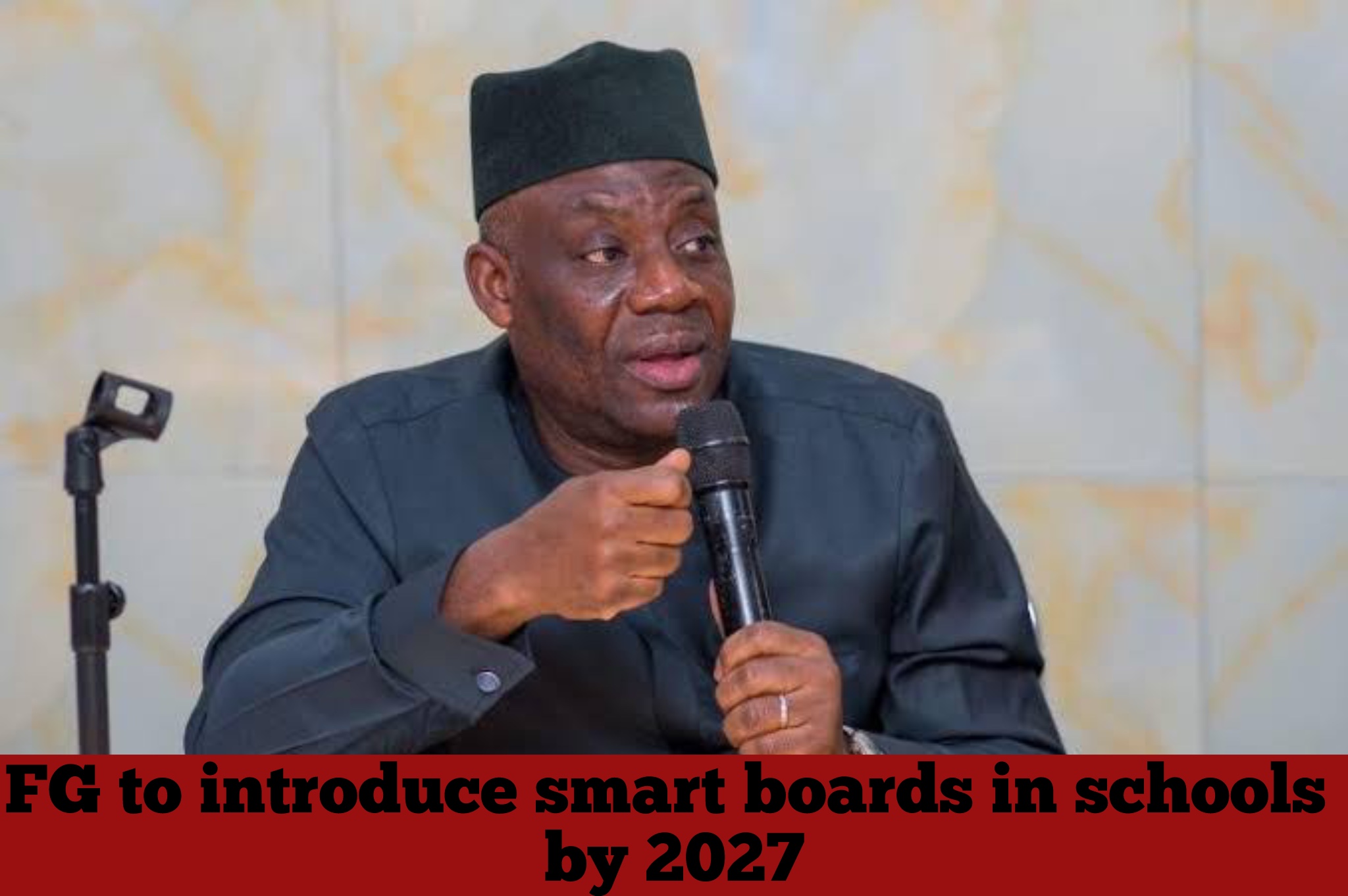
The Federal Government has announced plans to phase out traditional chalkboards and introduce smart boards in all schools nationwide by the year 2027.
The Minister of Education, Dr. Olatunji Alausa, made this known during a ministerial roundtable in Abuja, emphasizing the government’s dedication to closing the digital gap in the education sector.
According to Alausa, the government is taking bold steps toward full digital transformation in education.
“Beginning in 2026, the annual school census will be completely digitalised, enhancing the accuracy of data collection and analysis.”
He said more than 60,000 tablets had already been distributed to students in Adamawa, Oyo, and Katsina States under the Airtech (AWS) and BESDA programmes, with an additional 30,000 tabletsexpected to be deployed soon.
The Minister explained that the new smart boards would promote interactive and technology-driven lessons, enabling students to engage with multimedia and digital content for a more dynamic learning experience.
Alausa also expressed concern over the high dropout rate in Nigerian schools, revealing that out of 30 million pupils captured from 21 states in the Nigeria Education Management Information System (NEMIS), only six million progress to senior secondary school.
He noted that the use of digitised data and biometric tracking would support evidence-based interventions and help monitor student progress more effectively.
Alausa further disclosed that efforts were underway to integrate WAEC and JAMB data into NEMIS, improving coordination across educational bodies.
He also appreciated UNICEF and President Bola Tinubu for their continued support in advancing the nation’s education sector.
The Executive Secretary of the Universal Basic Education Commission (UBEC), Aisha Garba, confirmed that technology was now an integral part of teaching and school operations, marking a significant milestone in the digitalisation of public education in Nigeria.
She mentioned that the initiative aims to create a modern learning environment, reduce the number of out-of-school children, and ensure equal access to quality education for every Nigerian child, regardless of background.