The Ministry of Foreign Affairs and the Nigerian Air Force (NAF) have reaffirmed their commitment to stronger institutional coordination and strategic communication, amid evolving security challenges and heightened international media scrutiny of Nigeria’s security operations.
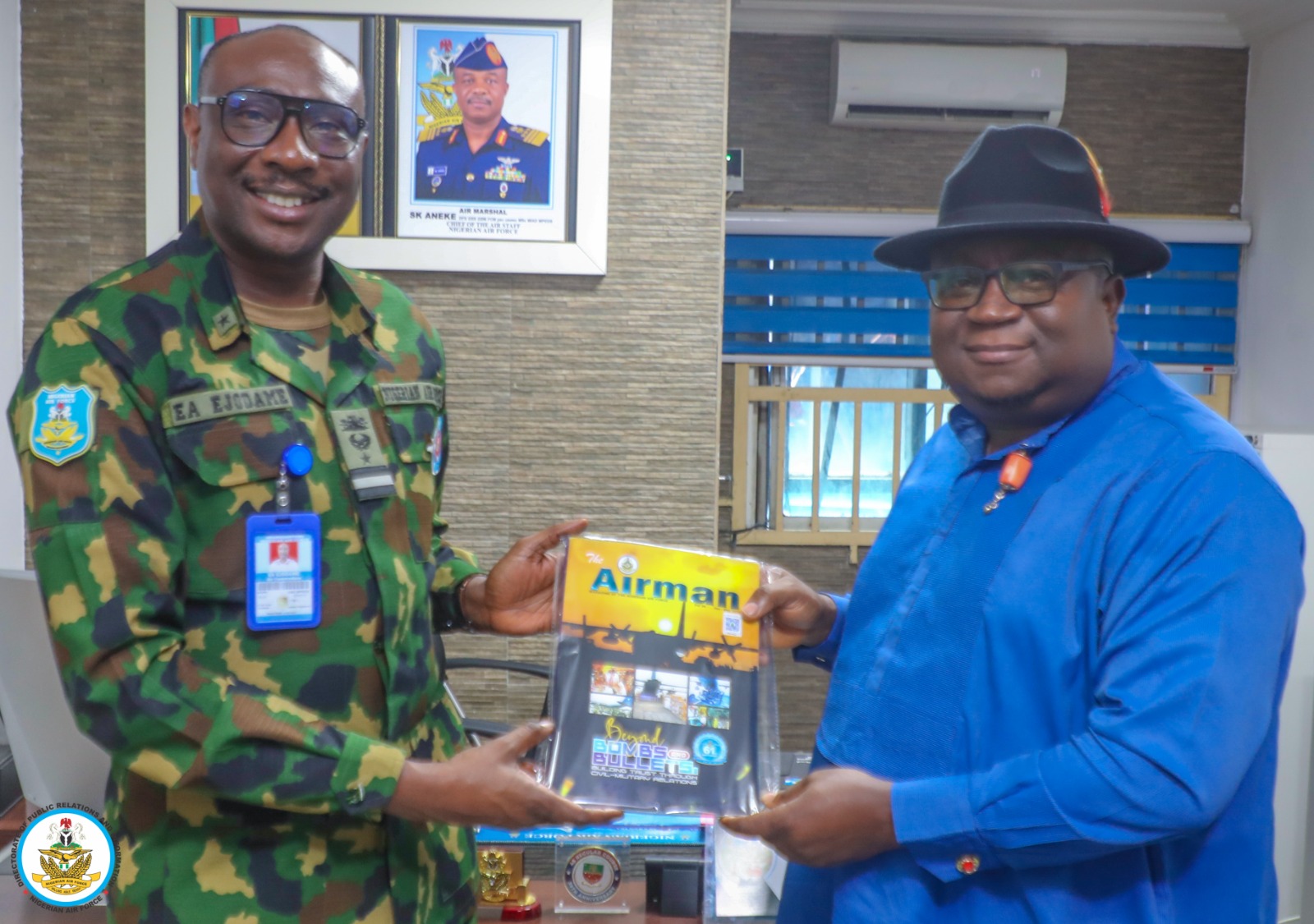
This was the focus of a familiarisation visit by the Spokesperson of the Ministry of Foreign Affairs, Mr. Kimiebi Imomotimi Ebienfa, to the Director of Public Relations and Information of the Nigerian Air Force, Air Commodore Ehimen Ejodame, at the NAF Headquarters in Abuja.
The engagement underscored the growing complexity of modern security communication, with both sides noting that military operations are increasingly intertwined with diplomatic considerations, public perception and global narratives.
Speaking during the meeting, Air Commodore Ejodame said Nigeria’s security landscape is largely shaped by asymmetric and guerrilla-style threats, with hostile elements often operating within civilian populations.
“This operational reality makes it difficult to clearly distinguish combatants from non-combatants,” Ejodame said. “It also complicates public communication, because the same communities we are protecting may be infiltrated by violent actors, making the release of information highly sensitive.”
From the diplomatic perspective, Ebienfa stressed the importance of carefully calibrated public messaging, particularly during sensitive security operations involving international partners. He warned that uncoordinated or premature statements could escalate operational matters into diplomatic challenges.
“Unverified or speculative communication during rapidly evolving situations can generate intense media speculation, public anxiety and avoidable diplomatic pressure,” Ebienfa said, emphasising the need for pre-agreed communication frameworks and timely inter-agency consultation.
The Air Force spokesperson also highlighted the delicate balance between transparency and operational security, noting that while the public has a right to information, certain details cannot be disclosed without endangering missions, intelligence assets or personnel.
“Delayed communication, however, can create information gaps that are often exploited by misinformation and hostile narratives,” Ejodame added.
Both spokespersons agreed that information warfare has become a critical component of modern conflict, requiring proactive measures to protect the credibility and professionalism of Nigeria’s Armed Forces. They noted that despite the challenges of asymmetric warfare, Nigeria’s military continues to command respect both regionally and internationally.
Discussions also touched on broader geopolitical concerns, including public perceptions of foreign military cooperation, the risk of such partnerships being misrepresented as dependency, and the danger of narratives capable of deepening social divisions or fuelling radicalization.
The meeting concluded with a shared understanding that sustained collaboration between the communication structures of the Ministry of Foreign Affairs and the Nigerian Air Force is essential for effective national security management. Both sides agreed on the need for early consultation during incidents with diplomatic implications, consistent messaging aligned with operational realities, and continued professional engagement, including joint media-response simulations and capacity-building initiatives.
Describing the visit as timely and constructive, both institutions reaffirmed their commitment to coordinated strategic communication as a vital tool for safeguarding Nigeria’s sovereignty, maintaining public trust and strengthening the country’s international standing.