
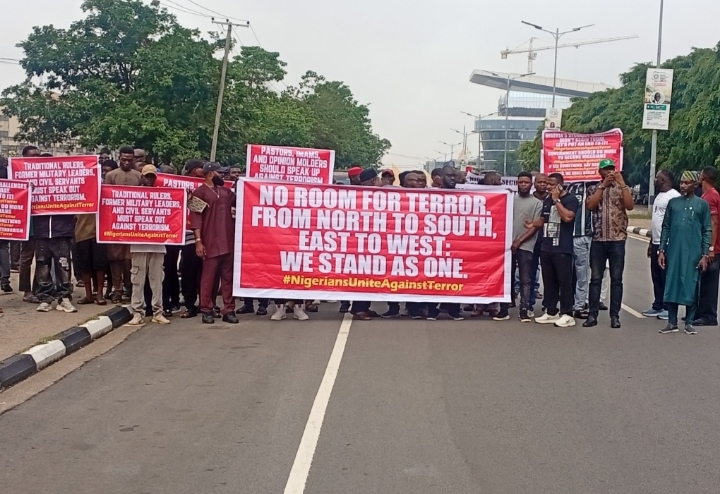
A coalition of civil society organisations, youth groups and community leaders on Tuesday staged a peaceful rally in Abuja, calling for urgent action to tackle Nigeria’s worsening insecurity and urging citizens to unite against terrorism, banditry and kidnapping.
The demonstrators, who marched under the banner “Nigerians Unite Against Insecurity”, said insecurity had become a national crisis affecting all Nigerians regardless of ethnicity, religion or political affiliation.
Carrying placards with inscriptions such as “Nigeria’s security challenges didn’t begin today, let’s put an end to them”, “Pastors, Imams and opinion moulders should speak up against terrorism” and “No room for terror”, the protesters called on government at all levels to intensify efforts to protect lives and property.
Addressing journalists during the rally, activist Comrade Isah Abubakar said Nigerians could no longer remain silent while citizens live in fear of kidnappers, terrorists and bandits.
“We now live in a society where we cannot sleep with our two eyes closed. We now live in a society where you cannot travel freely,” he said.
“There are roads in Nigeria that once it is five o’clock in the evening, you can no longer pass through because of insecurity. The people affected are not members of any political party; they are Nigerians.”
Mr Abubakar argued that criminal groups do not discriminate based on religion, tribe or political affiliation, stressing that insecurity had become a common threat to all citizens.
“It is time to give us security. It is time to protect lives and property. It is time to protect children and women from violence and kidnapping,” he added.
The activist also called for improved funding of security agencies and greater public participation in discussions on the proposed creation of state police.
According to him, constitutional amendments relating to state policing should be subjected to extensive public consultations to ensure the system is not abused by political actors.
“If state police is going to be introduced, citizens must be adequately carried along. Public hearings should be organised so Nigerians can contribute to how it should work,” he said.
Speaking at the event, activist Comrade Usman Okai Austin said insecurity should not be viewed through political, ethnic or religious lenses, describing it as a threat to Nigeria’s survival.
“Insecurity is everyone’s business. The attackers do not discriminate, therefore leaders should not discriminate in finding solutions,” he said.
Mr Austin urged political leaders across party lines, former presidents, traditional rulers and religious leaders to speak with one voice against insecurity.
“Until we have a country, you cannot have political parties, elections, schools or governance. Securing Nigeria must come first,” he said.
While acknowledging the efforts of the military, police, Department of State Services and other security agencies, he insisted that more coordinated action was needed to address the crisis.
The protesters also expressed concern over reports of some citizens collaborating with criminal groups by supplying information and logistics, warning that such actions were undermining national security efforts.
Responding to questions from journalists, the organisers urged President Bola Tinubu’s administration to ensure that public officials remain connected to the security realities in their communities and support grassroots security initiatives.
They also called for a careful assessment of the financial, legal and institutional requirements for state policing, arguing that the success of such a system would depend on adequate funding, proper training and effective oversight.
The rally, which commenced from the Ministry of Women Affairs, ended at the National Assembly gate with a renewed call for national unity, community participation and stronger government action to curb terrorism, banditry and kidnapping across the country.