
For thousands of children with disabilities across West Africa, access to a wheelchair, white cane or other assistive device can mean the difference between exclusion and opportunity.
To bridge that gap, the Economic Community of West African States (ECOWAS) has donated 670 assistive devices to children with disabilities in Nigeria, while calling for greater investment in assistive technology and disability inclusion across the region.
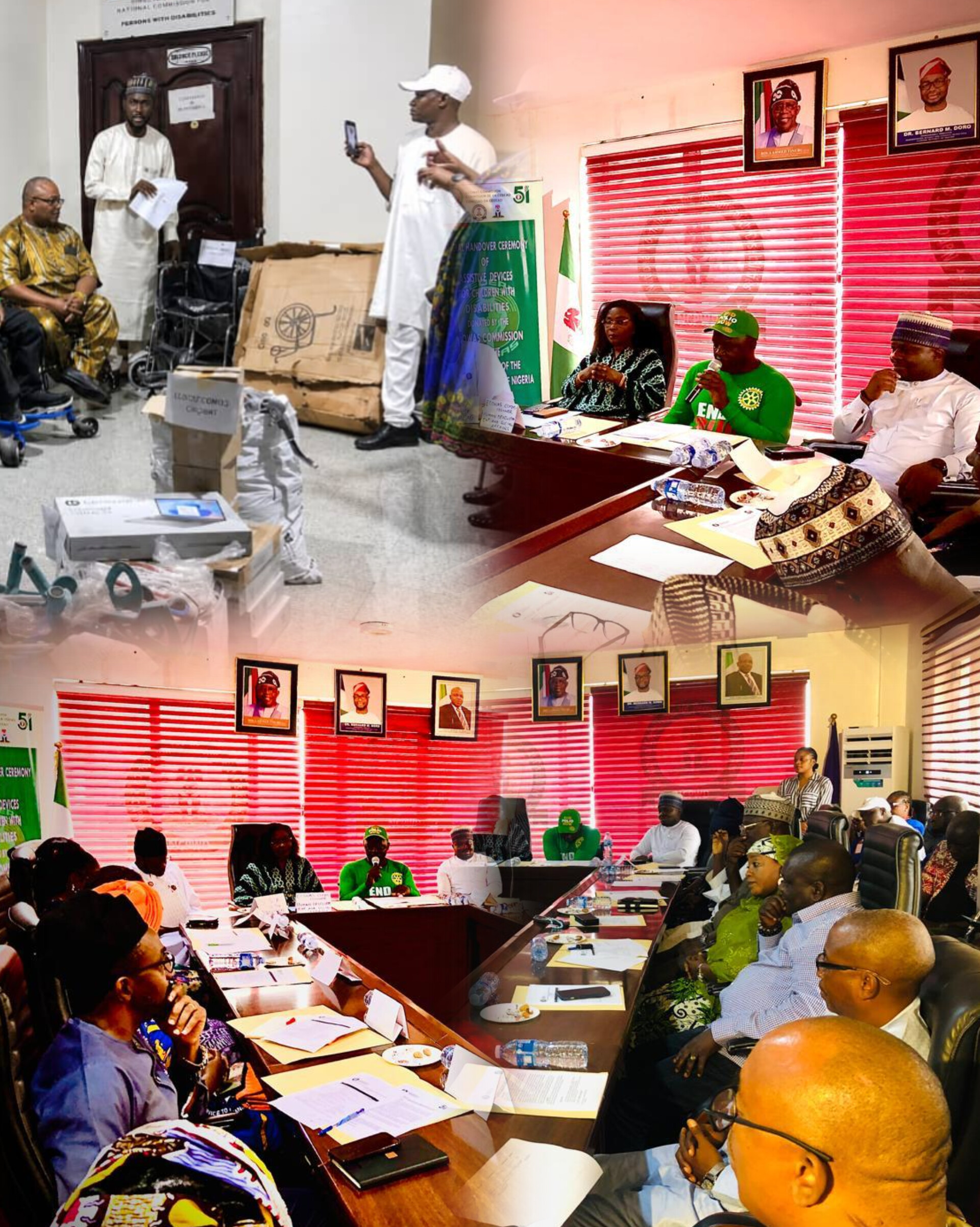
The donation, made in Abuja under the first phase of the ECOWAS Regional Programme on the Provision of Assistive Devices for Children with Disabilities, was designed to improve access to education, healthcare, mobility and social participation for children with disabilities.
Nigeria and Togo are the pilot beneficiaries of the regional initiative.
The assistive devices, handed over to the National Commission for Persons with Disabilities (NCPWD), include 100 wheelchairs, 100 white canes, 50 tricycles, 50 standing chairs, 50 bath chairs, 50 armpit crutches, 50 elbow crutches, 100 wide-brim hats, 10 laptops and 10 cartons of sunscreen, among other items.
Speaking at the ceremony, ECOWAS Commissioner for Human Development and Social Affairs, Professor Fatou Sarr, said the intervention demonstrates the regional body’s commitment to ensuring that persons with disabilities were not left behind in the region’s development agenda.
“What we are doing here today is a demonstration of the commitment of the ECOWAS Commission to promote social inclusion of all vulnerable community citizens, including but not limited to persons with disabilities,” she said.
Professor Sarr explained that the programme was developed following a 2021 regional study on disability inclusion, which revealed severe shortages in access to assistive technology across West Africa. She said the pilot programme was launched in 2024 in Nigeria and Togo to address the identified gaps.
Describing assistive technology as a fundamental human right recognised under the United Nations Convention on the Rights of Persons with Disabilities, she noted that access remains highly unequal across the world.
Citing the World Health Organization (WHO)-UNICEF Global Report on Assistive Technology, Professor Sarr said nearly 90 per cent of assistive technology needs are met in high-income countries, while access falls below three per cent in some low-income countries.
She identified the high cost of devices, inadequate public policies, dependence on imported equipment, shortages of trained professionals and poor access in rural communities as major barriers to disability inclusion.
“Every dollar invested in assistive technology, such as wheelchairs, prostheses, spectacles and hearing aids, can generate an estimated economic return of nine dollars,” she said.
Professor Sarr said the initiative would improve children’s access to education, healthcare and community life while preserving their dignity and enabling them to participate fully in society.
Executive Secretary of the National Commission for Persons with Disabilities, Chief Ayuba Gufwan, described the intervention as a major boost to disability inclusion in Nigeria.
He said more than 26 million Nigerians require one form of assistive technology or another, while demand for quality, affordable and appropriate assistive products continues to exceed supply.
“For a child, an assistive device is not merely a piece of equipment; it is a pathway to education, independent living, participation, confidence and hope,” he said.
Chief Gufwan announced that the Commission had established a dedicated Assistive Device and Technology Unit and, in collaboration with the Federal Ministry of Health and Social Welfare and development partners, developed the Nigerian Priority Assistive Products List, the Investment Case for Assistive Technology in Nigeria and the National Assistive Technology Scale-Up Plan to strengthen access to disability services nationwide.
Representing President Bola Tinubu, the Senior Special Assistant on Special Needs and Equal Opportunities, Mr Mohammed Isa said the donation would significantly improve the quality of life of beneficiaries and contribute to national development by expanding opportunities for children with disabilities.
Representing the Minister of Humanitarian Affairs and Poverty Reduction, Dr Bernard Doro, the Special Technical Adviser, Mr Daniel Dalliof, described the donation as more than a humanitarian intervention.
“These wheelchairs, crutches and other assistive devices represent dignity restored, independence regained and doors reopened,” he said.
He explained that the intervention aligns with the Federal Government’s integrated approach combining humanitarian response, poverty reduction and social protection, adding that supporting persons with disabilities is critical to reducing poverty among vulnerable households.
Stakeholders urged beneficiaries and their families to make effective use of the devices, noting that assistive technology has the potential to transform lives by improving mobility, communication, learning outcomes and economic participation.
The ceremony also featured goodwill messages from development partners, including UNICEF, Sightsavers, GIZ Nigeria, PMON, The Leprosy Mission Nigeria and the Nigerian Air Force Officers’ Wives Association (NAFOWA).
The organisations reaffirmed their commitment to supporting disability inclusion, expanding access to assistive technology and strengthening collaboration to ensure that no child with a disability is left behind.