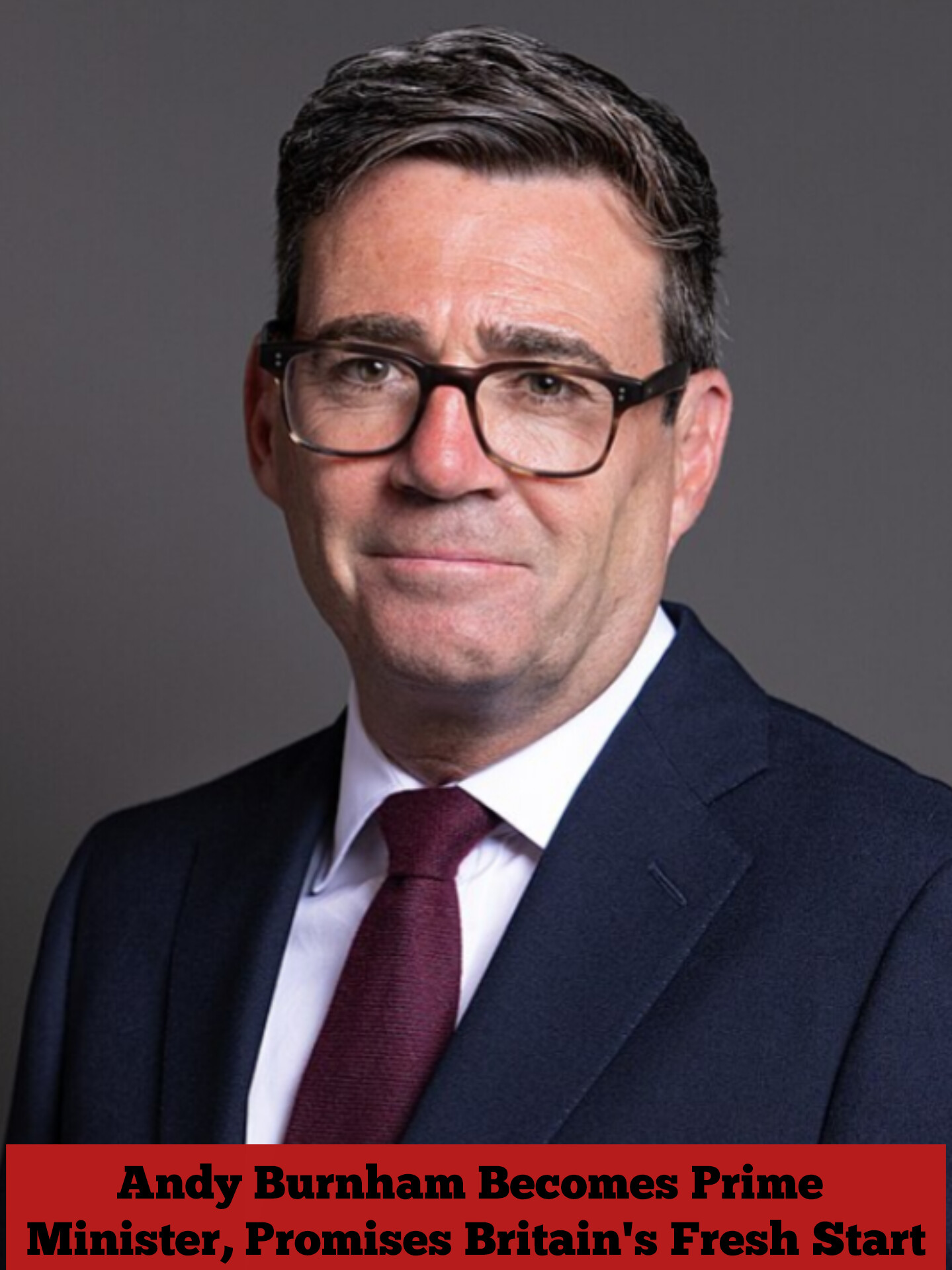
Andy Burnham has officially become the United Kingdom’s new prime minister, pledging to restore confidence in government and tackle the country’s deepening cost-of-living crisis after taking over from Keir Starmer.
The 56-year-old succeeds Starmer, who resigned after just two years in office following a series of political setbacks, despite leading Labour to a landslide election victory that ended 14 years of Conservative rule.
After being invited by King Charles III to form a government, Burnham was expected to deliver his first address outside 10 Downing Street on Monday, where he would promise a more stable style of leadership and outline his priorities for government.
In an interview with The Times, Burnham said Britain needed a decisive change in direction.
“What we’ve been doing hasn’t been working. That’s the way I see it,” he said.
“I am going to try and do things in a different way.”
His team said the new prime minister would focus on restoring public trust, easing pressure on household finances and giving Britain “more breathing room” as families continue to grapple with rising living costs.
Burnham is also expected to prioritise economic growth and greater devolution of powers to regional communities, while announcing a new cabinet, including a replacement for former finance minister Rachel Reeves.
The former Greater Manchester mayor, widely known as the “King of the North”, was chosen by Labour MPs after Starmer’s resignation, with many believing he offers the party its strongest chance of countering Nigel Farage’s Reform UK ahead of the next general election.
Deputy Labour leader Lucy Powell said Burnham’s experience outside Westminster would help Labour deliver on its promises.
“His mayoral experience means he understands the bigger, bolder measures needed to deliver Labour’s manifesto,” Powell said.
Burnham inherits an economy facing sluggish growth, high borrowing costs, rising welfare spending and continued pressure over irregular migration across the English Channel. Global uncertainty, including volatile energy prices linked to the US-Iran conflict and political tensions involving US President Donald Trump, also poses challenges for the new administration.
Setting out his economic vision, Burnham said his government would adopt a different approach to public spending.
“More focused on early investment, early intervention, setting people up for success, and much less paying for failure,” he said.
He also promised swift action to help households struggling with the cost of living, saying his election campaign exposed the financial pressures facing many families.
Burnham has little time to establish his leadership, with opinion polls suggesting Reform UK could emerge as a serious challenger at the next general election, expected within three years.
Describing his leadership as Labour’s “last chance” to regain public confidence, Burnham insisted he has “a plan” despite questions over his rapid rise to the party leadership.
In his first major policy move, he scrapped the previous government’s proposed nationwide digital ID scheme, valued at £1.8 billion over three years, saying the money would instead be redirected to support measures aimed at easing the cost-of-living crisis.