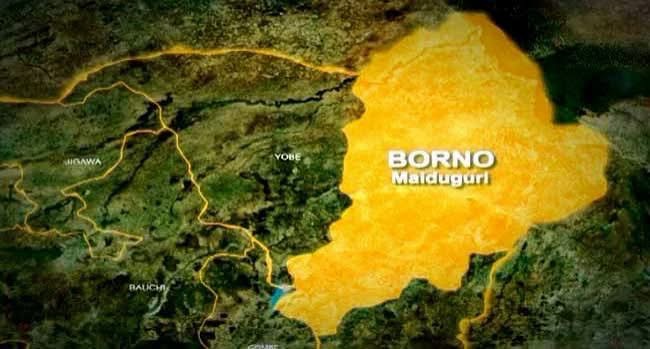
Traders at the Kwaya Kusar Grains Market in Kwaya Kusar Local Government Area of Borno State have raised the alarm over the circulation of counterfeit N1,000 notes, saying the development is causing financial losses and affecting business activities.
The traders expressed their concerns in separate interviews with the News Agency of Nigeria (NAN) in Kwaya Kusar community on Saturday.
According to them, the circulation of fake currency is not limited to the Kwaya Kusar market but also affects markets in Biu and Bayo Local Government Areas, where traders regularly purchase commodities depending on market days.
They said the development was disrupting economic activities while also eroding trust between traders and their customers.
One of the traders, Ibrahim Yusuf, a grain dealer from Gombe Main Market who was in Kwaya Kusar to buy maize, said he had fallen victim to counterfeit currency twice.
“About three weeks ago, I went to Biu Grain Market to buy some bags of maize, and I was given four pieces of fake N1,000 notes. I did not realise until I was in transit.
“It was when I was about to pay the driver that I noticed one new N1,000 note was very light and felt unusual in my hand. I suspected it was fake,” he said.
Yusuf said he immediately contacted the person who gave him the money after discovering three other counterfeit N1,000 notes among the cash he had received.
“My profit is not much, as I make between N3,000 and N4,000 per bag after taking out transportation costs.
“Now I bought three bags, meaning I am expecting roughly N12,000, but I now have N4,000 in counterfeit notes, which means my profit margin has been reduced,” he said.
He called on the government and relevant authorities to visit markets in Biu, Kwaya Kusar and Shani to investigate the circulation of the counterfeit notes, identify their source and remove them from circulation.
“This is highly imperative, especially now that farmers have started harvesting their produce, which will surely increase the volume of trade in the markets.
“Urgent action from relevant agencies is necessary to protect traders from making huge losses,” Yusuf said.
Another trader, Alhaji Hassan Mai-Dawa, said he had also fallen victim to counterfeit N1,000 notes after collecting the money from a Point-of-Sale (POS) operator in Kwaya Kusar.
He said the notes were discovered to be fake when he attempted to deposit the money in a bank.
Mai-Dawa explained that many traders in the area did not accept bank transfers, forcing him to withdraw cash from POS operators to purchase goods.
“I think this is something the government should come in because I also faced similar issues in Biu Market.
“Many traders do not know the difference, so we use the fake notes alongside the original ones,” he said.
A rice trader, Mrs Hauwa Aminu, said she often noticed unusual new N1,000 notes among the cash in her possession but did not initially attach much importance to them because other people continued to accept the notes from her.
Aminu recounted an incident in which she almost had a confrontation with a customer who requested a refund after making a cash payment the previous day.
“I gave him the cash I had, and he rejected some of the notes, but I insisted that I was not the one printing them. It was an intense argument, and since then, that buyer has never returned to my shop to buy from me,” she said.
Aminu appealed to the government and relevant agencies to deploy officials to rural markets to monitor the circulation of counterfeit currency, identify those responsible and make necessary arrests.
She said such measures would help protect traders and restore confidence in transactions across the affected markets.