

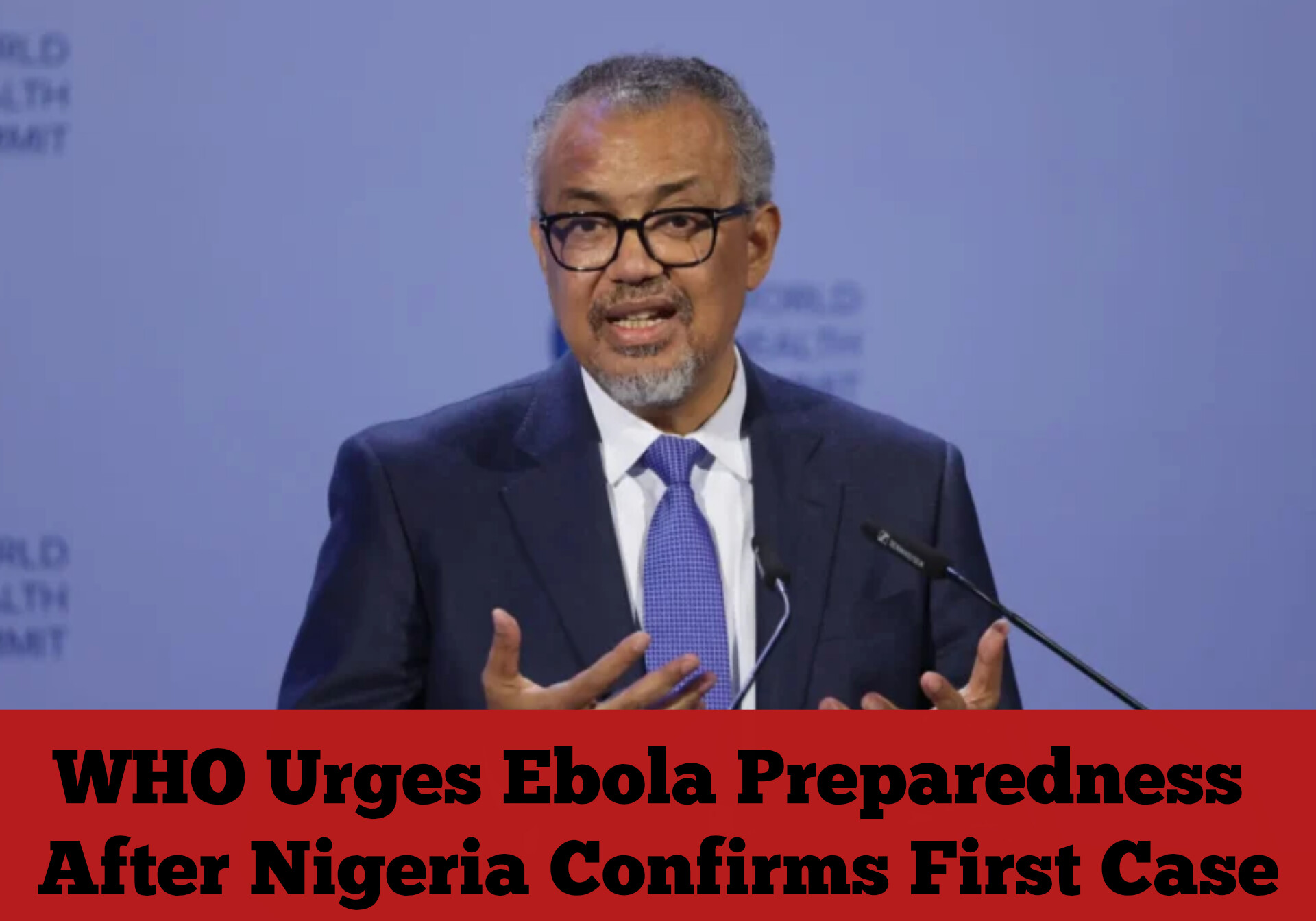
The World Health Organisation (WHO) has urged countries across the region to maintain heightened preparedness following Nigeria’s confirmation of its first Ebola Virus Disease case caused by the Bundibugyo virus.
WHO Director-General, Dr Tedros Ghebreyesus, made the call in a post on his official X account, stressing the need for early detection, effective contact tracing and measures to prevent further transmission.
“Contact tracing is ongoing. WHO and partners are working with the governments of Nigeria, Kenya and the DRC to strengthen the overall outbreak response,” he said.
Tedros said countries must remain vigilant to protect healthcare workers and communities from the disease.
“WHO urges all countries in the region to sustain a high level of readiness, which is essential to detect cases early, prevent onward transmission and protect health workers and communities,” he added.
The Federal Government confirmed Nigeria’s first imported case of Ebola in the Federal Capital Territory (FCT) after a woman who recently travelled from Uganda tested positive for the virus.
The Minister of Health and Social Welfare, Prof Ali Pate, said the patient was in isolation and receiving medical care, while health authorities intensified efforts to identify and monitor people who might have been exposed.
He said 44 contacts had been identified for monitoring, including healthcare workers, patients, caregivers and people who might have travelled with the patient.
The government urged Nigerians to remain calm, rely on verified information and follow public health guidance as surveillance measures were strengthened.
It also advised residents to maintain good hand hygiene, familiarise themselves with Ebola symptoms and seek guidance from public health authorities if they suspected exposure.
The Federal Government said it was working with the Nigeria Centre for Disease Control and Prevention (NCDC) and other relevant health authorities to strengthen surveillance and protect public health.

