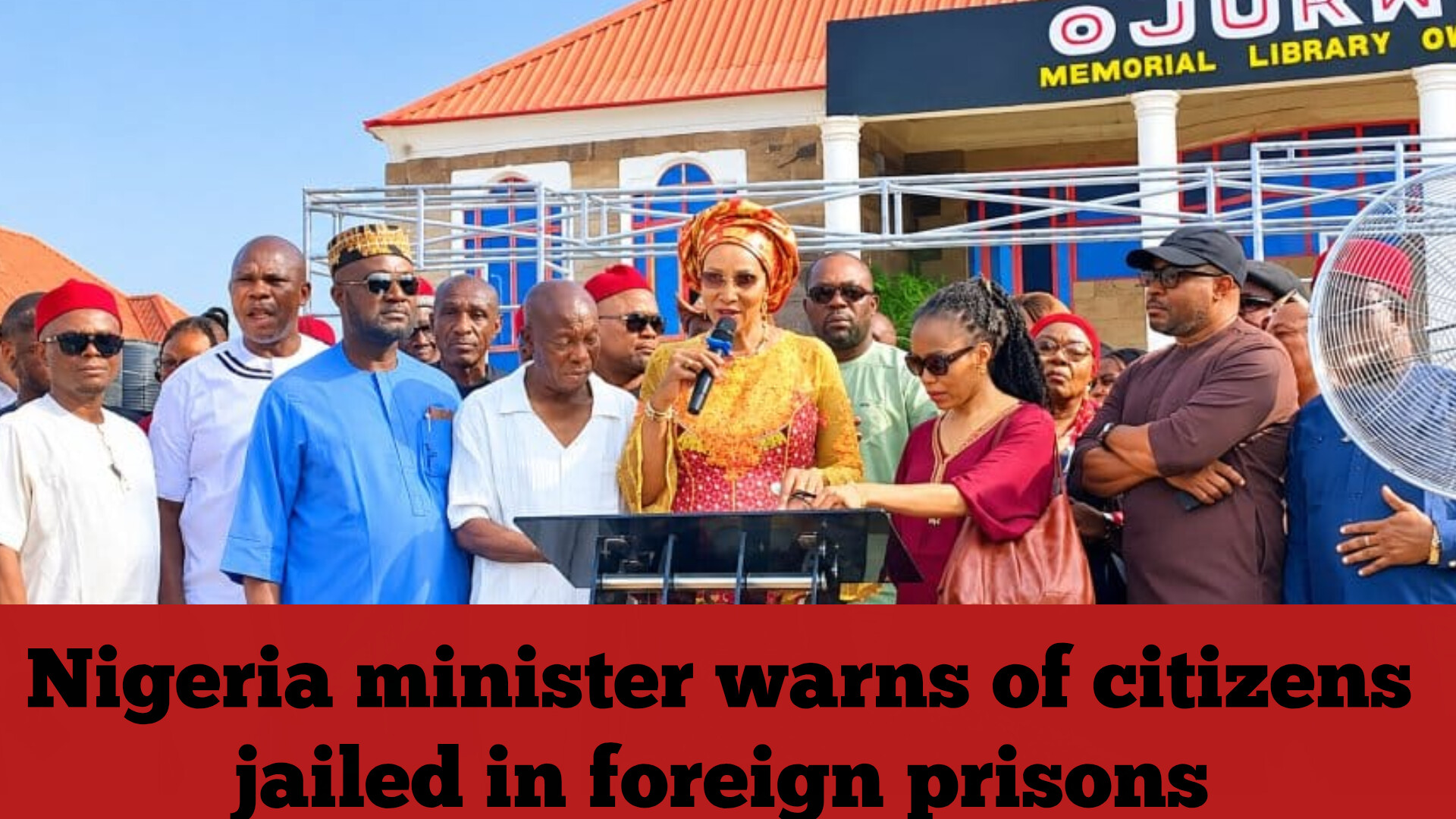
Nigeria’s Minister of Foreign Affairs, Bianca Odumegwu-Ojukwu, has warned that many Nigerians are languishing in overseas prisons, claiming some are deliberately framed to seize their foreign assets.
Speaking at a memorial lecture for her late husband, Chukwuemeka Odumegwu-Ojukwu, in the south-eastern city of Owerri, she urged Nigerians in the diaspora to redirect their wealth into investments at home.
She revealed that she and the attorney-general had recently approached President Bola Tinubu to push for prisoner transfer agreements so Nigerian inmates abroad can serve their sentences at home.
“Our people are suffering abroad due to the quest to make both ends meet,” Mrs Odumegwu-Ojukwu told attendees at the event in Imo State.
“In some cases, foreigners would encourage them to develop properties and, in the end, frame them up in order to take over these properties.”
Drawing comparisons between the struggles of the Igbo people—one of Nigeria’s largest ethnic groups—and the historical displacement of the Jewish people, the minister urged the diaspora to prioritise developing their ancestral communities.
Calls for regional unity
Beyond the plight of overseas inmates, Mrs Odumegwu-Ojukwu challenged political, traditional, and business leaders in south-eastern Nigeria to overcome divisions and foster economic growth.
“We cannot continue to celebrate Igbo greatness, which my late husband represents, without working to achieve Igbo unity,” she said.
“Let our governors work together and speak with one voice, let our community leaders work for unity, let our businessmen invest at home and let our youths be innovative.”
The annual event, marking 15 years since the death of the former Biafran leader, was organised by the Biafra Independence Movement (BIM-MASSOB) and drew attendees from across southern Nigeria.
Speaking at the same gathering, BIM-MASSOB leader Ralph Uwazuruike praised the minister’s advocacy and renewed calls for the federal government to intervene in the ongoing detention of separatist leader Nnamdi Kanu.
Mr Kanu, leader of the outlawed Indigenous People of Biafra (Ipob), faces terrorism-related charges—a case that remains a major source of political tension in the region.