
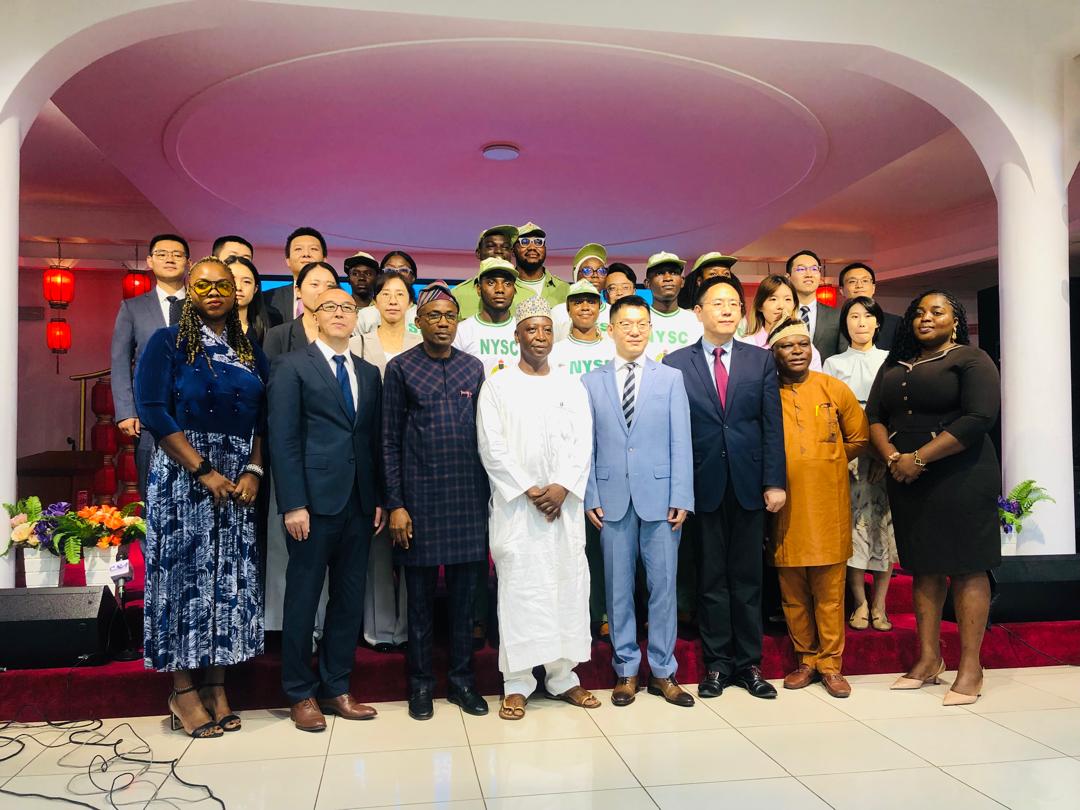
Nigeria and China have renewed their commitment to strengthening youth-focused cooperation, with both countries calling for deeper collaboration in innovation, trade, education, and cultural exchange as part of efforts to advance bilateral relations.
Speaking at the China-Nigeria Youth Exchange Seminar in Abuja, the Chargé d’Affaires of the Chinese Embassy in Nigeria, Mr. Zhou Hongyou, described young people as the driving force behind the future of China-Africa relations and key contributors to innovation, diplomacy, and sustainable development.
Mr. Zhou said China-Africa relations, spanning seven decades, and 55 years of diplomatic ties between China and Nigeria, had remained resilient despite global challenges. He highlighted China’s recent zero-tariff policy for goods from 53 African countries, which took effect on May 1, as a major step towards supporting Africa’s economic development and modernization.
“The world today is deeply interconnected, and countries are like passengers on a shared vessel of destiny,” he said, urging Nigerian and Chinese youths to promote dialogue, strengthen mutual understanding, and actively participate in development initiatives across trade, education, science, culture, and sports.
The Chinese diplomat also reaffirmed the embassy’s commitment to working with Nigeria’s Federal Ministry of Youth Development to expand opportunities for exchange programmes, innovation partnerships, and people-to-people engagement.
Also speaking, Director of the China Cultural Center in Nigeria, Mr. Yang Jianxing, said cooperation between both countries was already producing tangible benefits through infrastructure development, employment opportunities, and cultural initiatives. He revealed that Chinese firms operating in Nigeria, including CCECC and CGC, are providing internship and employment opportunities for outstanding Nigerian graduates and National Youth Service Corps members.
Mr. Yang announced plans for a China-Nigeria Fashion Show, Food Festival, and Film Festival in 2026, aimed at strengthening cultural ties and promoting creative industry collaboration between the two countries.
Representing Nigeria’s Federal Ministry of Youth Development, Director of Education and Youth Development, Mr. Despan Kwardem, said youth cooperation remained a strategic priority given the large youth populations in both countries. He noted that Nigeria continues to benefit from technology transfer, skills development programmes, and professional training opportunities facilitated through partnerships with Chinese institutions and companies.
Participants at the seminar, including NYSC members, described the engagement as enlightening and called for stronger collaboration in emerging sectors such as artificial intelligence, cybersecurity, and digital innovation. They urged policymakers to create more opportunities that would enable Nigerian youths to move beyond technology consumption and become active contributors to research, development, and production.