
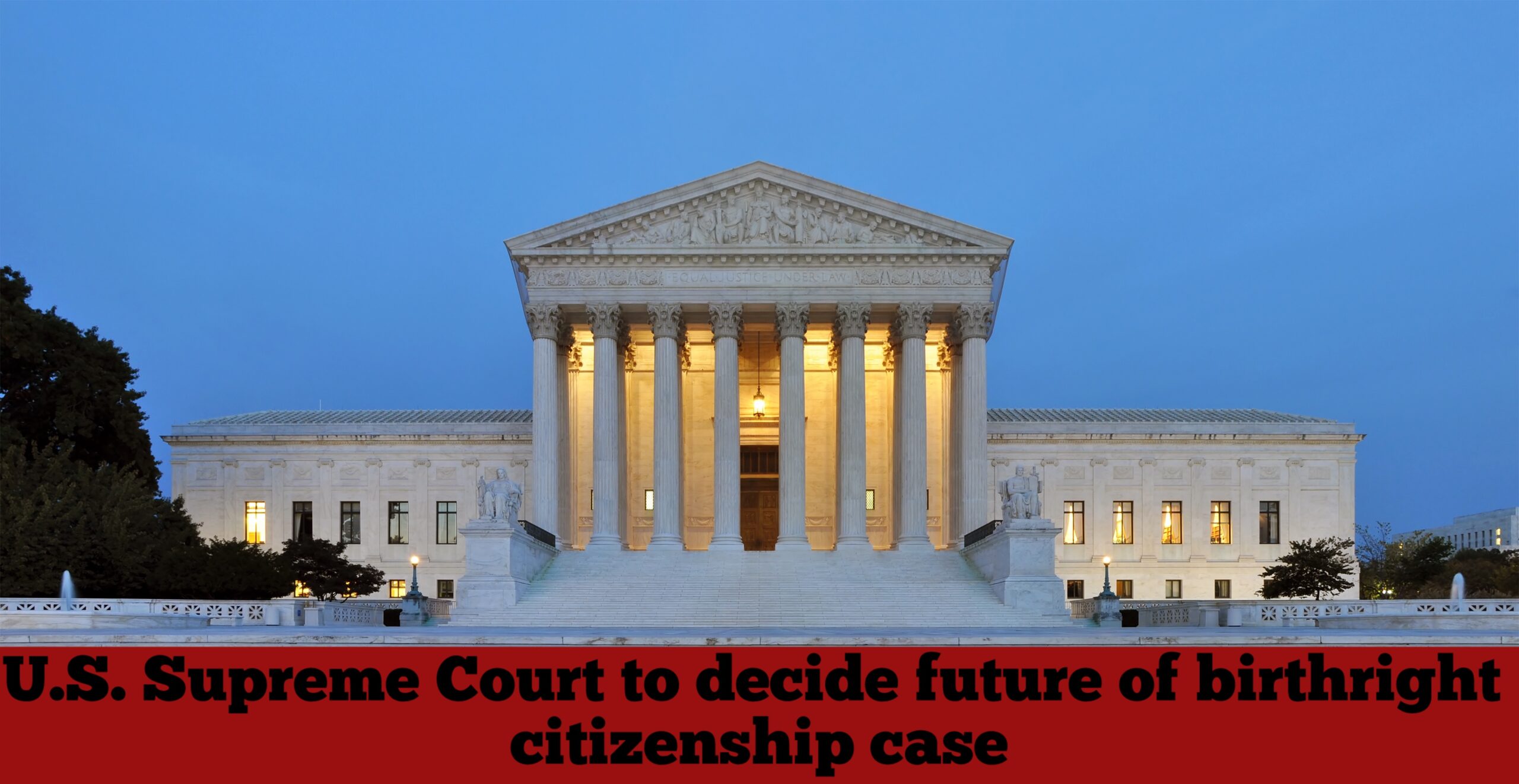
The U.S. Supreme Court has agreed to hear a landmark case that could determine the future of birthright citizenship in the United States.
The case centers on a controversial executive order signed by President Donald Trump on his first day in office in January, which sought to end automatic citizenship for children born in the U.S. to parents who are in the country illegally or on temporary visas. Lower courts blocked the order, citing constitutional concerns.
The Supreme Court’s ruling, expected after oral arguments were scheduled, will decide whether the century-old constitutional right guaranteed under the 14th Amendment will continue or be revoked.
Plaintiffs in the case include immigrant parents and their children, who argue that Trump’s order violates the Amendment, which has, for nearly 160 years, guaranteed that anyone born in the United States is a U.S. citizen, except for children of diplomats or foreign military personnel.
The 14th Amendment states:
“All persons born or naturalized in the United States, and subject to the jurisdiction thereof, are citizens of the United States.”
The Trump administration argued that the Amendment was never meant to cover children of undocumented or temporary-status immigrants.
Several federal courts deemed the order unconstitutional and issued injunctions to block it. After appealing to the Supreme Court, the justices ruled that lower courts had overstepped their authority with nationwide injunctions, but they did not address the central constitutional question regarding birthright citizenship itself.
The Supreme Court’s decision could have far-reaching implications for U.S. immigration policy and the rights of children born to non-citizen parents.

