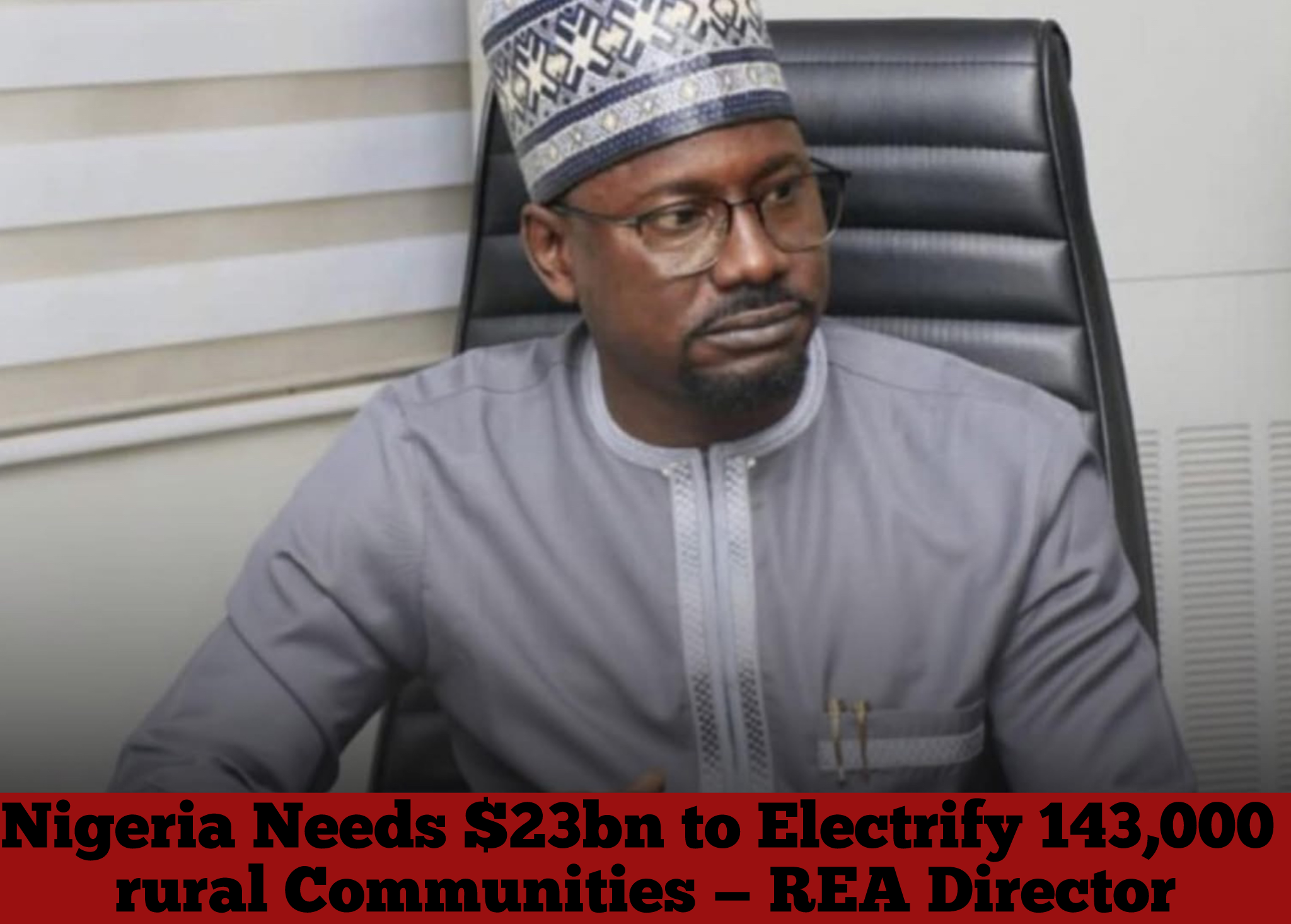
The Managing Director of the Rural Electrification Agency (REA), Abba Aliyu says Nigeria will require an estimated $23 billion investment to bridge electricity access gaps affecting about 143,000 underserved and unserved communities.
Aliyu made this disclosure in Abuja during the switch-on ceremony of Phase 1 of the Greening of the UN House solar project. He explained that a nationwide mapping exercise carried out by the agency revealed thousands of communities across Nigeria with little or no access to electricity.
The survey, he said, covered settlements of varying sizes—from densely populated areas with millions of residents to remote villages with only a handful of households. According to Aliyu, the $23 billion estimate represents the least-cost pathway for expanding electricity access to off-grid communities while strengthening supply in underserved areas as Nigeria works toward universal energy access and a cleaner energy mix.
Also speaking at the event, the United Nations Resident and Humanitarian Coordinator in Nigeria, Mohammed Fall, described the solarisation of the UN House as both symbolic and strategic for sustainable energy adoption.
The project includes a 400-kilowatt peak solar photovoltaic microgrid, which can be expanded to 700 kilowatts, along with 650 kilowatt-hours of lithium-ion battery storage.
Once fully operational, the system is expected to reduce electricity costs at the complex by about 40 percent annually.
Before the installation, the UN House reportedly spent between N432 million and N540 million per year on electricity.
The new solar system is projected to generate annual savings of between N173 million and N216 million, cut grid electricity consumption by nearly one million kilowatt-hours, and reduce about 300 tonnes of carbon emissions each year.