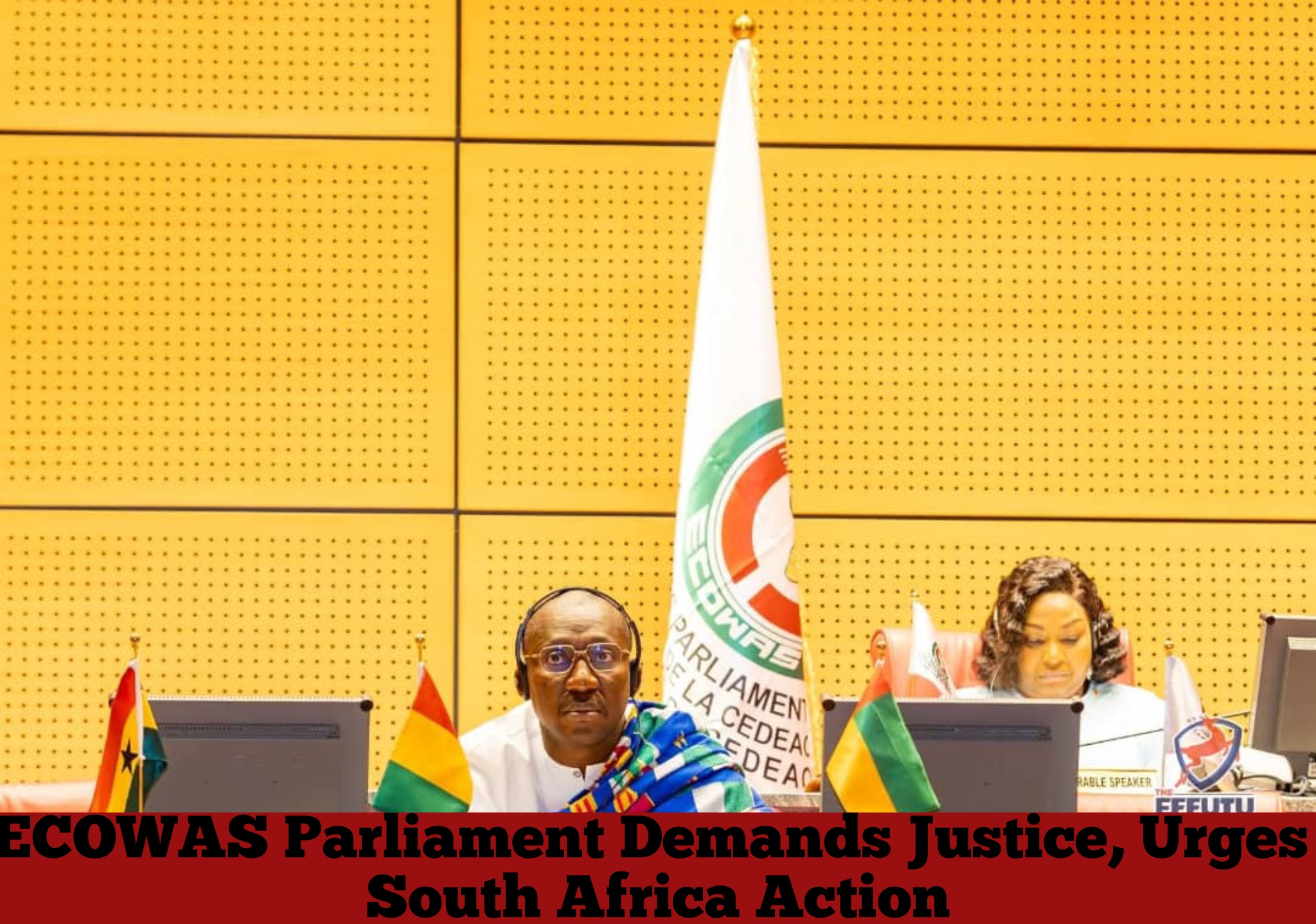
The ECOWAS Parliament has directed its Committee on Political Affairs to intervene in the rising wave of xenophobic attacks in South Africa, amid growing concern over the safety of non-citizens.
The decision was announced during the First Ordinary Session of the regional parliament, where lawmakers also tasked the committee with examining the spread of violent extremism in the Sahel, particularly in Mali and Burkina Faso.
Parliamentarians warned that insecurity in the two countries, despite their withdrawal from the bloc, poses a significant threat to neighbouring ECOWAS member states.
“Failure to collaborate with Mali and Burkina Faso to tackle insecurity will definitely affect the regional bloc, especially countries that share boundaries with them,” the lawmakers said.
On xenophobic violence, the Parliament urged member states to summon South African envoys in protest over reported killings and harassment of foreign nationals.
“We stood by them in the fight against apartheid. It is disappointing that the same country we all supported have turned around to harass citizens of the same countries that helped them,” the parliamentarians stated.
Presenting a motion titled Accountability, Justice, Free Movement and Regional Solidarity, Third Deputy Speaker Alexander Afenyo-Markins described the attacks as a violation of African unity and regional agreements.
“A regional community that cannot protect its citizens in transit has not yet earned its name,” he said.
Mr Afenyo-Markins cited reported cases involving Nigerians, Ghanaians and other African nationals who have been attacked, displaced or killed, warning that official condemnations alone were insufficient.
“Condemnations, however eloquent, do not bring a single attacker to justice,” he added.
He also criticised what he described as inconsistent messaging from South African authorities, arguing that statements perceived as conditional acceptance of foreigners could embolden perpetrators.
“A government cannot simultaneously condemn mob justice and deploy the language that mobs use to justify their actions,” he said.
The Parliament called on South African authorities to move beyond rhetoric and ensure that those responsible for the violence are identified and prosecuted.
“The perpetrators, many of whose faces are known, must be identified, arrested, charged and prosecuted… without impunity,” the lawmakers stressed.
They further advocated the ratification of the African Union Protocol on Free Movement of People and proposed the establishment of a special committee to protect ECOWAS citizens abroad.