

The Tinubu Light Initiative, launched under the Federal Ministry of Innovation, Science and Technology, aims to support homegrown innovation, strengthen local manufacturing and connect young innovators with investors and industry partners.
Nigeria has intensified its push for indigenous innovation and clean energy development, with the National Board for Technology Incubation (NBTI) launching the Tinubu Light Initiative and a renewable energy investor announcing plans to provide up to $500 million for solar power projects across Nigerian universities.
The announcements were made at the NextGen Innovation Challenge 2026 National Showcase in Abuja, where government officials, innovators and private sector investors gathered to promote local technology as a driver of economic growth and national development.

The Tinubu Light Initiative, launched under the Federal Ministry of Innovation, Science and Technology, aims to support homegrown innovation, strengthen local manufacturing and connect young innovators with investors and industry partners.
The Permanent Secretary of the Federal Ministry of Innovation, Science and Technology, Muktar Muhammad, who represented the Minister, Dr. Kingsley Udeh, said the government remained committed to policies that promote innovation, technological advancement and entrepreneurship.
He said strategic collaboration among government institutions would accelerate national development and strengthen Nigeria’s innovation ecosystem.
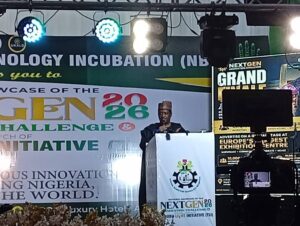
The NBTI Director-General Kazeem Kolawole Raji said the initiative was designed to position Nigeria among the world’s leading centres for creativity and entrepreneurship.
“Nigeria is intensifying efforts to become one of the world’s leading nations in creativity and entrepreneurship,” he said.
Raji added that the Tinubu Light Initiative and the NextGen Innovation Challenge would help nurture innovative ideas, boost local production and improve Nigeria’s competitiveness in the global innovation economy.
The Director-General of the National Space Research and Development Agency, Olusola Odusanya, described the initiative as a strategic platform that should be leveraged to stimulate economic development through science, technology and innovation.
A major highlight of the event was the announcement by a Renewable Energy Investor, Gigawatt Global, whose Chief Executive Officer, Yoseph Abramowitz, said the company was ready to provide up to $500 million in project financing for solar power plants across Nigerian universities.
“We’re honoured to be able to present up to $500 million in project finance,” Mr Abramowitz said.
He said the financing would cover up to 90% of the funding required for university-based solar projects, subject to internationally bankable power purchase agreements and agreed project milestones.
Abramowitz said many Nigerian universities currently relied on expensive diesel generators and had electricity for only a few hours each day.
“How do you run a university in three, four or five hours? How do you not have internet because you don’t have electricity?” he said.
According to him, each solar facility would generate between 10 and 20 megawatts, exceeding the immediate electricity needs of the universities.
The surplus electricity, he said, would be supplied to nearby rural communities through prepaid metering systems.
“We want to bring down your costs, increase the amount of energy, make it green and sustainable, and empower the communities around each of these universities,” he said.
Abramowitz said the company planned to maximise local participation by sourcing solar panels, cables, mounting systems and maintenance services within Nigeria.
“The idea is to keep as many of the jobs locally, both for operations and maintenance and for the hardware to be made in Nigeria,” he added.
He said reducing universities’ energy costs would allow institutions to redirect more resources towards education, research and innovation while expanding access to clean electricity in surrounding communities.
The launch of the Tinubu Light Initiative and the NextGen 2026 Innovation Challenge is expected to create new opportunities for Nigerian innovators, strengthen indigenous technology development and support the country’s transition towards a knowledge-driven and globally competitive economy.