
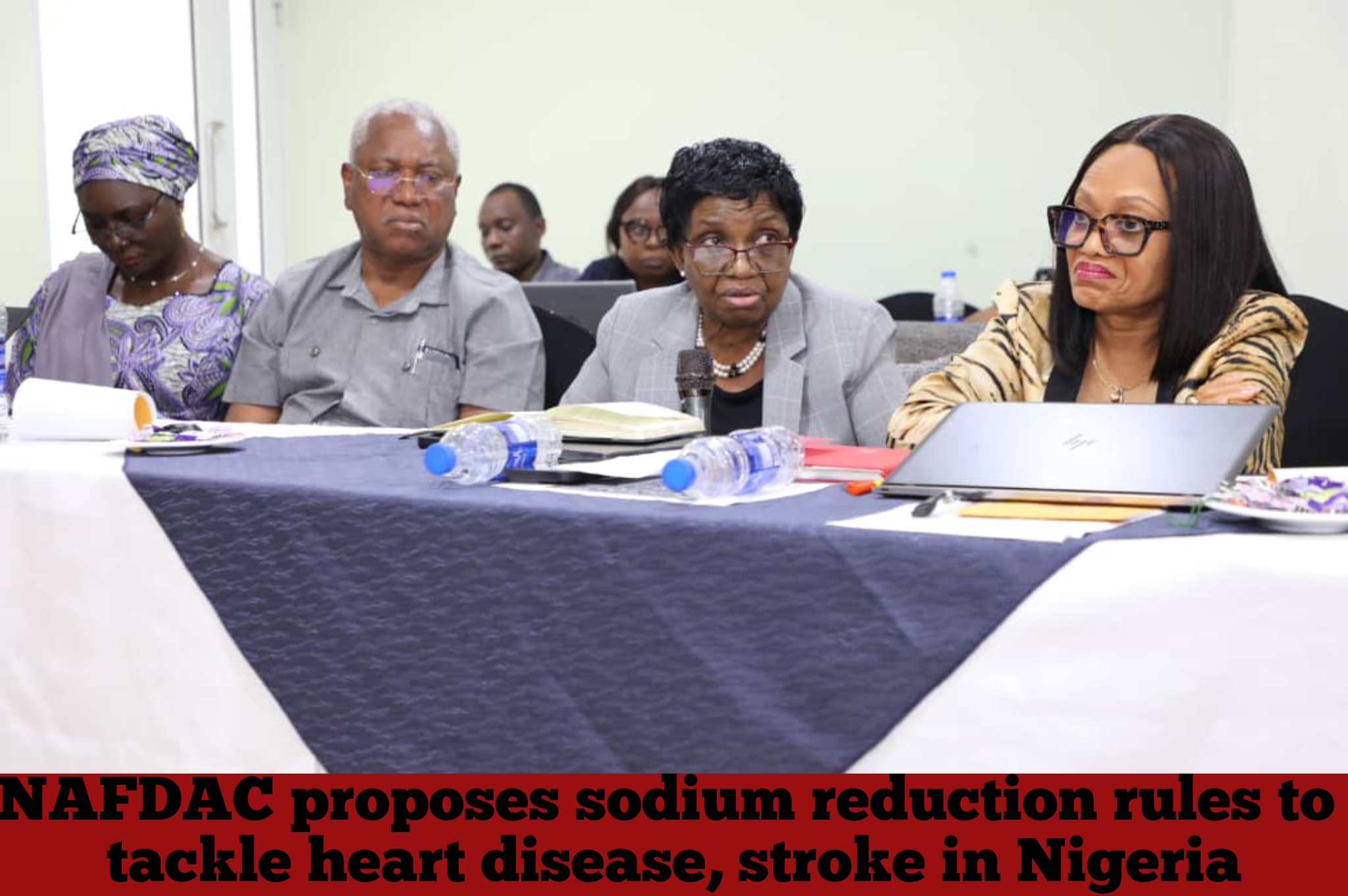
As part of efforts to tackle the rising burden of non-communicable diseases in Nigeria, the National Agency for Food and Drug Administration and Control (NAFDAC) has intensified plans to reduce sodium content in pre-packaged foods.
Speaking at a stakeholders’ meeting on the draft Reduction of Sodium in Pre-Packaged Foods Regulations 2026, the Director-General of NAFDAC, Mojisola Adeyeye, warned Nigerians against excessive sodium intake, linking it to conditions such as hypertension, cardiovascular diseases, and stroke.
Adeyeye noted that high sodium consumption remains a major dietary risk factor globally and in Nigeria, adding that the World Health Organization has consistently identified sodium reduction as one of the most cost-effective ways to prevent premature deaths and improve public health.
She explained that changing dietary habits, rapid urbanisation, and increased consumption of processed foods have significantly raised sodium intake levels across the country. In response, the Federal Government, through the Federal Ministry of Health and Social Welfare and NAFDAC, is introducing new regulations to curb the trend.

According to her, the proposed regulations aim to set maximum sodium limits for selected categories of pre-packaged foods, ensure clear labelling of sodium content, and encourage manufacturers to reformulate products to healthier standards.
However, Adeyeye stressed that regulation alone would not achieve the desired impact without collaboration. She called on food manufacturers, regulators, researchers, and consumer advocacy groups to work together to ensure effective implementation and compliance.
Adeyeye concluded that inputs from the engagement would be used to refine the draft regulations before submission to the NAFDAC Governing Council, after which it will undergo further review by the health ministry and the Ministry of Justice before being gazetted.
Also speaking, the Director of Food Safety and Applied Nutrition at NAFDAC, Eva Edwards, described non-communicable diseases as a major public health concern in Nigeria, with cardiovascular diseases accounting for a significant share of deaths.
She revealed that while the World Health Organization recommends less than 2 grams of sodium per day (about one teaspoon of salt), the average Nigerian consumes approximately 10 grams daily — nearly double the recommended limit.
Edwards attributed the high intake largely to the growing consumption of processed and ultra-processed foods, particularly in urban areas, noting that this trend has increased the risk of hypertension, stroke, heart disease, and kidney-related conditions.
To address the challenge, she said the draft regulations propose a phased reduction strategy, starting with a 15 percent cut in sodium levels and progressing toward a 30 percent reduction target by 2030, in line with global health goals.
She added that the initiative aligns with the National Multi-sectoral Action Plan for the Prevention and Control of Non-Communicable Diseases (2019–2025), which identifies unhealthy diets as a key risk factor.
Stakeholders at the meeting, including representatives from academia, public health organisations, and advocacy groups such as the Network for Health Equity and Development and Corporate Accountability and Public Participation Africa, expressed support for the initiative and emphasised the need for collective action.

