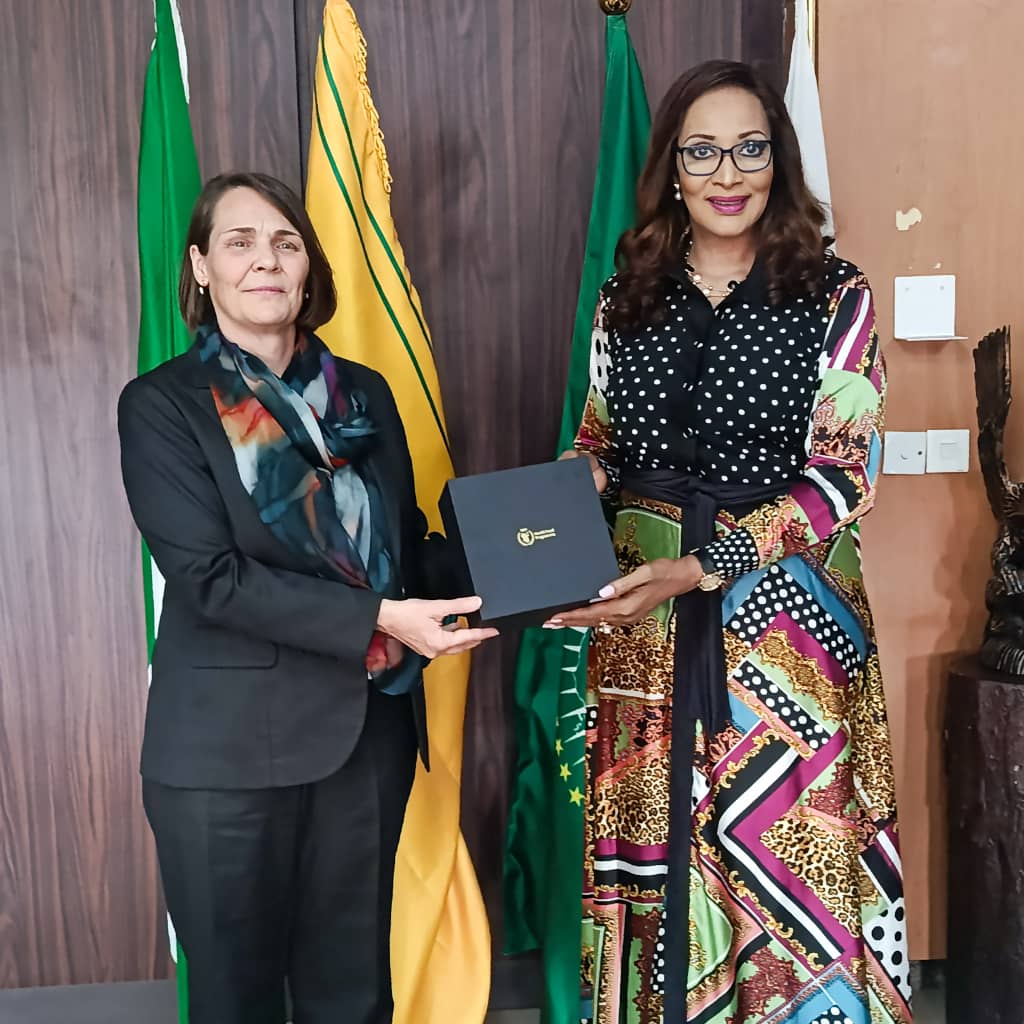
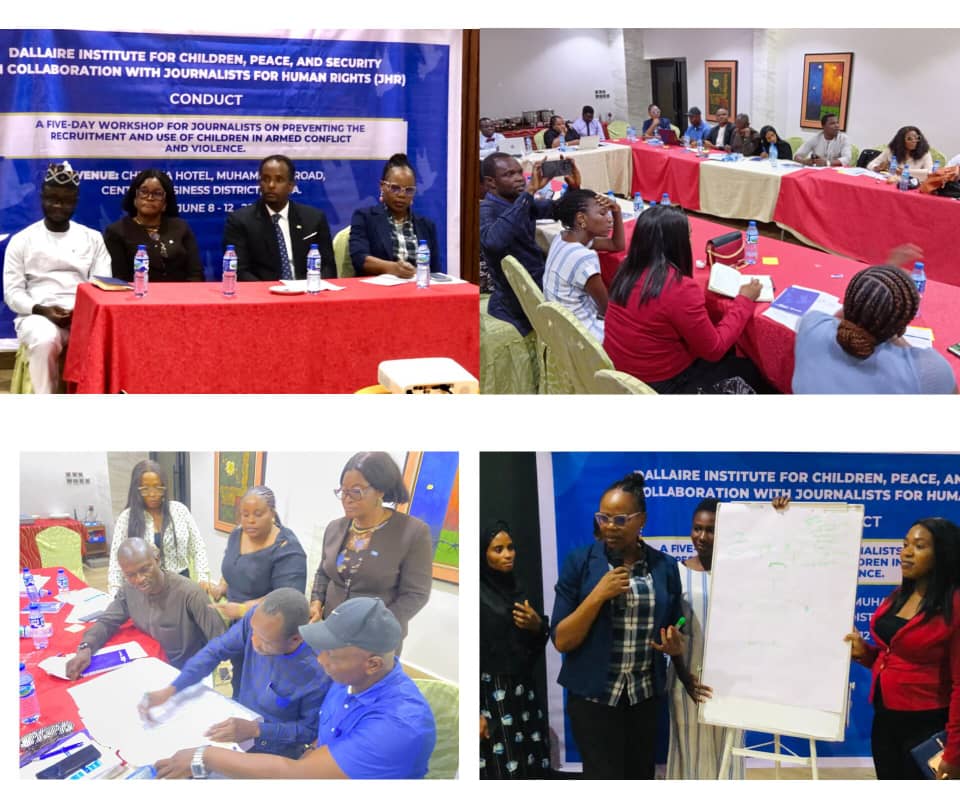
Journalists have been challenged to use ethical, child-centred reporting to help prevent the recruitment and use of children in armed conflict and violence, as a five-day capacity-building workshop opened in Abuja.
Speaking at the opening of the training, Country Representative of the Dallaire Institute for Children, Peace and Security, Mrs Offiong Nsa, said the media remains a critical partner in efforts to protect children from exploitation by armed groups and other violent actors.
The workshop, organised by the Dallaire Institute in partnership with Journalists for Human Rights (JHR) Africa, focuses on preventing the recruitment and use of children in armed conflict and violence.
Mrs Nsa described the use of children in armed conflict and violence as one of the most serious violations of human rights, stressing that journalists have a responsibility to expose abuses and promote accountability.
“You, as journalists, are not merely chroniclers of conflict. You are powerful human rights advocates,” she said.
“Through your ethical, child-centred reporting, you possess the ability to expose the hidden recruitment networks and the realities of children in armed violence.”
She urged journalists to shift public narratives away from portraying affected children as perpetrators and instead recognise them as victims and potential agents of peace.
“Your stories will shape public opinion, influence policy, and ultimately help us to put an end to this cycle of violence,” Mrs Nsa added.
Representing the High Commissioner of Canada to Nigeria, Counsellor (Political) at the Canadian High Commission, Mr Omar Alihashi, reaffirmed Canada’s commitment to protecting children affected by conflict and supporting global efforts to end child recruitment.
He noted that children recruited into armed groups often face lifelong consequences affecting their education, wellbeing and future opportunities.
“Children affected by conflict face profound challenges,” Mr Alihashi said.
“Beyond the immediate dangers of violence, recruitment into armed groups can have lasting consequences for their education, well-being, opportunities, and of course, their future.”
He said journalists play a vital role in promoting public understanding of child protection issues through accurate and responsible reporting.
“Through accurate, ethical and responsible reporting, the media can help raise awareness, amplify evidence-based information, and contribute to informed public dialogue,” he added.
Mr Alihashi said Canada would continue to support international initiatives guided by the Vancouver Principles, which seek to prevent the recruitment and use of child soldiers.
Also speaking, Chairman of the Nigeria Union of Journalists (NUJ), FCT Council, Comrade Grace Ike, represented by the Council’s Treasurer, Comrade Sandra Chukwugekwu, called on journalists to adopt child-sensitive reporting practices and avoid sensational coverage of children affected by conflict.
She said children remain among the most vulnerable members of society and require stronger protection from violence, exploitation and recruitment by armed groups.
“The media has a central role to play in addressing this crisis,” she said.
“As journalists, we shape public awareness, influence policy debates, and hold institutions accountable.”
Comrade Chukwugekwu urged media professionals to report responsibly by protecting the identities of child victims, highlighting root causes of recruitment, and amplifying prevention and rehabilitation efforts.
“We can help prevent recruitment by telling accurate, sensitive stories that highlight root causes such as poverty, lack of education, family breakdown and social marginalisation,” she said.
She further called for coordinated action involving governments, security agencies, educational institutions, civil society groups and communities to address the challenge.
“The NUJ will continue to support training for journalists on ethical reporting about children and conflicts because ethical reporting saves lives,” she added.
Earlier, Africa Programme Director of Journalists for Human Rights, Mr Mustapha Dumbuya, said the training was designed to equip journalists with practical skills for reporting on children affected by conflict in a professional, ethical and sensitive manner.
Mr Dumbuya explained that participants would receive training on trauma-informed journalism, digital safety, gender-sensitive reporting, journalist security, and story development techniques.
“We are hoping that by the end of the five days, you will be equipped with the skills and knowledge on how to report on children who are impacted by conflicts in a sensitive and compelling manner,” he said.
He added that participants would also be encouraged to develop story pitches on child protection issues, with selected projects receiving support to facilitate in-depth reporting.
The workshop attracted journalists from various media organisations and forms part of broader efforts to strengthen media capacity in reporting on child protection and human rights issues in conflict-affected communities.