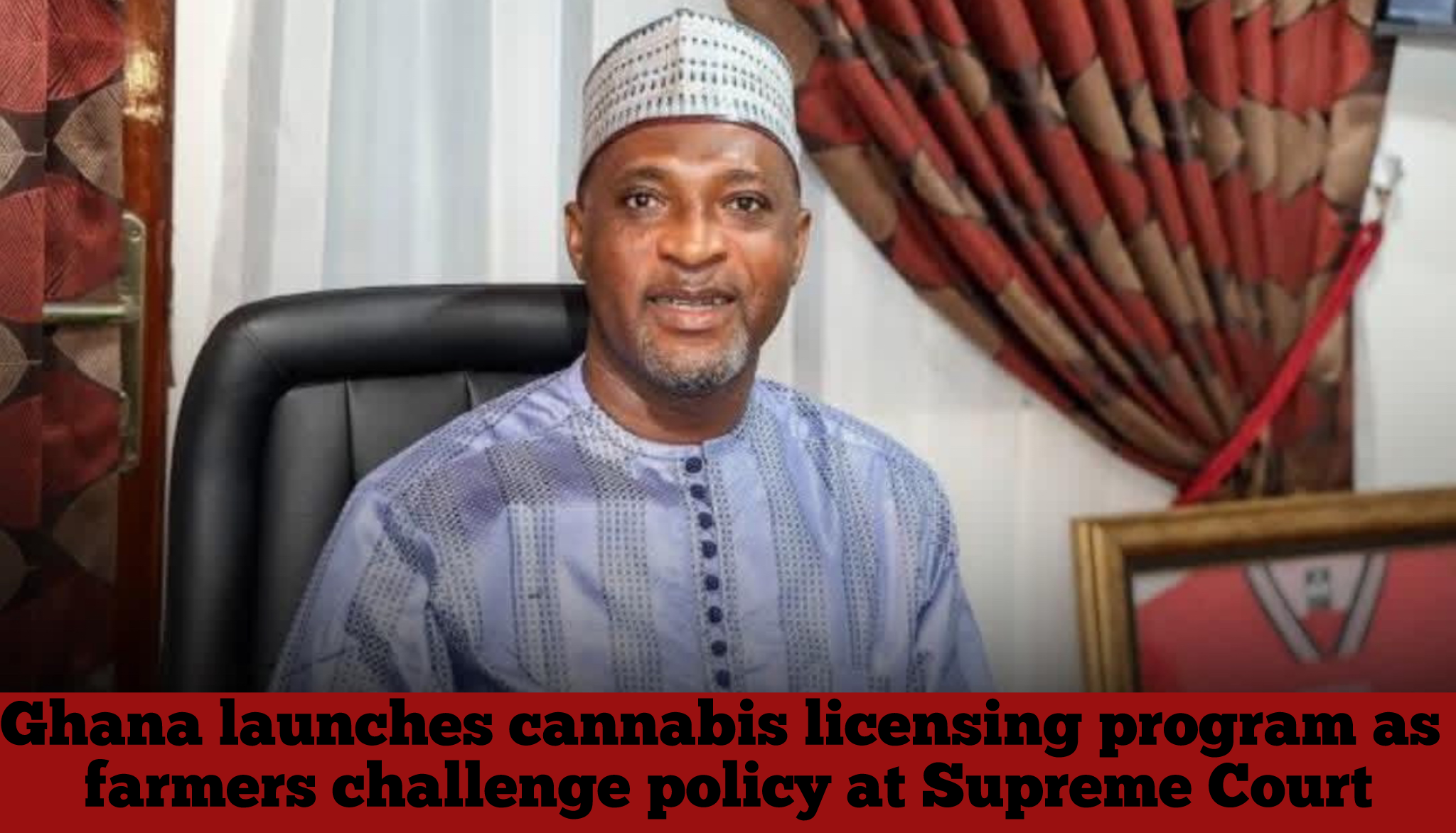
The Ghanaian government has introduced a new licensing framework for the cultivation and management of industrial and medicinal cannabis.
The initiative, announced on February 26 by Interior Minister Muntaka Mohammed-Mubarak, allows individuals and companies to apply for permits covering several activities in the cannabis value chain.
These include cultivation, processing, research, laboratory testing, storage, transportation, and import and export.
Under the new policy, only cannabis varieties containing no more than 0.3% THC will be permitted for licensed production. Authorities say the program is designed to promote the development of industrial fibres, seeds, and pharmaceutical products while maintaining strict regulatory oversight.
However, the policy is already facing legal challenges. A farmer from Techiman, Mariam Alhassan, has filed a lawsuit at the Supreme Court of Ghana questioning the constitutionality of the licensing regime.
In her suit, Alhassan argues that the framework’s “irrational design, exclusionary economic effect, and disproportionate exercise of administrative discretion” could prevent smallholder farmers from benefiting from the industry.
She also claims the authorities acted unfairly by imposing high licensing fees without creating a tiered structure that would allow smaller operators to participate. Reports indicate that proposed permit fees range from $5,000 to $42,000 depending on the type and scale of operation.
The legal challenge could create uncertainty for Ghana’s emerging hemp industry, which policymakers view as a potential source of agricultural exports, investment, and economic growth.