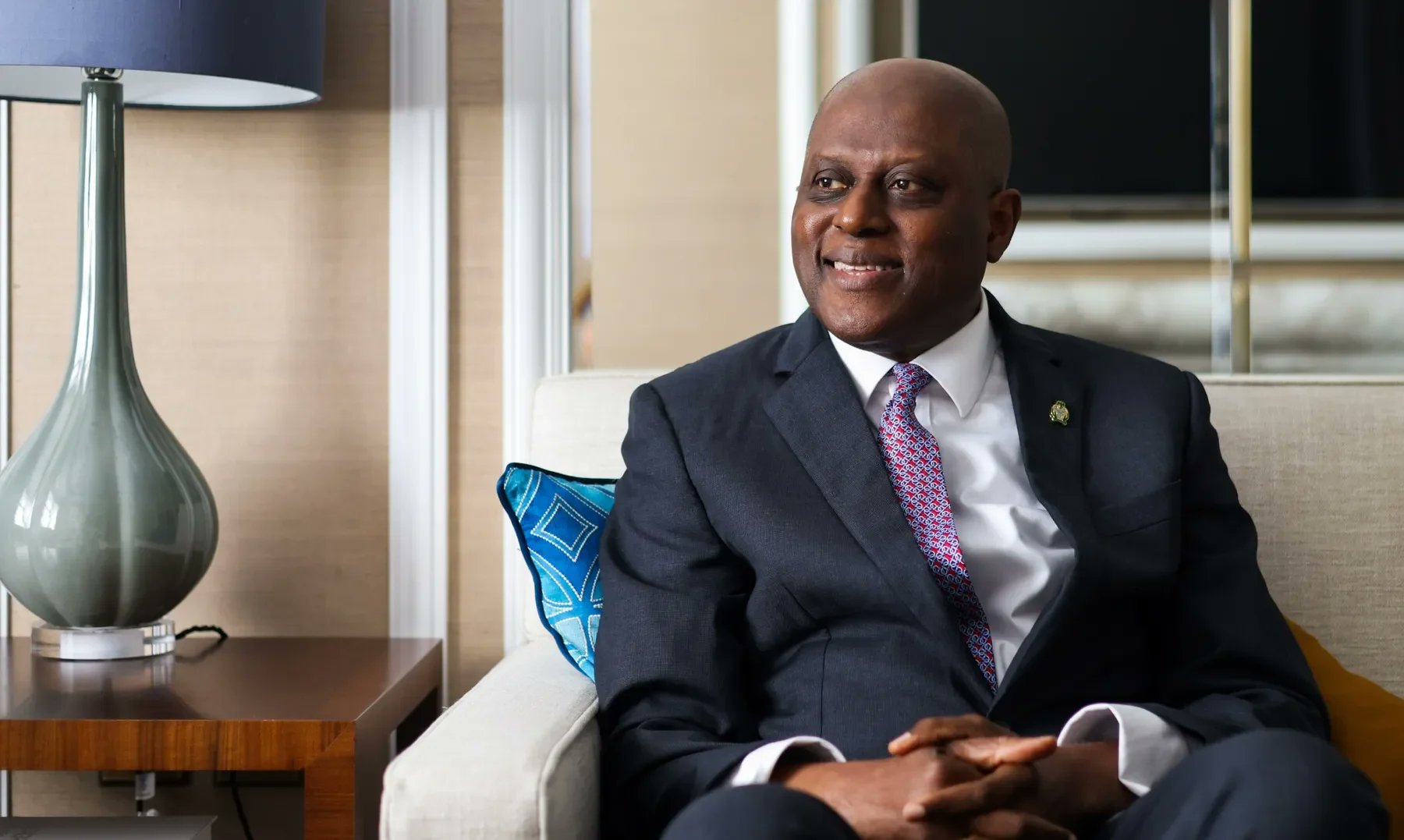
Governor of the Central Bank of Nigeria (CBN), Olayemi Cardoso, has described Nigeria’s youth as the country’s most valuable asset, urging them to step up and take leadership roles in driving economic stability, innovation, and inclusive growth.
Cardoso made the remarks on Friday during the inaugural CBN Governor Annual Lecture Series, held at the Lagos Business School under the theme: “Next Generation Leadership in Monetary Policy and Nation Building.”
The Lecture Series forms part of Cardoso’s broader Knowledge Acceleration and Thought Leadership Initiative, aimed at deepening public understanding of monetary policy while fostering innovation and dialogue within Nigeria’s financial system.
“Nigeria’s most important asset is its next generation,” Cardoso said. “You, the emergent cohort of scholars, professionals, and civic actors, are not simply participants in this dialogue; you constitute its very subject.”
He stressed that leadership anchored in credibility, transparency, and innovation would be the driving force of Nigeria’s economic future.
Youth, Demographics, and Responsibility
With a median age of just 18 and more than half of the population under 30, Nigeria ranks among the youngest countries in the world. Cardoso argued this demographic structure is both a massive opportunity and a significant responsibility.
“Such demographic indices situate Nigeria not only amongst the youngest polities globally but also amongst those most richly endowed with prospective human capital,” he noted.
Economic Reforms Showing Results
Cardoso also highlighted key reforms undertaken by the CBN, including policy tightening, which has helped bring inflation down from nearly 35% to 20%, GDP growth of 4.2% in Q2 2025, external reserves rising above $42 billion and growing investor confidence and improved sovereign credit ratings.
He credited the restoration of credibility in monetary policy, the unification of exchange rate windows, and the end to CBN’s direct government financing as instrumental to these improvements.
Nation-Building, Reputation, and Leadership
Referencing the recent reopening of the Wole Soyinka Centre for Culture and Creative Arts, Cardoso called it a symbol of national pride and cultural restoration.
“That project was about restoring pride in what it means to be Nigerian. Reputation is one of the most valuable assets a person, institution, or nation can possess,” he said.
While acknowledging the continued hardship many Nigerians face, he warned against excessive self-criticism, urging citizens to balance accountability with confidence in their national identity.
“If all we do is criticise ourselves, we risk eroding credibility at home and abroad. But when reputation is rebuilt, confidence returns, capital flows, and stability takes root,” he added.
A Call to Action for the Next Generation
The CBN governor concluded by calling on young Nigerians to embrace digital innovation, make evidence-based decisions, engage actively in public discourse and prepare for leadership in policymaking, entrepreneurship, and governance.
“Today’s students will be tomorrow’s policymakers, central bankers, and entrepreneurs. You must not only inherit leadership — you must transform it,” Cardoso said.