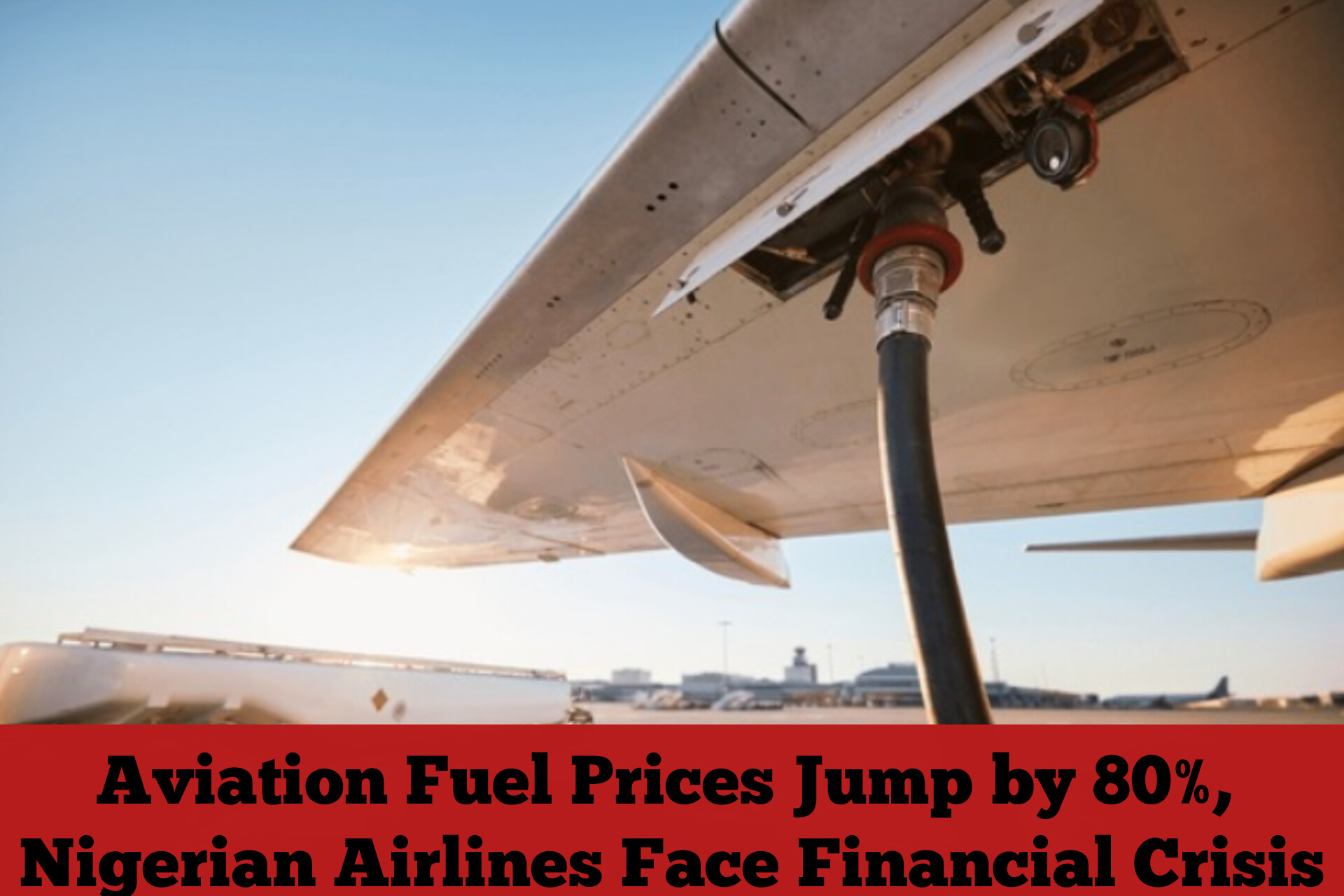
Domestic airlines in Nigeria are struggling with a severe financial crunch as aviation fuel prices skyrocket by nearly 80%, threatening to disrupt the country’s air travel sector. The recent surge in the price of Jet-A1, a key operational cost for airlines, has pushed the industry to the edge, according to the Airline Operators of Nigeria (AON).
The price of Jet-A1, which was around N1,000 per litre just two weeks ago, has now surged to N1,800 per litre in several regions. This sharp increase is mainly attributed to the ongoing Middle East conflict, which has contributed to a rise in global energy prices.
Speaking with reporters, Prof. Obiora Okonkwo, spokesperson for the AON, expressed his concern over the mounting pressure on airlines. “The price increase is an unprecedented spike—about 80%. We were paying N1,000 per litre two weeks ago, and now it’s N1,800. This is a huge burden,” Okonkwo said.
He noted that aviation fuel accounts for nearly 30-35% of airlines’ total operating costs, making it the largest single expense for carriers.
Despite the soaring fuel prices, airlines have refrained from raising ticket prices, hoping to shield passengers from the added financial strain. Okonkwo explained that, while airlines are absorbing the losses, this approach is not sustainable.
“We are taking the hit. We’re selling tickets at prices that are not profitable, and we’re losing money. Right now, we’re just bleeding,” Okonkwo lamented. “The situation is dire, and we are not sure how much longer we can keep absorbing these losses.”
Okonkwo warned that, unless fuel prices stabilize or the government steps in, airlines will eventually have to adjust their fares, which would further affect passengers. “Obviously, adjustments will be expected, but we’re sensitive to the current economic situation of Nigerians and travelers,” he said.
Okonkwo also called on the federal government to explore possible solutions to the aviation fuel crisis, including collaboration with the newly operational Dangote Refinery. “We are hopeful that with the refinery now in place, we can find a way to stabilize aviation fuel supply locally,” he said.
In addition to concerns over rising fuel prices, Okonkwo responded to recent sanctions imposed by the Federal Competition and Consumer Protection Commission (FCCPC) on five airlines over alleged price fixing. He rejected the notion of coordinated price fixing, stating that the aviation industry in Nigeria is deregulated.
“There’s no meeting where airlines agree to fix prices. That would be a cartel, which is not the case here. Each airline sets its fares based on its own operational costs,” Okonkwo clarified.
He further stressed the importance of airlines proving financial viability to regulators, who require carriers to demonstrate their ability to sustain operations.
“We must constantly prove to regulators that we are financially viable and able to keep flying,” Okonkwo added.
As the cost of aviation fuel continues to rise, the future of Nigeria’s airline industry looks uncertain. If the current trend persists, many carriers may be forced to reconsider their operations. The government’s ability to address fuel price hikes and stabilize the sector will be crucial in preventing further disruption to domestic air travel.