

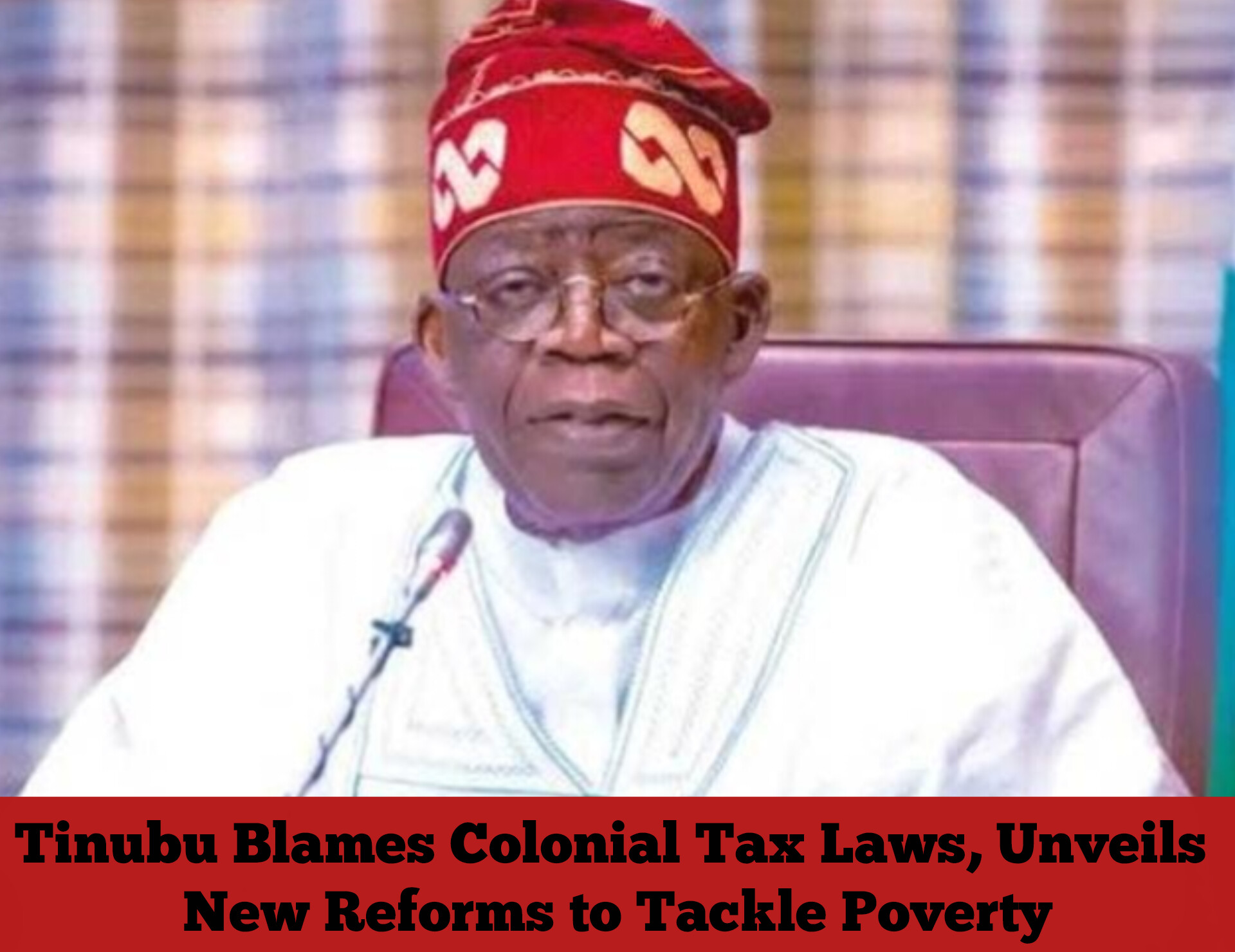
President Bola Tinubu has attributed Nigeria’s economic hardship and widespread poverty to outdated colonial-era tax laws, saying his administration’s new tax reforms will usher in opportunities and long-term prosperity.
The President made the remarks on Tuesday during the commissioning of the 16-storey Nigeria Revenue Service (NRS) Headquarters in Abuja, according to a statement issued by his Special Adviser on Information and Strategy, Bayo Onanuga.
In the statement titled “Old tax laws made Nigerians poor, new systems will create opportunities and prosperity,” Tinubu said the newly introduced tax framework is designed to replace obsolete structures and strengthen the nation’s fiscal foundation.
“On my inauguration day, I made a solemn pledge that we will move Nigerians from the dimness of uncertainty into the clear light of renewed hope. I committed to confronting structural weaknesses, restoring financial stability, and building an economy anchored in discipline, equity, and opportunity,” the President said.
“Today, I stand before you to reaffirm that these words were not rhetoric; they were a covenant with the Nigerian people.”
Tinubu noted that the reformed tax system, which became fully operational in January, aims to create a more inclusive, investment-friendly, and people-centred economy capable of driving sustainable growth.
He described the reforms as a strategic effort to build a transparent and efficient revenue system that will not only support national development but also rebuild public trust in government institutions.
Addressing concerns about the impact of the reforms, the President assured Nigerians that the new system is structured to simplify taxation, eliminate inefficiencies, and ensure fairness across all sectors while safeguarding vulnerable citizens.
“The reforms are designed to simplify our system, eliminate distortions and create a fair, transparent and investment-friendly environment. Our direction is clear: to have a revenue system that rewards enterprise, supports growth, and ensures that every contribution to the national cause is matched by feasible value for the people,” he added.
The Federal Government maintains that the overhaul of Nigeria’s tax system is a key pillar of its broader economic reform agenda aimed at stabilising the economy and improving citizens’ livelihoods.


