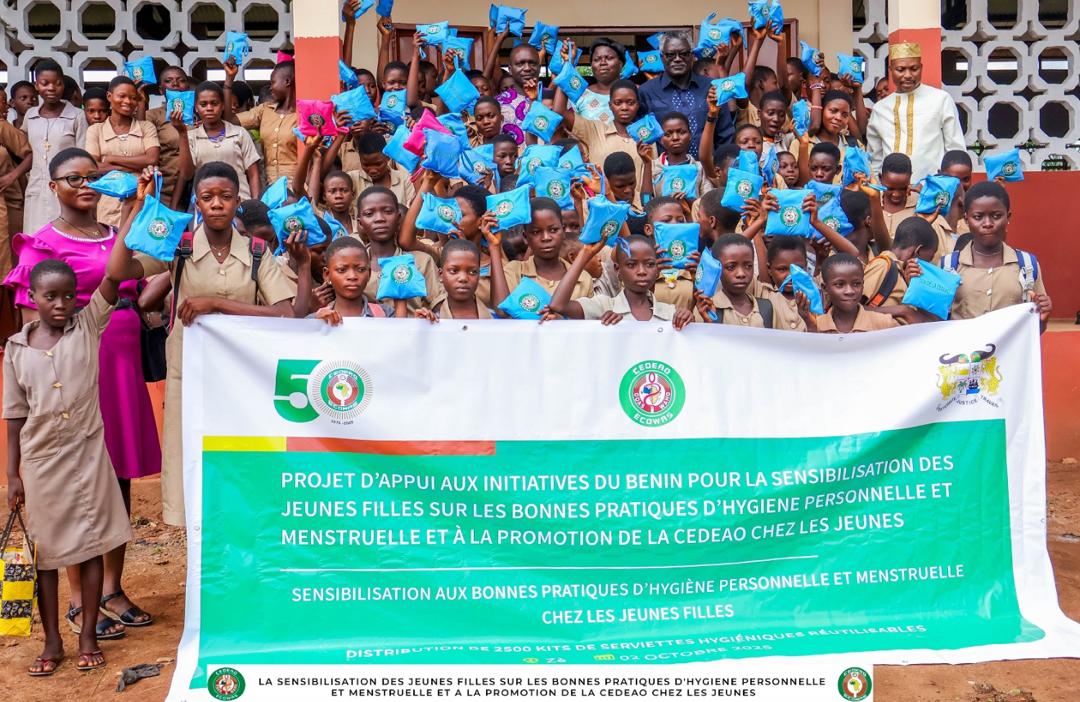
More than 5,000 young girls across the Beninese municipalities of Zè and Djidja have received life-changing support through a major menstrual health education campaign spearheaded by the ECOWAS Representation in Benin, in partnership with the West African Health Organisation (WAHO).
This large-scale initiative focused on menstrual hygiene management, reproductive health awareness, and the distribution of reusable sanitary pads — all aimed at empowering adolescent girls and improving school attendance and self-esteem.
The program is part of ECOWAS’s broader effort titled “Support for Benin’s Initiatives to Raise Awareness Among Young Girls About Good Personal and Menstrual Hygiene Practices and Promote ECOWAS Among Young People.”
Empowering Girls Through Education and Access
According to ECOWAS, this menstrual health initiative reflects its commitment to sustainable development, youth empowerment, and gender equality in West Africa.
“Through this initiative, ECOWAS is going beyond institutions to reach citizens directly — especially young girls — by working for their well-being, health, and dignity,” said Ambassador Amadou Diongue, ECOWAS Resident Representative in Benin, during a field visit to the project sites.
The ambassador emphasized that a stronger and more inclusive West Africa begins with empowering young people — particularly girls — with the tools, knowledge, and confidence to thrive.
Local Training with Lasting Impact
Ahead of the awareness campaign, a training-of-trainers workshop was held from September 16 to 19, 2025, in Zè and Djidja. The session equipped 20 participants from local education and social affairs departments with the skills to promote menstrual hygiene education.
These trained facilitators visited 23 schools and vocational centers — 10 in Zè and 13 in Djidja — where they educated students about reproductive health, personal hygiene, and the environmental benefits of reusable sanitary towels.
“Many girls used to skip classes because of their periods,” said a local education official in Djidja. “Now, with proper menstrual education and access to reusable pads, they attend school with confidence and dignity.”
Strengthening Community Partnerships
Ambassador Diongue also visited local leaders, including the mayors of Zè and Djidja, as part of the campaign’s community engagement strategy. Local authorities expressed gratitude for ECOWAS’s ongoing investment in youth health and development.
“This partnership with ECOWAS is a lifeline for many of our young girls,” said the Mayor of Zè. “It shows how regional cooperation in West Africa can directly improve lives at the grassroots level.”
ECOWAS highlighted that community collaboration is a cornerstone of its “ECOWAS of the Peoples” agenda, which promotes inclusive, citizen-centered integration across the sub-region.
Building a Healthier, More Equitable Future
This campaign not only delivered practical tools like reusable sanitary kits but also provided vital knowledge that helps break the stigma surrounding menstruation — a key step toward gender equity in education.
“We are proud to support initiatives that protect the dignity of young women and promote equal opportunities,” Ambassador Diongue stated. “Empowering girls with knowledge and dignity today means building a stronger, more equitable West Africa tomorrow.”