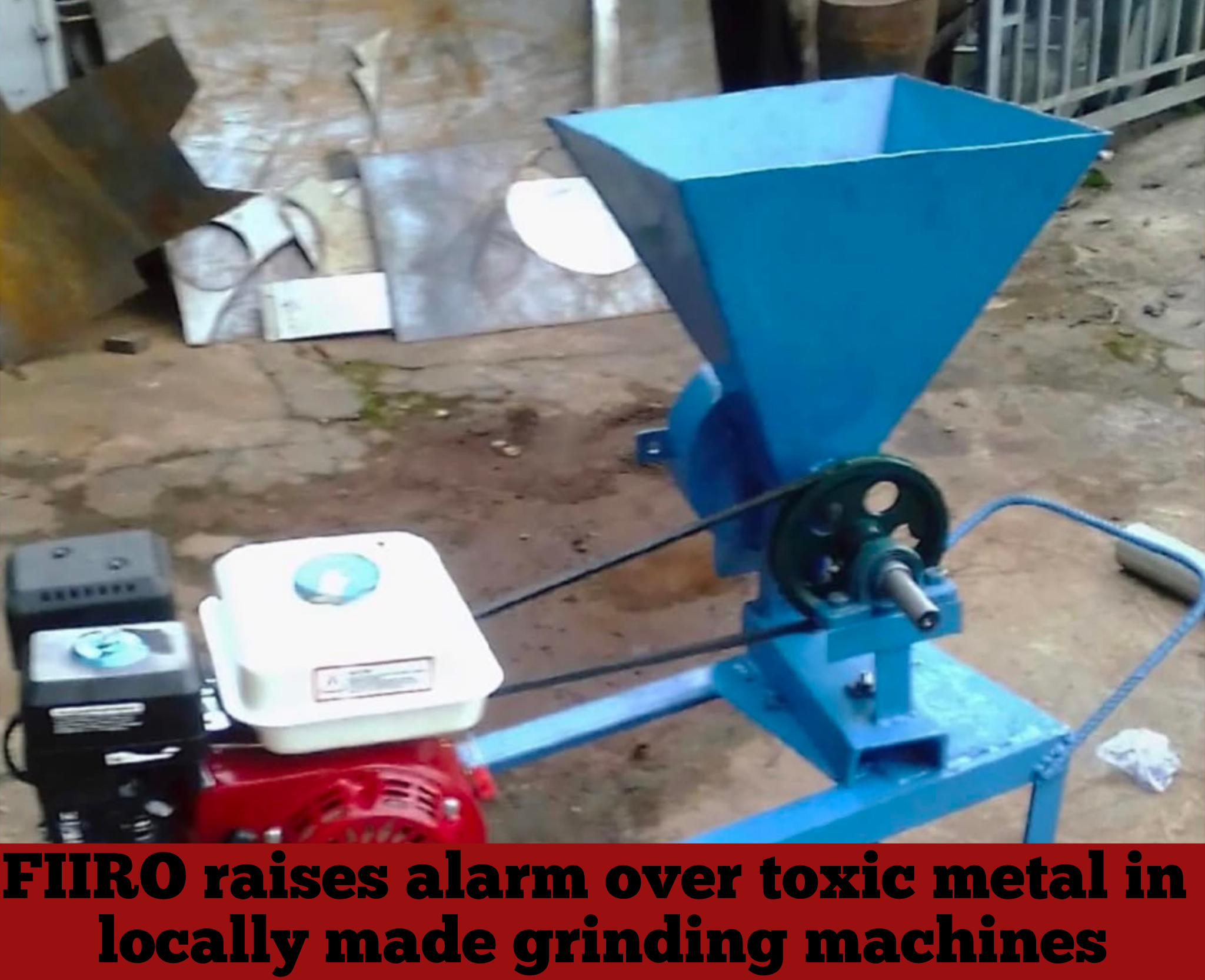
The Federal Institute of Industrial Research, Oshodi, (FIIRO), has raised concerns over a possible link between rising cases of organ failure and cardiovascular diseases in Nigeria and the use of locally fabricated grinding machines for food processing.
In a statement released to journalists, the Director-General of FIIRO, Dr Jummai Adamu Tutuwa, cited findings from a comprehensive 2013 study conducted by the institute’s researchers. The assessment examined locally manufactured grinding machines commonly used to process tomatoes, pepper, onions, melon seeds, and other food items, particularly within the Lagos metropolis.
According to the findings, many of these machines contained traces of heavy metals, including lead, copper, chromium, nickel, cadmium, and manganese. Researchers also detected non-heavy metals such as calcium, magnesium, zinc, and iron.
Dr. Tutuwa explained that long-term consumption of food contaminated with these metals could contribute to the growing incidence of cardiovascular diseases and organ failure, even among young adults.
The institute further revealed that, in some cases, contamination levels exceeded safety limits set the World Health Organization (WHO) and Food and Agriculture Organization (FAO), especially in areas exposed to heavy traffic and industrial activities.
She noted that while heavy metals occur naturally in the environment, their danger lies in bioaccumulation, persistence, and high concentrations within the food chain, which pose significant health risks. Cadmium, in particular, was described as a major ecotoxicological threat due to its widespread industrial applications.
To tackle the problem, FIIRO has developed a stainless-steel pepper grinding machine designed to significantly reduce the risk of metal contamination during food processing.