The Economic Community of West African States (ECOWAS) has reaffirmed its commitment to achieving universal access to reliable and affordable electricity across the region, while targeting a 48 per cent share of renewable energy in its electricity mix by 2030.
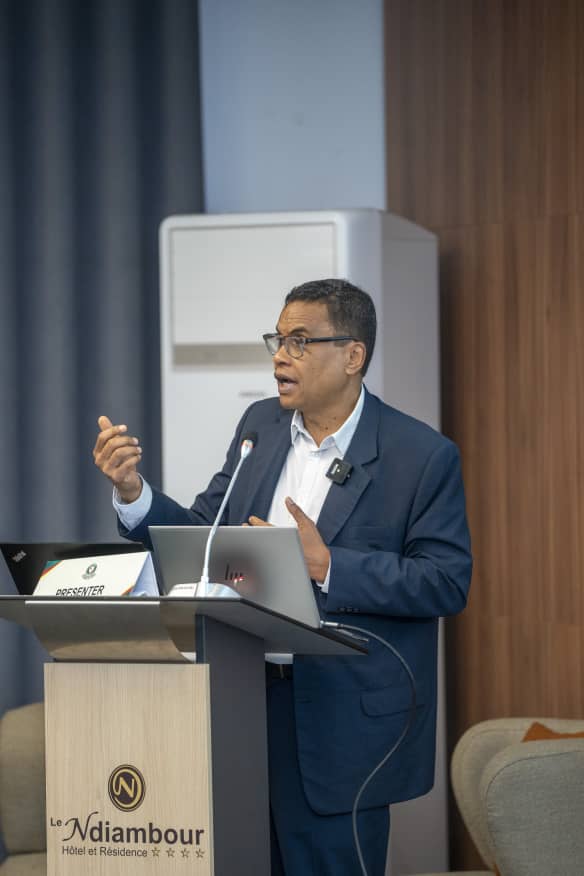
The commitment was highlighted during the opening of the delocalized meeting of the Joint Committee of the ECOWAS Parliament on Energy and Mines, Infrastructure, Agriculture, Environment and Natural Resources in Dakar, Senegal.
Speaking on behalf of the Director of Cabinet in the Office of the President of the ECOWAS Commission, Hon. Abdou Kolley, the Acting Director of Energy and Mines, Mr. Williams Baidoe, said the regional bloc remains focused on ensuring sustainable electricity access for all communities in West Africa.
The meeting, themed “Harnessing Renewable Energy for Rural Electrification and Empowerment of Rural Economies in the ECOWAS Region: The Role of the ECOWAS Parliament,” brought together lawmakers and stakeholders to discuss strategies for accelerating energy access and rural development.
Kolley commended the ECOWAS Parliament for creating a platform that allows policymakers to engage directly with stakeholders and develop practical solutions to the region’s energy challenges.
He noted that ECOWAS has established a comprehensive and gender-responsive policy framework for the energy sector, anchored on the updated ECOWAS Energy Policy, the ECOWAS Renewable Energy Policy and the ECOWAS Energy Efficiency Policy.
According to him, the renewable energy policy aims to increase the contribution of renewable sources, including large hydropower projects, to 48 per cent of the region’s electricity supply by 2030.
He added that the Energy Efficiency Policy is designed to tackle electricity losses estimated at between 35 and 40 per cent, largely caused by ageing and obsolete infrastructure across member states.
Kolley also highlighted the recently adopted ECOWAS Climate Strategy, describing it as a key instrument for harmonising climate adaptation and mitigation efforts across the sub-region.
He said regional institutions such as the ECOWAS Centre for Renewable Energy and Energy Efficiency (ECREEE), the ECOWAS Regional Electricity Regulatory Authority (ERERA), the West African Power Pool (WAPP) and the West African Gas Pipeline Authority (WAGPA) are playing critical roles in advancing energy integration and infrastructure development.
“Access to electricity is not merely about lighting homes. It is about creating opportunities for economic growth, improving healthcare services and supporting education in both rural and urban communities,” he said.
Kolley added: “We continuously imagine the lives of families being illuminated with hope, students able to study after sunset, health centres able to save more lives, and citizens finding new economic opportunities in their own communities.”
He urged citizens across the region to safeguard energy infrastructure, discourage illegal electricity connections and make productive use of available power to boost local economies.
The ECOWAS official expressed confidence that recommendations emerging from the Dakar meeting would strengthen ongoing regional efforts and provide innovative solutions for achieving universal electricity access and sustainable economic growth across West Africa.