
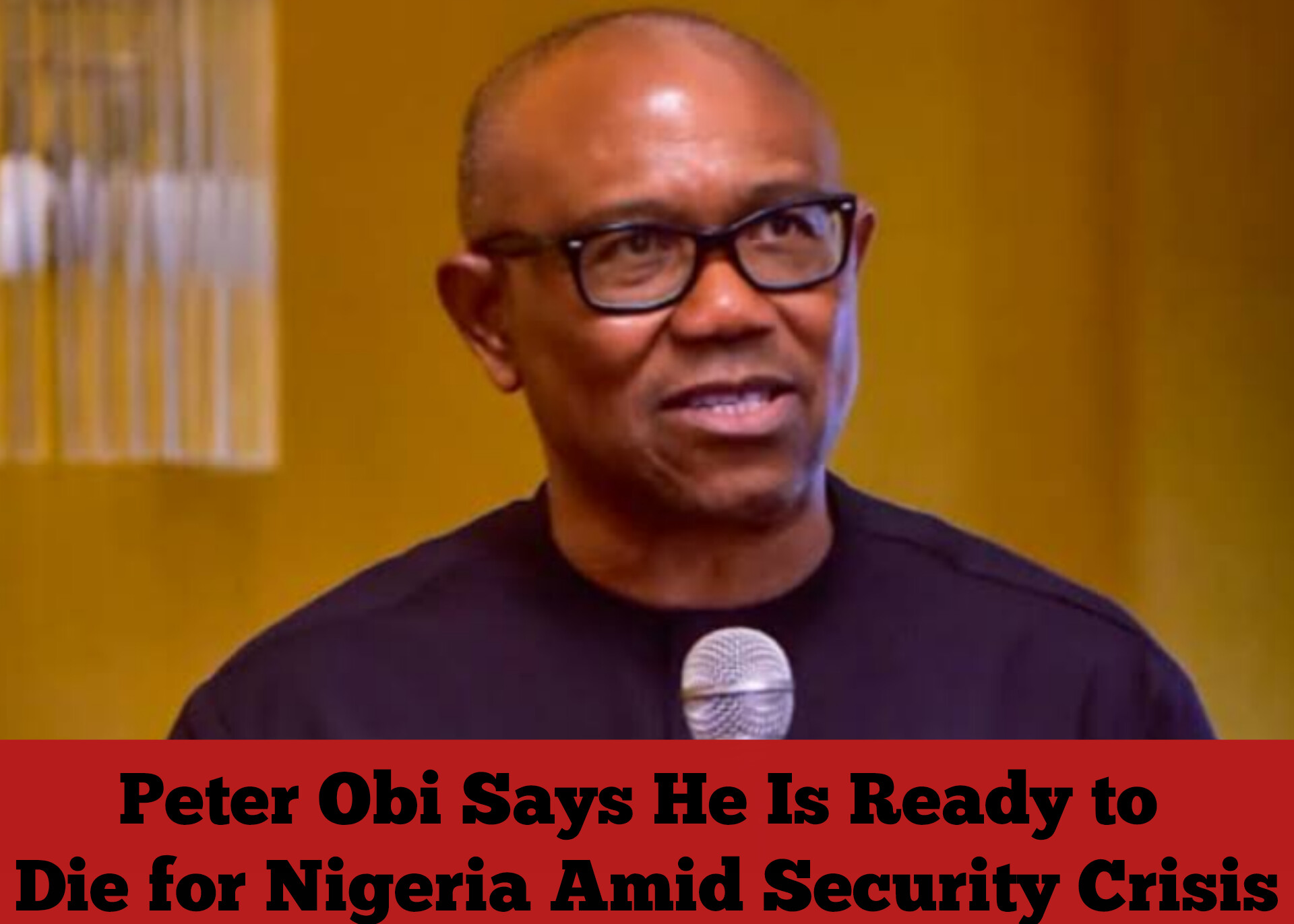
Peter Obi, the presidential candidate of the Nigerian Democratic Party for the 2027 election, has said he is prepared to die for Nigeria, arguing that effective leadership requires personal sacrifice to tackle the country’s growing insecurity.
Speaking during an interview on Black Box hosted by journalist Rufai Oseni on Nevon HQ, Obi said leaders must be willing to risk everything to restore security and national stability.
The former Anambra State governor made the remarks while responding to questions on how he would address kidnappings, attacks on schools and the killing of security personnel if elected Commander-in-Chief.
Although he did not provide specific military or security strategies, Obi insisted that commitment and decisive leadership are critical to defeating criminal groups.
“I have fought criminality in Anambra. Commitment solves the problem for everybody,” he said.
Obi recalled efforts undertaken during his administration in Anambra State, claiming that notorious kidnappers were driven out due to the government’s firm stance against crime.
Referring to an alleged account by a well-known kidnapper identified as Vance, Obi said criminal activities became increasingly difficult under his watch.
“One government. It’s either I’m in charge or they’re in charge. One person must be in charge,” he said.
“We declare war. If you’re ready to lead, you must be ready to die. If you’re not ready to die, go home.”
When asked directly whether he was willing to die for Nigeria, Obi responded: “Yes.”
He added: “Tomorrow. If I’m outside this country and there’s war, I’ll come back. I’m a Nigerian. I’ve never had any reason to have any country’s passport. God created me a Nigerian. And I’m ready to die here.”
His comments come as Nigeria continues to grapple with widespread insecurity, including banditry, kidnapping for ransom and attacks on schools and security personnel.
Obi cited recent incidents, including the abduction of students and teachers in Oyo State and the killing of a retired senior military officer after his kidnapping in Katsina State, as evidence of the worsening security situation.
He also expressed concern over the growing influence of non-state actors and argued that determined leadership could restore confidence in Nigeria’s security institutions.
Highlighting Nigeria’s past military contributions to international peacekeeping missions, Obi said the country’s armed forces once played significant roles in operations in Liberia, Sudan and Kuwait.
The former governor maintained that the willingness of leaders to confront insecurity decisively is more important than detailed operational plans, insisting that strong commitment from the nation’s leadership is essential to reversing the current trend of violence.