
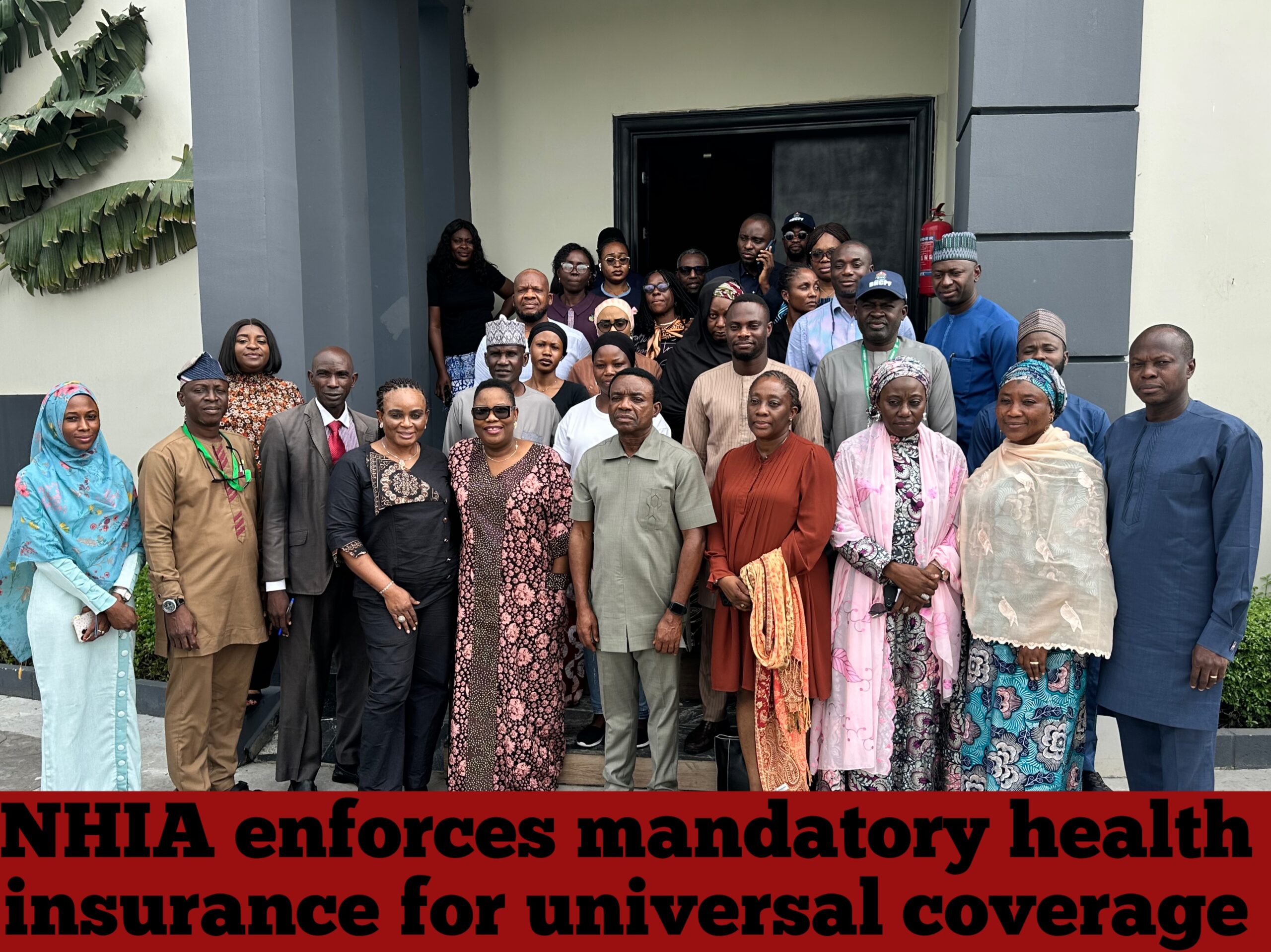
As part of efforts to fast-track progress toward Universal Health Coverage, the National Health Insurance Authority, NHIA, says it has taken decisive steps to enforce Nigeria’s health insurance law among self-funding government agencies and ensure full compliance with the NHIA Act 2022, which makes health insurance mandatory for all.
Speaking in Abuja, at a one-day sensitisation programme on Strengthening Institutional Support for Universal Health Coverage for Self-Paying Agencies, the Director of the Formal Sector Department, Mr. Nuhu Ajodi, who represented the Director General of NHIA, Dr. Kelechi Ohiri, noted that the Authority had partnered with relevant regulatory bodies to increase public awareness and rebuild trust in Nigeria’s healthcare system.
Mr. Ajodi further revealed that the country’s health insurance coverage had significantly increased, with over 21.1 million Nigerians now enrolled as of August 2025 which is significant milestone and evidence of renewed confidence for citizens.
“This act broke a two-decade stagnation that saw coverage remain at about seven per cent.
Before the new Act, health insurance coverage in Nigeria had remained stagnant for nearly twenty years. But with the presidential directive and enforcement of the NHIA Act, we are witnessing steady growth in enrollment and public confidence,” he said.
Ajodi added that under the leadership of the present Director-General of NHIA, Dr Kelechi Ohiri, the authority has launched new initiatives such as the Obstetric Fistula Care Programme and the Emergency Care Initiative to reduce financial barriers to healthcare and support women facing life-threatening complications.
He further noted that programmes such as the Comprehensive Emergency Obstetric and Newborn Care (CEmONC) and the Fistula Free Programme have provided thousands of women nationwide with access to quality maternal and reproductive health services.
A participant from the Raw Materials Research and Development Council, Mrs Juliana Ogboyi maintained that 5% payment plan should come from ministries, departments and agencies to cover up for their staff.
“If an enrollee cannot pay, it is the duty of MDAs to make up for the payment. Their worker’s health and welfare should be their topmost priority,” she added.
Mrs. Ogboyi stressed the need for enrollees to be attended to and to access the drugs at the right time without any hitches or delays.