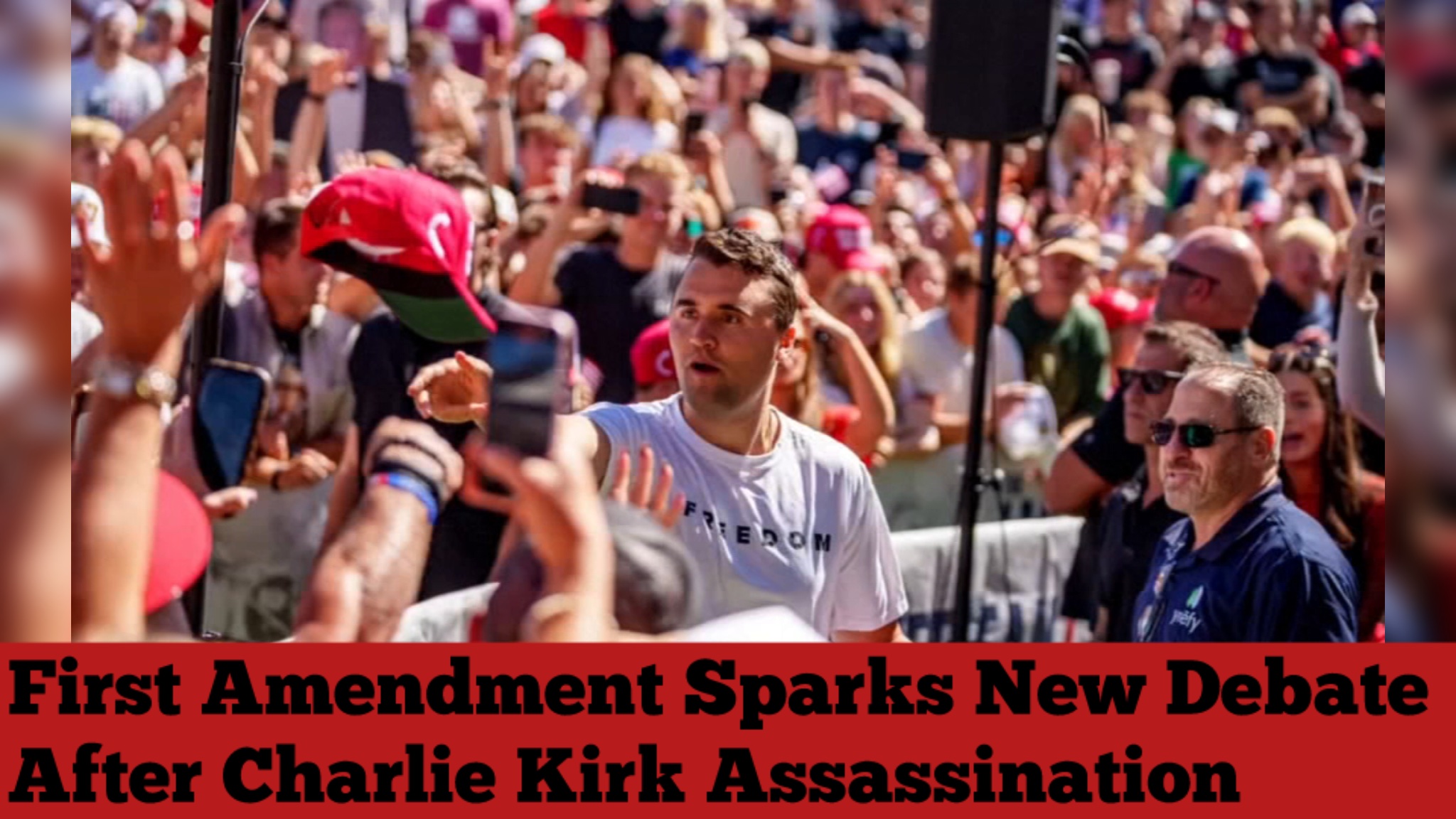
On Thursday, Democrats accused President Donald Trump of “waging war on free speech” after he publicly celebrated ABC’s suspension of late-night host Jimmy Kimmel. The comedian had accused conservatives of exploiting Kirk’s death for political gain.
The American Civil Liberties Union (ACLU) condemned the administration’s actions, saying they echoed the political repression of the Red Scare.
“This is beyond McCarthyism,” said Christopher Anders, director of the ACLU’s democracy and technology division. “Trump officials are repeatedly abusing their power to stop ideas they don’t like, deciding who can speak, write, and even joke.”
The First Amendment prohibits Congress from passing laws that restrict free speech, religion, press freedoms, or peaceful assembly. For David Super, a Georgetown University law professor, it is “really how we identify ourselves as a nation.”
“We are thought to be drawn together by a belief in open discussion and a belief that the government can’t shut any of us up,” Super told AFP.
Legal scholar Eugene Volokh of UCLA added that even speech deemed “morally repulsive” is constitutionally protected. Still, he pointed out that U.S. history has been marked by repeated efforts to silence dissent — from the 1798 Sedition Act, to bans on pacifist speech during World War I, to the suppression of communists and civil rights activists in the 20th century.
Trump has built much of his political brand on denouncing “cancel culture,” claiming conservatives have been silenced by progressive critics. Yet Democrats now argue the president is guilty of the very same practice, targeting universities, media organizations, and now Kimmel.
“After years of complaining about cancel culture, the current administration has taken it to a new and dangerous level,”former President Barack Obama posted on X.
The controversy has also deepened over Attorney General Pam Bondi’s announcement that the Justice Department would prosecute individuals guilty of “hate speech” tied to Kirk’s assassination. Critics noted that the U.S. Constitution does not carve out exceptions for hate speech.
Republican Senator Ted Cruz fired back that the First Amendment “absolutely protects hate speech.” Bondi later clarified that she was referring to incitements of violence, not offensive opinions.
Conservative commentator Tucker Carlson called for “civil disobedience” if the government introduces new speech restrictions in the wake of Kirk’s killing. Meanwhile, some on the far right are pushing back against Trump’s August executive order criminalizing flag burning — an act the Supreme Court has recognized since 1989 as protected free speech.
“I would never in a million years harm the American flag,” conservative radio host Jesse Kelly wrote on X. “But a president telling me I can’t has me as close as I’ll ever be to lighting one on fire.”
As America grapples with grief, polarization, and fear, the debate over the First Amendment is once again proving that freedom of speech is not just a constitutional principle, but a cultural battlefield.