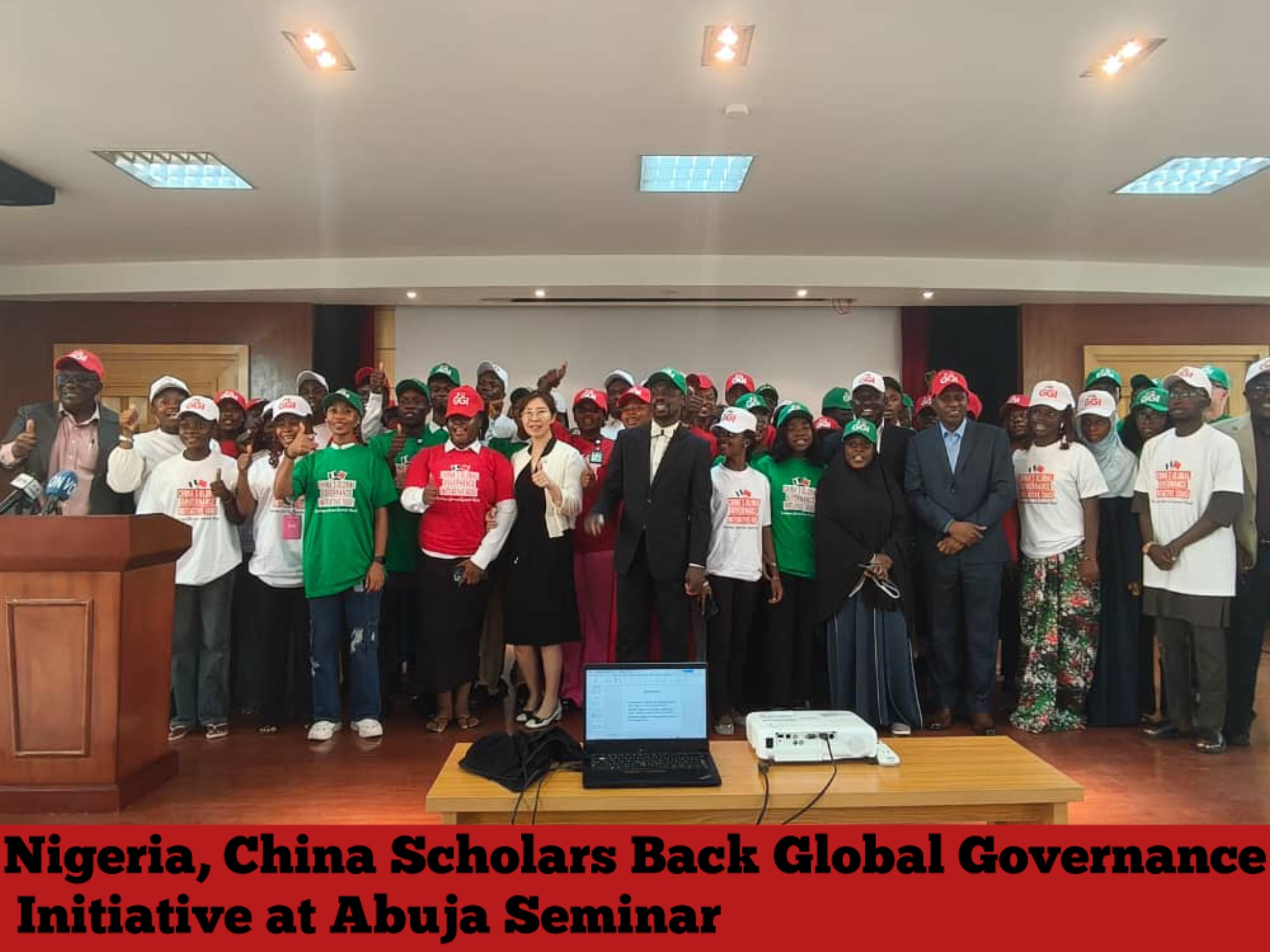
Nigerian scholars and Chinese diplomats have rallied support for China’s “Global Governance Initiative (GGI)”, describing it as a timely framework for building a fairer and more inclusive international order.
A Seminar at the China General Chamber of Commerce in Abuja, brought together academics, policymakers, and diplomats, including Ms. Dong Hairong, Counselor at the Embassy of the People’s Republic of China in Nigeria, and several leading Nigerian scholars.
Delivering a keynote address, Ms. Hairong said the GGI alongside China’s Global Development, Security, and Civilization initiatives forms “the four pillars of China’s thought on how to build a community with a shared future for mankind.”
“The world is far from peaceful and stable. Geopolitical tensions, economic uncertainties, regional conflicts, and global health crises demand urgent reforms in governance,” she said. “China is ready to work hand in hand with African partners, including Nigeria, to make global institutions more just, equitable, and representative of the Global South.”
In a goodwill messages, the Director-General of the Nigeria-China Strategic Partnership, Mr. Joseph Tegbe, stressed that the GGI offers “real opportunities, not just ideas,” for Nigeria’s growth. “From industrialisation and infrastructure to technology and cultural exchange, this initiative expands our partnership with China and creates avenues for shared prosperity,” he said.
The Chairman of the House Committee on China-Nigeria Parliamentary Relations, Mr. Chibuike Amaechi, stated that Nigeria’s parliament would provide legislative backing to deepen collaboration under the GGI. “This framework ensures no nation is left behind in the pursuit of peace, justice, and prosperity. We see opportunities in renewable energy, digital economy, innovation, and people-to-people connectivity,” he said.
In a presentation, the Director of the Centre for Contemporary China-Africa Research, Professor Sherif Ghali Ibrahim, highlighted the philosophical and historical context of global governance. He argued that “reforming global institutions such as the UN Security Council and the IMF is an imperative to ensure inclusivity and address the underrepresentation of developing nations.”
Our Correspondent reports that the event underscored Nigeria’s alignment with China on issues of sovereignty, multilateralism, and equitable reforms in global governance.