

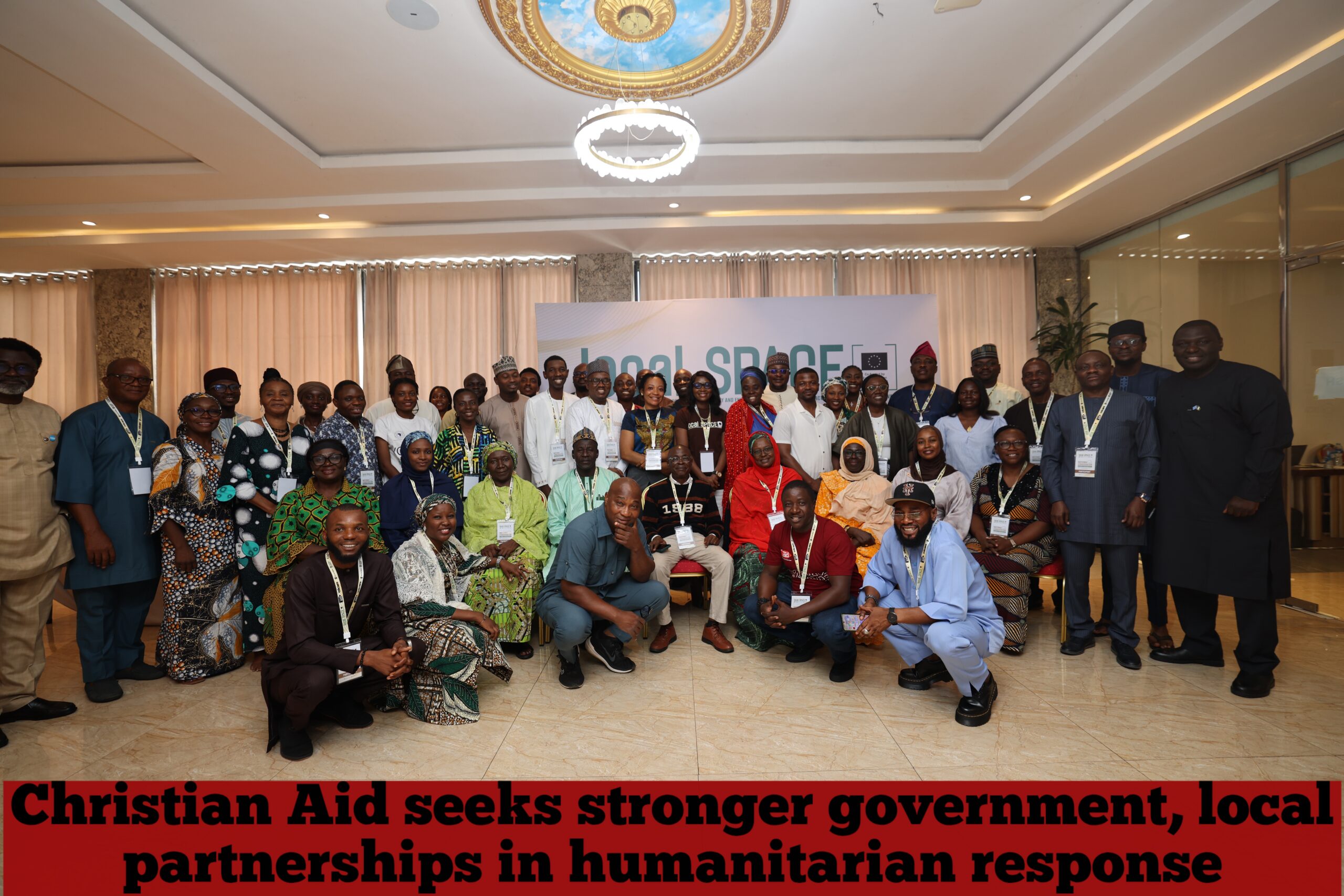
A non governmental organization, Christian Aid Nigeria has called for greater involvement of local and national organisations in Nigeria’s humanitarian response.
The Programme and Partnership Lead, Nigeria, Christian Aid, Victor Arokoyo, made the call in Abuja while speaking on the ongoing transition in the humanitarian sector.
Arokoyo, who described the transition as a “humanitarian reset,” said stakeholders must prepare for the Federal Government to take greater responsibility for coordinating humanitarian interventions as the United Nations Office for the Coordination of Humanitarian Affairs, OCHA, moves from direct coordination to an advisory role.
According to him, OCHA is transitioning to become an advisory organisation to the government on humanitarian interventions, with its operational presence in some crisis-affected areas expected to reduce as it focuses on supporting the government from Abuja.
Arokoyo said humanitarian and security challenges were spreading beyond the North-East, and called for a humanitarian response system that would enable the government to provide leadership across the country.
“We are seeing situations in the North-West, we are seeing situations in the North-Central. We are even seeing some security challenges in the South,” he said.
Arokoyo said Christian Aid was committed to ensuring that local and national organisations were not excluded from the new humanitarian framework.
He said the organisation was a signatory to the Charter for Change and the Pledge for Change, which promote stronger partnerships with local and national organisations and greater support for their visibility, capacity and funding.
“We believe in partnership. We believe in working with local and national organisations. We believe in supporting them to be visible and better funded,” he said.
Arokoyo said the next phase would involve engaging the government with a position paper outlining the expectations of local and national actors and recommending how they could be incorporated into the new humanitarian response framework.
He noted that localisation had become an increasingly important concept in humanitarian response since 2016, stressing that the ongoing transition presented an opportunity to strengthen the leadership and participation of Nigerian organisations in addressing humanitarian crises.
The Program manager for of another humanitarian NGO, EYN projects, Ms. Hamsatu James, noted that localisation had become an increasingly important concept in humanitarian response since 2016, stressing that the ongoing transition presented an opportunity to strengthen the leadership and participation of Nigerian organisations in addressing humanitarian crises.
Participants identified the need for better access to direct, flexible and quality funding, stronger operational systems and improved access to humanitarian data.
