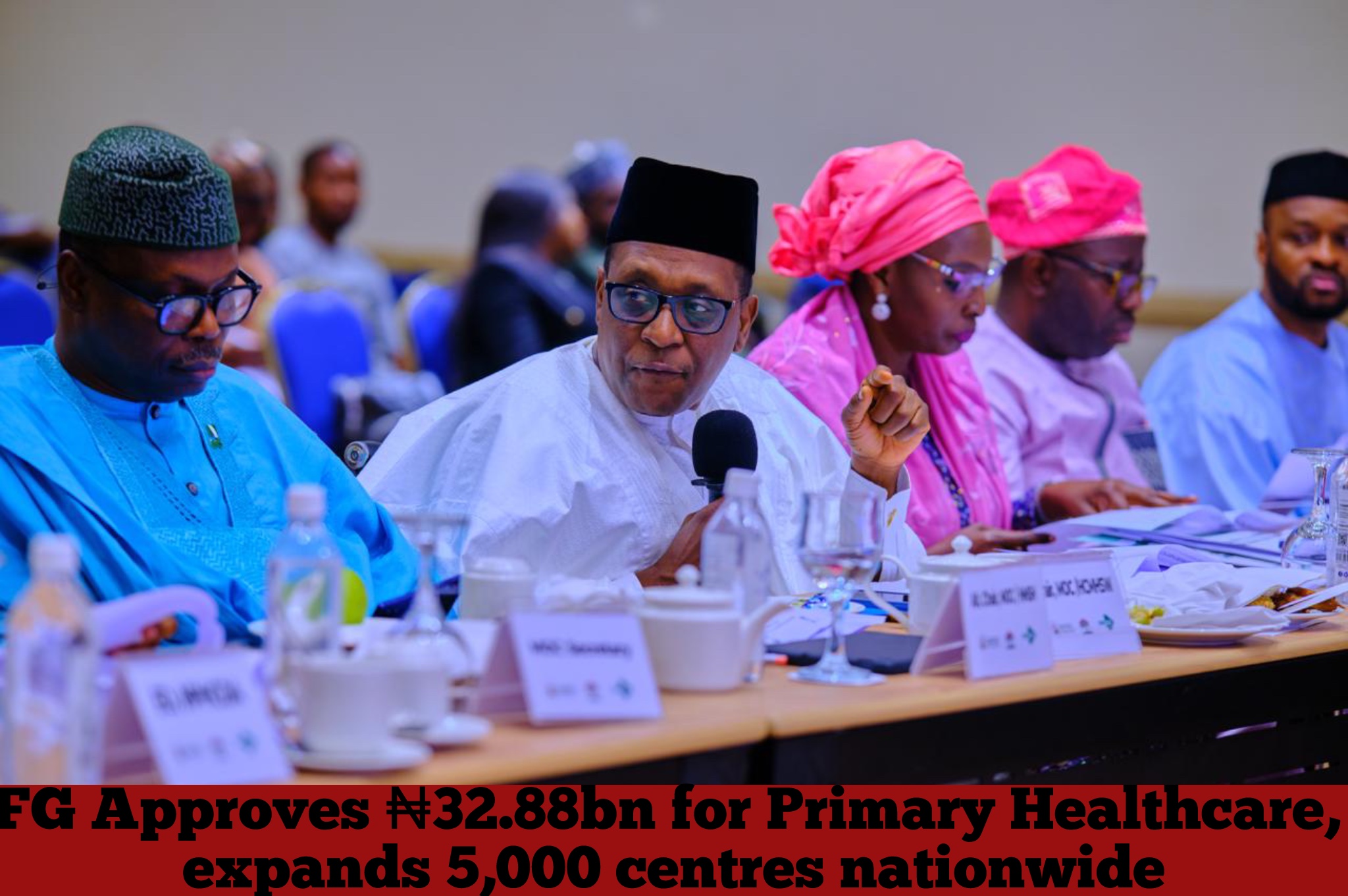
The Federal Government has approved ₦32.88 billion to sustain primary healthcare delivery nationwide under the Basic Health Care Provision Fund (BHCPF), as part of ongoing efforts to strengthen Nigeria’s health system.
The approval was announced at the 14th Expanded Ministerial Oversight Committee (MOC) meeting held in Abuja.
The meeting was chaired by the Coordinating Minister of Health and Social Welfare, Professor Ali Pate, and brought together key government institutions, development partners, and stakeholders to review progress and outline the next phase of reforms under BHCPF 2.0.
Speaking at the meeting, Pate mentioned that the government had also approved the expansion of Direct Facility Financing to an additional 5,000 primary healthcare centres across the country.
He noted that the move is expected to deepen access to healthcare at the grassroots and improve service delivery, particularly in underserved communities.
The minister further disclosed that the Federal Government’s free fistula programme has restored the health and dignity of over 4,000 women, while plans are underway to introduce reimbursement for neonatal care to improve survival rates among newborns.
According to him, improvements are already being recorded across key health indicators. He said more Nigerians are accessing healthcare services, maternal mortality is beginning to decline, and immunisation coverage is expanding. He added that making emergency obstetric care free is directly impacting lives by ensuring that critical services remain accessible and affordable to families.
Also speaking, the Minister of State for Health and Social Welfare, Iziaq Salako, emphasised the importance of transparency and accountability in the utilisation of BHCPF resources.
He noted that the growing involvement of Civil Society Organisations (CSOs) in monitoring healthcare delivery is strengthening oversight and ensuring that funds translate into measurable benefits for citizens.
“The inclusion of civil society is critical in tracking performance at the facility level and ensuring Nigerians receive value for investments in primary healthcare,” he said.
Presenting the memorandum, the Acting Secretary of the MOC Secretariat, Aishatu Abubakar Bajoga, explained that the approved ₦32.88 billion allocation is aimed at sustaining service delivery across health facilities, particularly at the primary care level.
She added that the committee also approved revised ambulance tariffs under the Emergency Medical Treatment (EMT) Gateway to strengthen emergency response systems and ensure sustainable financing of ambulance services nationwide.
The revised tariffs, she said, are expected to encourage broader participation from both public and private providers, thereby improving efficiency and responsiveness in emergency care delivery.
The meeting also considered plans to integrate private sector players into the MOC framework, with consultations ongoing and implementation expected in the second quarter of 2026.
Stakeholders noted that private sector participation could unlock additional resources, innovation, and efficiency within the health sector.
Deliberations further highlighted the need for stronger data-driven planning, improved performance tracking, and enhanced coordination across BHCPF gateways.
Participants stressed that transparency and accountability in fund utilisation remain essential to achieving better health outcomes.
Civil Society Organisations were recognised for their role in promoting community awareness, demand generation, and accountability at the grassroots level.
The Federal Government reaffirmed its commitment to expanding equitable access to quality and affordable healthcare, noting that reforms under BHCPF 2.0 are already delivering measurable improvements across the sector.
Established under the National Health Act of 2014, the BHCPF remains a key component of Nigeria’s healthcare financing strategy, designed to ensure that all Nigerians, particularly the poor and vulnerable, have access to essential health services without financial hardship.