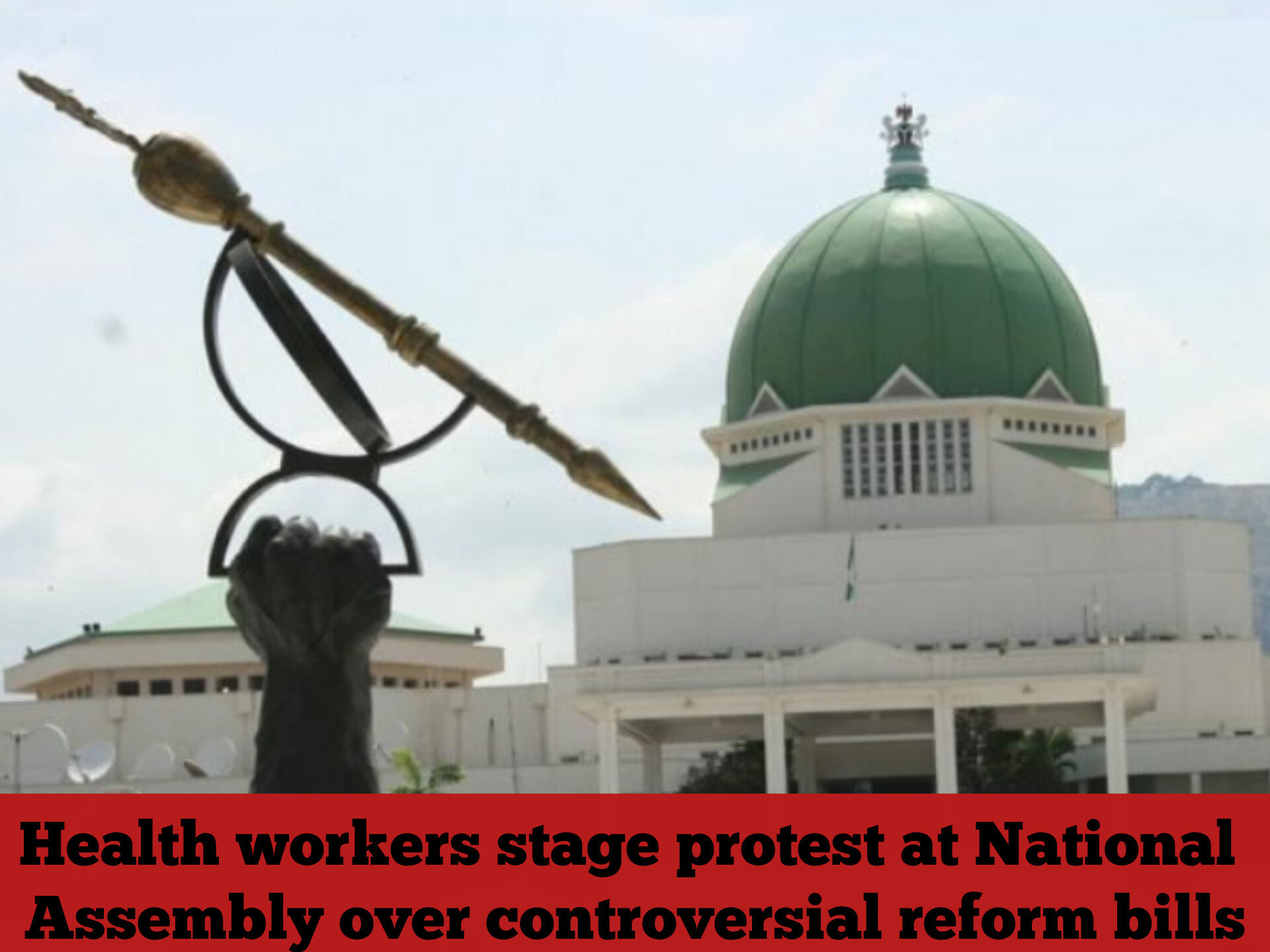
Healthcare workers under the Joint Health Sector Unions (JOHESU) and the Assembly of Healthcare Professional Associations have commenced a nationwide protest in Abuja over the proposed Health Sector Executive Bills 2026 currently before the National Assembly.
The demonstration, taking place today, has drawn health professionals from across the country to the National Assembly Complex, with participants converging at the Unity Fountain.
In a directive issued to affiliate unions and professional bodies, JOHESU urged mass mobilisation, warning that the proposed legislation could significantly impact healthcare professionals and the structure of the sector.
Speaking on the protest, JOHESU National Secretary, Martin Egbanubi, said the action was aimed at raising public awareness about the implications of the bills.
“Our members must educate the general public on how the Health Sector Executive Bills 2026 affect their respective professions in particular and the health sector in general,” Egbanubi stated.
He described the protest as a defining moment for healthcare workers nationwide.
“Your participation in this historic existential struggle is highly solicited and essential,” he added.
The unions expressed concern that the bills—already past first reading in the Senate—could alter existing structures, redefine professional roles, and negatively affect welfare conditions within the health sector.
JOHESU, which includes groups such as the Medical and Health Workers Union of Nigeria and the Nigeria Union of Allied Health Professionals, has long been at the forefront of labour disputes in Nigeria’s healthcare system.
Over the years, the coalition has engaged the Federal Government on issues ranging from salary structures and hazard allowances to concerns over the dominance of certain professional groups in policy decisions.
The latest development adds to longstanding tensions within Nigeria’s health sector, where disputes frequently result in strikes and service disruptions affecting millions of citizens.
Industry stakeholders warn that the controversy comes at a critical time, as the nation’s healthcare system grapples with workforce shortages, persistent brain drain, and inadequate infrastructure. The continued migration of health professionals abroad in search of better opportunities has further strained service delivery nationwide.