

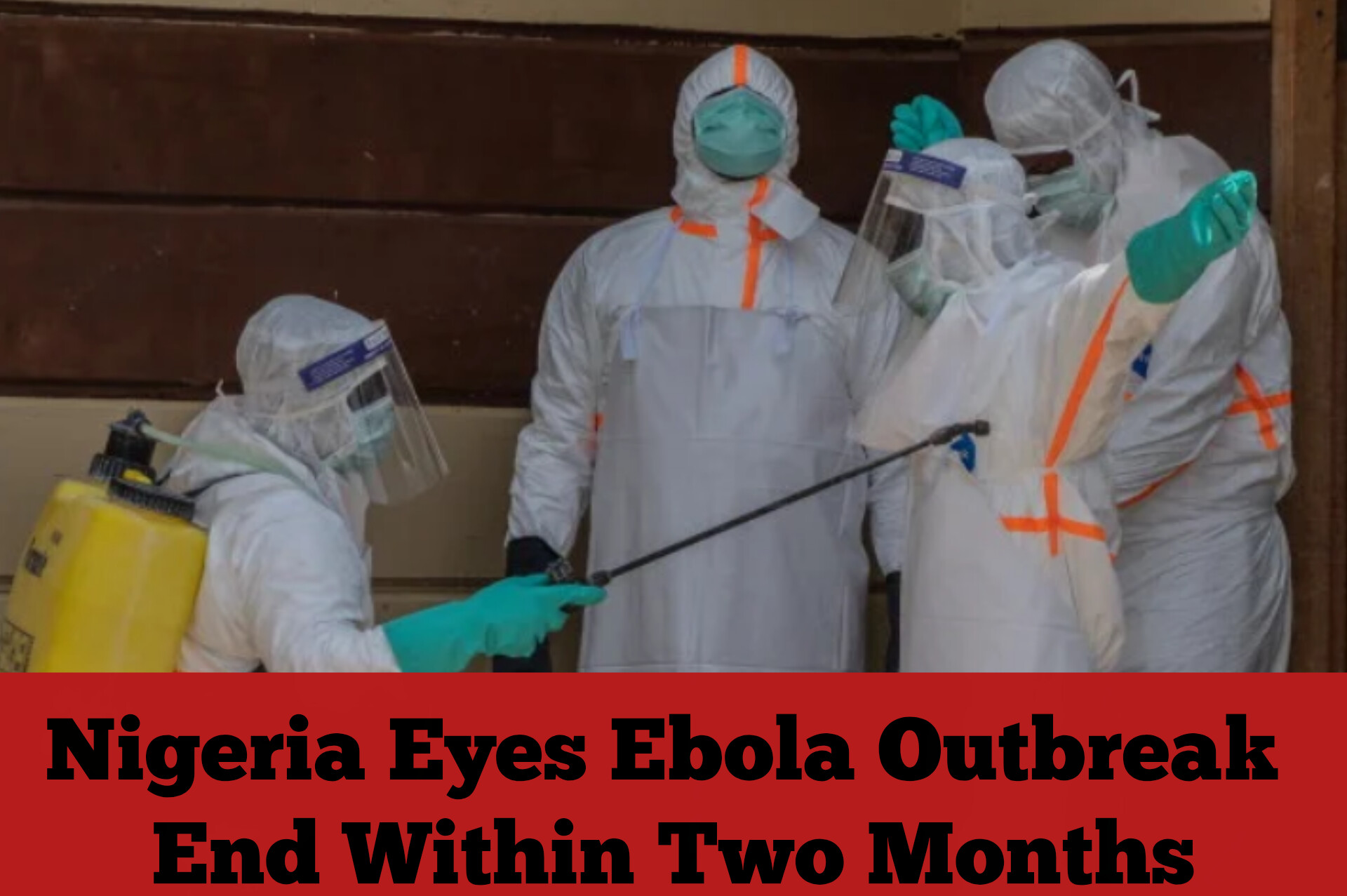
The Federal Government says Nigeria could declare its Ebola outbreak over within two months if no new confirmed or probable cases emerge and the country meets the World Health Organisation’s (WHO) requirements.
The Coordinating Minister of Health and Social Welfare, Prof. Muhammad Ali Pate, disclosed this in a post on his X account, stressing that the timeline depends on contact monitoring and validation of the required 42-day countdown by the Nigeria Centre for Disease Control and Prevention (NCDC) and the WHO.
“If no further confirmed or probable cases are detected, Nigeria could progress towards declaring this outbreak over under WHO criteria, potentially as early as next two months,” Pate wrote.He warned that the proposed timeline remains provisional and could change if another case is detected.
“This date remains provisional, subject to @NCDCgov and WHO validating the 42-day countdown. Any further case would require a fresh countdown in accordance with those criteria,” he added.
The Federal Government confirmed an Ebola case in the Federal Capital Territory (FCT) involving a female patient who recently travelled from Uganda.
According to the WHO, the patient developed symptoms after travelling and sought medical attention before her infection was confirmed.The NCDC said it is monitoring 53 primary contacts linked to the confirmed case as authorities intensify efforts to prevent further transmission.
Under WHO guidelines, an Ebola outbreak can be declared over after 42 consecutive days without a new confirmed case, provided the necessary conditions for ending transmission are met.
Pate said the government’s immediate priorities include monitoring identified contacts and strengthening preparedness across health facilities.
The development follows the medical evacuation of the female Ebola patient and her husband to Switzerland on Monday.Pate said the patient’s condition had improved significantly, describing her as stable, conscious and able to communicate. He added that her laboratory test results were approaching baseline levels.
In a statement, the Swiss Federal Office of Public Health (FOPH) said the patient was receiving treatment at Geneva University Hospital, while her husband, identified as a close contact, was in isolation at Zurich University Hospital.
Swiss authorities said the situation posed no public health risk to the country, noting that both hospitals had specialised isolation facilities and trained medical personnel to manage infectious diseases such as Ebola.
“The current situation does not pose any risk to public health in Switzerland,” the FOPH said.
The agency added that it was working with the university hospitals in Geneva and Zurich, alongside the relevant cantonal authorities, to manage the situation.
Switzerland’s Federal Councillor, Elisabeth Baume-Schneider, also expressed appreciation to Nigeria’s health minister during a telephone conversation.
She thanked Nigerian doctors and other healthcare workers for caring for the two Swiss nationals before their evacuation.


