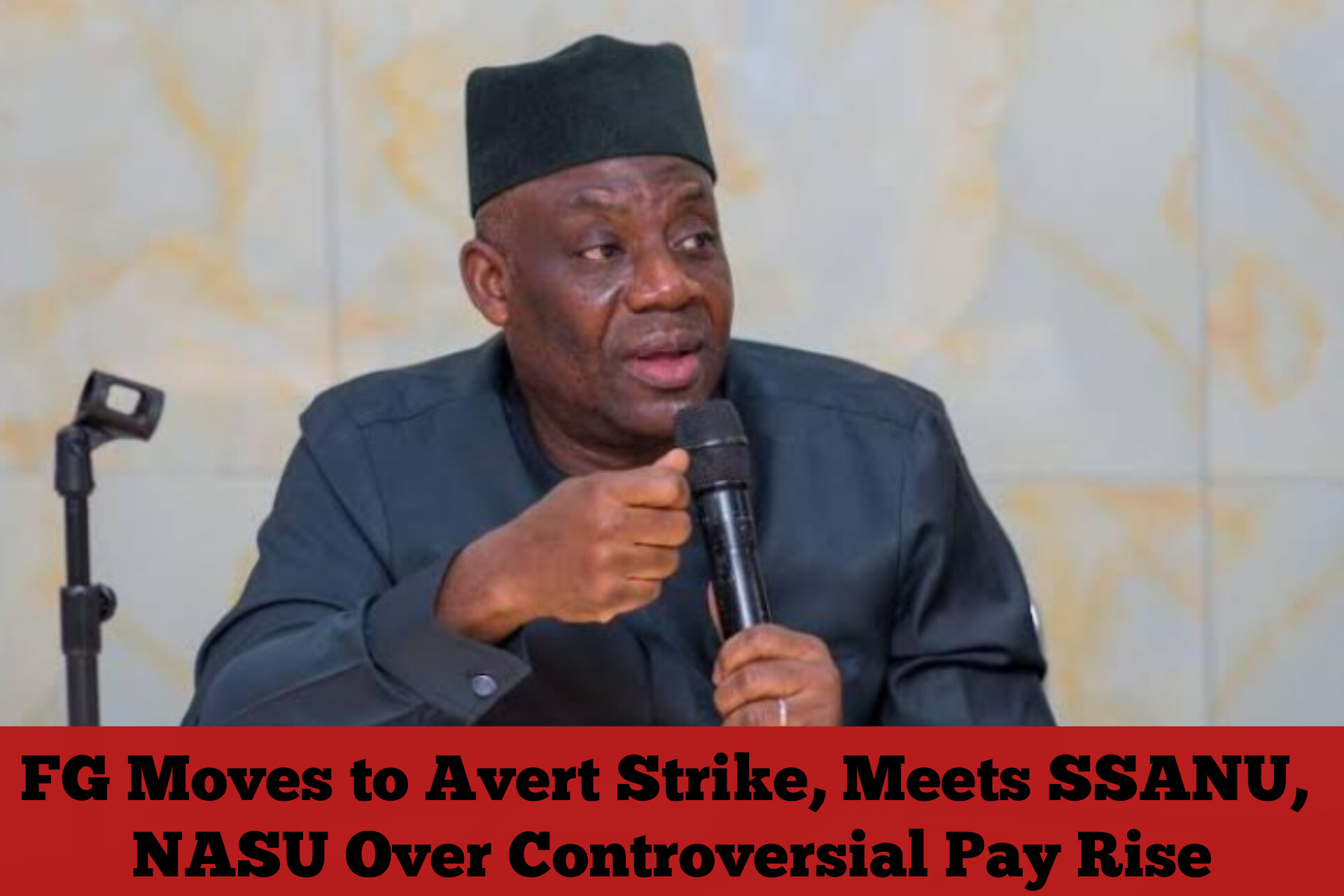
The Federal Government has invited the leadership of the Senior Staff Association of Nigerian Universities (SSANU) and the Non-Academic Staff Union of Universities and Allied Institutions (NASU) to a crucial meeting this week in a bid to forestall a looming nationwide strike by the two university-based unions.
The planned talks follow mounting tension over a controversial proposed 30 per cent salary increase announced by the Minister of Education, Dr Tunji Alausa, which has sparked outrage among non-academic workers.
Highly placed sources familiar with the development confirmed in Abuja that the government had reached out to the unions ahead of the meeting scheduled for this week.
“The government has written to the leadership of the unions and invited us to a meeting. We will be there to hear what they have to say, but the truth is that our ultimatum still stands,” a union source said.
Another source confirmed the invitation, saying, “It is true, we have been invited to a meeting this week and we will be there.”
The emergency talks come amid threats by the Joint Action Committee (JAC) of SSANU and NASU to shut down public universities if the government fails to withdraw what the unions described as a unilateral and controversial salary adjustment.
Alausa had, in a letter addressed to the National Universities Commission, National Commission for Colleges of Education and the National Board for Technical Education, announced a 30 per cent pay rise for non-academic workers in federal universities, polytechnics and colleges of education.
But the unions rejected the move, insisting the salary review did not emerge from ongoing negotiations with the Federal Government.
In a strongly worded protest letter signed by JAC Secretary-General Peters A. Adeyemi and President Mohammed Ibrahim, the unions described the development as “shocking and unacceptable.”
“We write with utmost respect to draw your urgent attention to the letter being circulated on social media, purportedly signed by you,” the unions said.
“We have not reached any conclusion warranting the award, which is alien to the tradition of collective bargaining.”
The unions warned that any attempt to impose the salary increment outside the negotiation process would violate established labour principles and could trigger industrial action.
“We are not part of it, and the two unions are not ready to take anything less than what may be agreed upon collectively with the negotiation committee,” the letter added.
Negotiations between the Federal Government and university-based unions are currently being handled by a committee chaired by Dr Yayale Ahmed, though the unions insist discussions remain inconclusive.
The JAC also demanded the immediate withdrawal of the circulating salary approval document to avoid confusion across tertiary institutions.
“We hereby call on the Honourable Minister to withdraw the letter in circulation,” the unions declared.
The dispute comes against the backdrop of a recent 40 per cent salary increase approved for members of the Academic Staff Union of Universities (ASUU), a development that has heightened agitation among non-academic workers.
This week’s meeting is expected to shape the next line of action, stakeholders are watching closely as the government moves to prevent another disruption in the university system.