By Raymond Enoch
Sierra Leone has intensified preparations for the July 2026 summit of the Economic Community of West African States (ECOWAS), with President Julius Maada Bio leading a bold infrastructure and logistics push aimed at delivering a world-class event and repositioning the country as a regional leader.
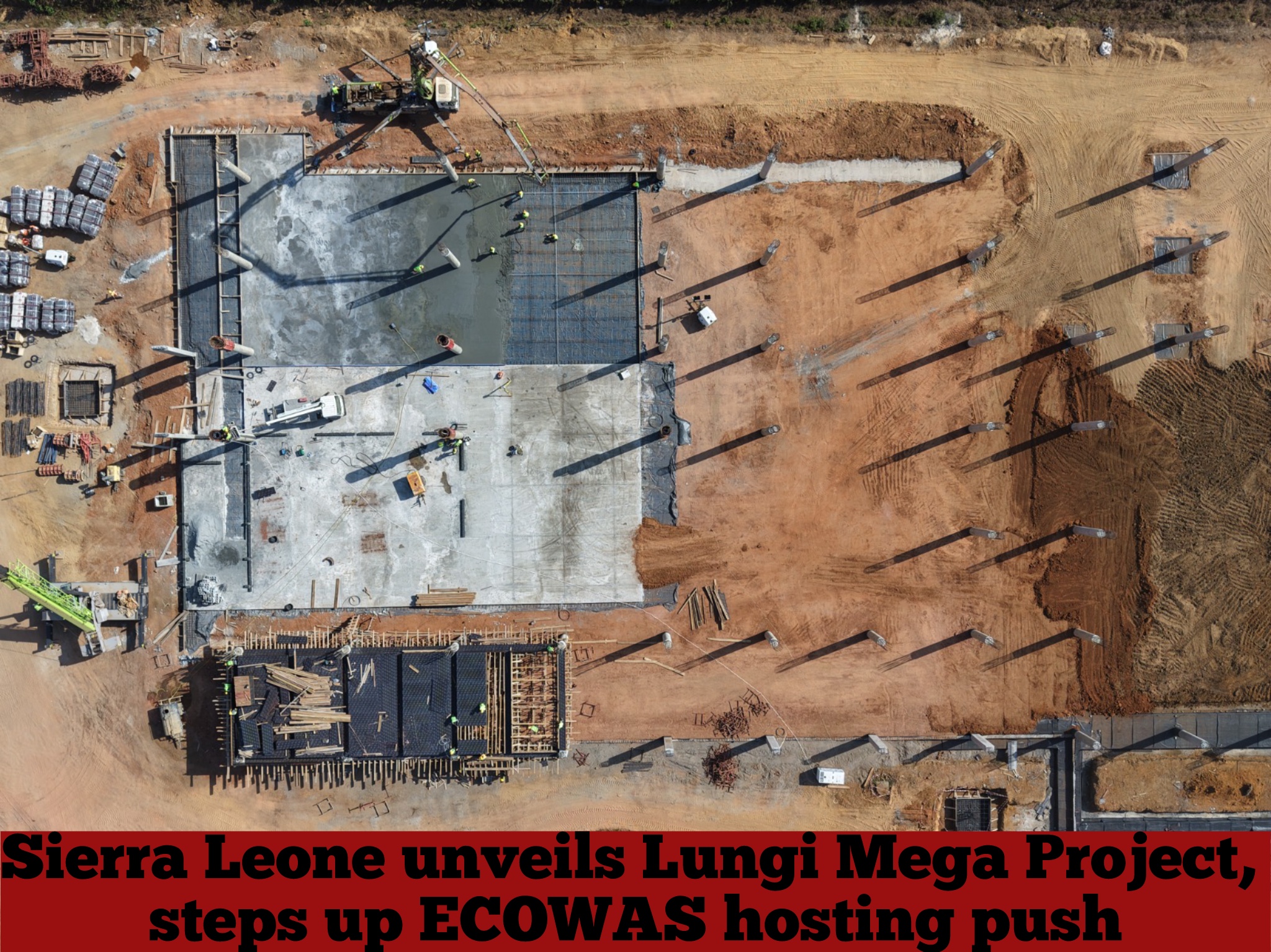
At the centre of the transformation is the landmark Lungi Congress Center development, rising within the concession area of the Freetown International Airport. The project is a strategic investment designed to place Sierra Leone firmly on the map as a destination for global diplomacy, business, and tourism.
The Congress Center itself is being built as a modern summit facility capable of hosting ECOWAS Heads of State and other high-level international gatherings. It will feature a presidential meeting hall for leaders and their delegations, a 1,400-seat multipurpose hall for plenary sessions, as well as breakout rooms for parallel meetings. Banquet halls, media centres, and secure protocol zones are also being incorporated to meet global standards.
Government officials say the facility will go beyond hosting summits, serving as a hub for trade exhibitions, investment forums, and cultural events that will drive economic activity long after the summit ends.
Supporting the complex is a 110-room Hilton Garden Inn, designed to provide international-standard accommodation for delegates and business travellers. In addition, 15 Presidential Villas are being constructed to host visiting Heads of State and senior dignitaries, offering privacy, comfort, and top-level security in line with diplomatic protocol.
Beyond Lungi, the government is upgrading key hospitality and transport infrastructure to ensure seamless movement and comfort for visitors. The iconic Bintumani Hotel in Freetown is undergoing major renovation to restore its status as a premier hospitality destination, while additional ferries are being deployed to strengthen transport links between Lungi and the capital.
The renewed focus on ferry services is particularly significant. For decades, movement between Lungi—home to the country’s main international airport—and Freetown has relied heavily on water transport, making efficient ferry operations a critical part of national connectivity. The new investments are expected to reduce travel time and improve the overall experience for summit delegates.
Sierra Leone’s drive to host the ECOWAS summit also carries historical weight. Since joining the regional bloc in 1975, the country has played an active role in promoting peace, integration, and economic cooperation in West Africa. Hosting the 2026 summit is being seen as a defining moment—an opportunity to showcase progress after years of rebuilding from civil conflict and health crises, and to project a new image of stability and ambition.
Analysts say the scale of the current preparations reflects a deliberate effort by President Bio, who also chairs the ECOWAS Authority of Heads of State and Government, to use the summit as a springboard for long-term development and regional influence.
Across Freetown and Lungi, the impact of the projects is already visible, with increased construction activity, job creation, and growing investor confidence. Local businesses are positioning to benefit from the expected influx of delegates, while the government continues to roll out policies aimed at strengthening the private sector and improving the business climate.
Officials insist the goal is not just to host a successful summit, but to leave a lasting legacy.
“This is about changing the narrative,” a senior official said. “Sierra Leone is ready to host the region and to lead it.”
With months to go, the message from Freetown is clear: Sierra Leone is not only preparing for ECOWAS—it is stepping forward with renewed confidence, determined to emerge as a premier hub for diplomacy, trade, and regional cooperation in West Africa.