
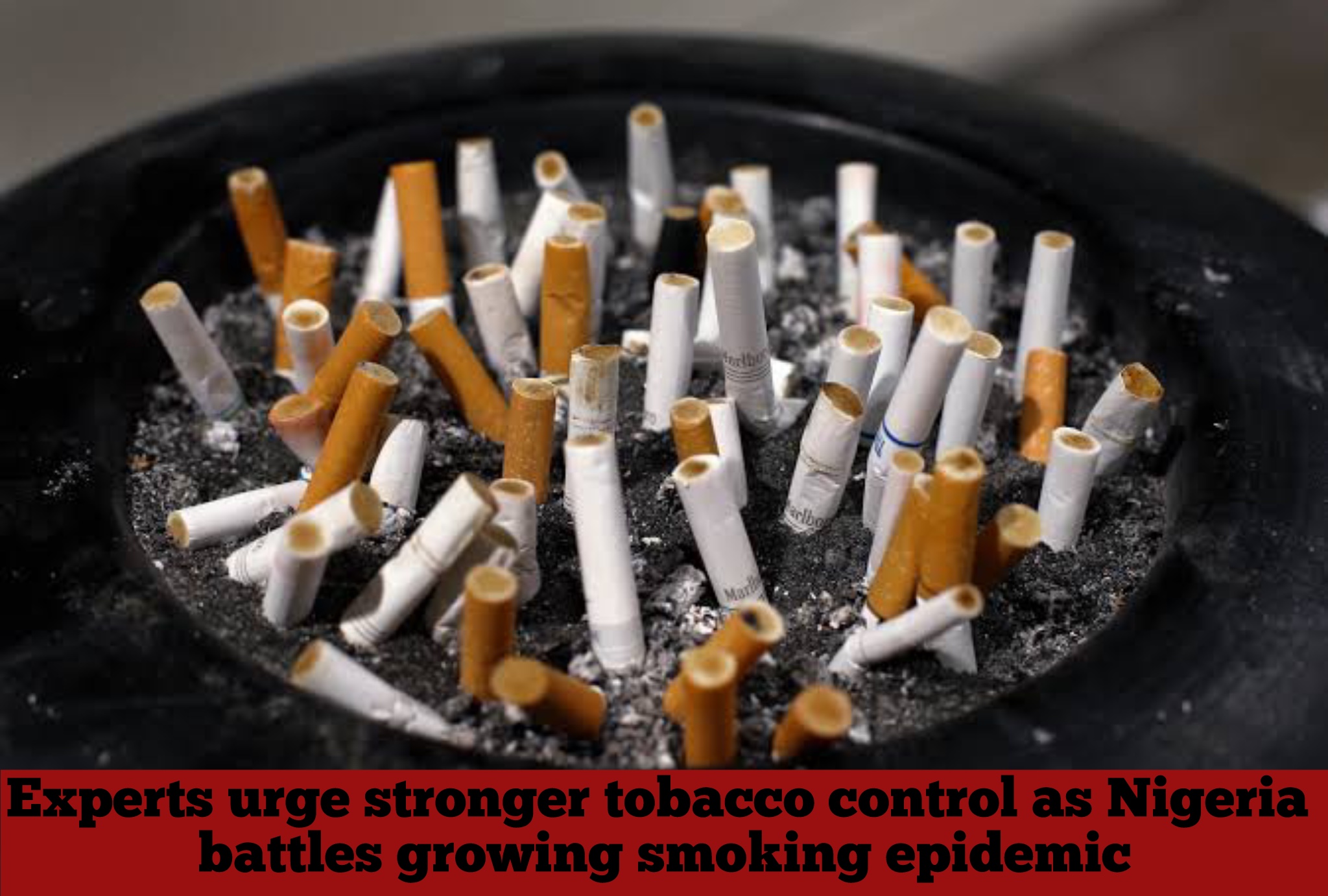
The tobacco epidemic remains one of the world’s biggest public health challenges, responsible for over 7 million deaths annually and millions more living with disabilities as well as chronic illnesses caused by tobacco-related diseases.
Global attention to the crisis dates back to 1987, when world leaders began marking World No Tobacco Day to raise awareness about the preventable deaths and diseases linked to tobacco use.
In Nigeria, tobacco use continues to pose a serious health concern. Data shows that about 5.6% of adults and 15.4% of youth consume tobacco products, with prevalence significantly higher among men. Despite growing awareness campaigns, smoking remains widespread, especially among young Nigerians.
According to the Federal Ministry of Health, Nigerians smoke an estimated 20 billion cigarettes annually, even as warnings persist that “all smokers are liable to die young.”

Global and Regional Warnings
The World Health Organization (WHO) reports that globally, about 37 million children aged 13 to 15use tobacco, while e-cigarette use among adolescents now surpasses that of adults. WHO data further shows that 11.1% of smokers are boys, 7.2% are girls, and over 1.3 million people die each year from exposure to secondhand smoke.
WHO Regional Director for Africa, Dr. Matshidiso Moeti, said the organisation is working closely with African governments to overcome barriers to tobacco control and protect the continent’s young people. The WHO is also urging governments to introduce environmental taxes on tobacco throughout its value chain — from production to distribution.
Rising Trends and Drivers in Sub-Saharan Africa
A recent survey by the Centre for the Study of the Economies of Africa (CSEA) identified several factors driving tobacco use in the region to include rising incomes, rapid population growth, targeted advertising, and low awareness about the dangers of smoking.
Experts also warn that tobacco companies increasingly market alternative nicotine products such as e-cigarettes and shisha, often under the guise of being “safer,” while still posing significant health risks.

Psychological and Social Impact
A Psychologist from the University of Ibadan, Ms. Mary Eya described tobacco use as a major predictor of suicidal behaviors among youths, adding that smoking often leads to social isolation, depression, and anxiety.
“Smoking during adolescence is linked to respiratory illnesses, behavioral and cognitive problems, and dependence on alcohol or illicit drugs later in life,” Ms. Eya stated.
Ms. Eya urged that more sensitization programs be introduced in schools and colleges to educate children on the harmful effects of tobacco use.
Legal and Enforcement Landscape
Nigeria’s National Tobacco Control Act (NTCA) was signed into law in June 2015, regulating the production, sale, labeling, and promotion of tobacco and its products. However, the enforcement remained inconsistent.
The Deputy Force Public Relations Officer, Mr. Isuku Victor, clarified that while smoking cigarettes is not a crime, the possession or use of illicit substances like cannabis remains illegal.
“We don’t have anything against tobacco or its companies,” he said. “It is when people use psychotropic or illicit drugs that they run into trouble with the law.”
Struggles of Smokers and Calls for Harm Reduction
Many smokers say they started smoking due to peer influence or stress relief. A resident of Abuja, Friday Ejoor, said, “It makes me happy and helps me sleep. Our forefathers smoked and lived long, so I don’t believe smoking kills.”
Another smoker, Ray Mmadu, added, “I got addicted because it calmed my nerves. I know the warnings but I don’t believe them — I just make sure I eat well.”
However, experts has warned that it was risky to quit tobacco suddenly.
 Professor Nnayelugo Ike-Muonso
Director General of the Raw Materials, Research and Development Council, Professor Nnayelugo Ike-Muonso, advocated harm reduction policies to support smokers who want to quit.
“Government should recognize alternative products, such as e-cigarettes, as reduced-risk products. Global evidence shows they pose fewer health risks than traditional cigarettes,”Professor Ike-Muonso stated.
Assistant Director of Nursing at the Lagos State Ministry of Health, Mrs. Olusola Ositade, urged federal and state authorities to intensify efforts to protect citizens from the health and environmental harms of tobacco.
“Nigeria needs stronger enforcement, more funding, and greater public awareness to ensure a healthier, tobacco-free society,” she emphasized.

