President Tinubu said the pay review reflects his administration’s commitment to supporting troops engaged in the fight against banditry, kidnapping, terrorism and other security threats.
President Bola Tinubu has approved a fresh salary increase of up to 80 percent for junior personnel of the Nigerian Armed Forces, describing the move as a demonstration of the government’s “deep appreciation” for troops confronting the country’s worsening security challenges.
The latest pay review, which takes effect in September, comes barely a month after the Federal Government announced an earlier wage increase for military personnel.
Under the new salary structure, privates the lowest-ranking soldiers will earn about $132 monthly, up from $73 approved in July and $36 before the first increase.
According to a statement by the Presidency, the salary adjustments vary across ranks, with privates to staff sergeants receiving an 80 percent increase, warrant officers to colonels getting 50 percent, while brigadier generals to full generals will receive a 30 percent increase.
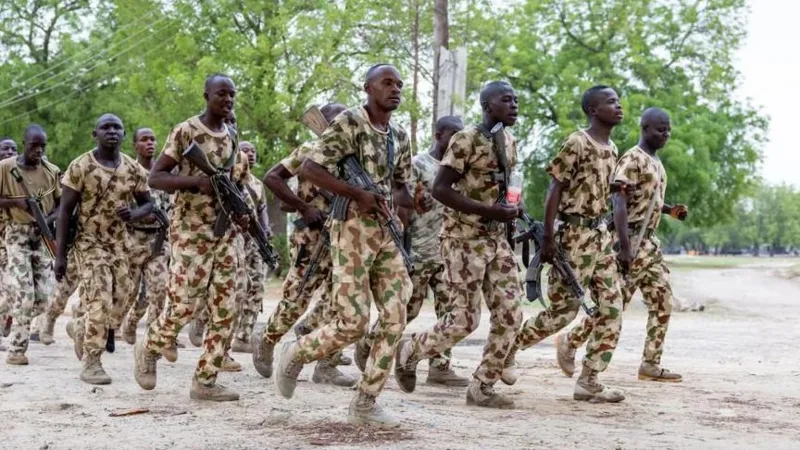
President Tinubu said the pay review reflects his administration’s commitment to supporting troops engaged in the fight against banditry, kidnapping, terrorism and other security threats.
«”The men and women who help to keep us safe in our homes must be supported and appreciated in the course of their duties to our nation,” the President said.»
He added:
“I urge our servicemen to take our gesture as a sign of our deep appreciation of the services they render to our fatherland. Together we shall prevail over the enemies intent on destroying the fabric of our nation.”
The salary increase is part of broader efforts by the Federal Government to strengthen the military’s capacity to tackle insecurity across the country.
Last month, President Tinubu approved the recruitment of 28,000 additional soldiers and authorised the establishment of four new army divisions, in what has been described as one of the military’s largest expansions in recent years.
Nigeria continues to grapple with multiple security threats, including insurgency in the North-East, banditry and mass kidnappings in the North-West and North-Central, separatist violence in the South-East, as well as recurring clashes between farmers and herders in parts of the country.
The latest salary adjustment is expected to increase the military’s annual wage bill from about $484 million to $678 million.
Retired Major General Bashir Galma welcomed the development, describing it as a long-awaited intervention.
“This is what we have been calling for a long time,” he said.
However, he cautioned that future administrations would need to sustain the increased funding while also addressing other welfare concerns.
According to Galma, troops also require improved uniforms, boots, accommodation and modern weapons to effectively confront the country’s security challenges.
Some serving military personnel, however, said they would wait until the revised salaries are paid before assessing the impact of the government’s decision.