
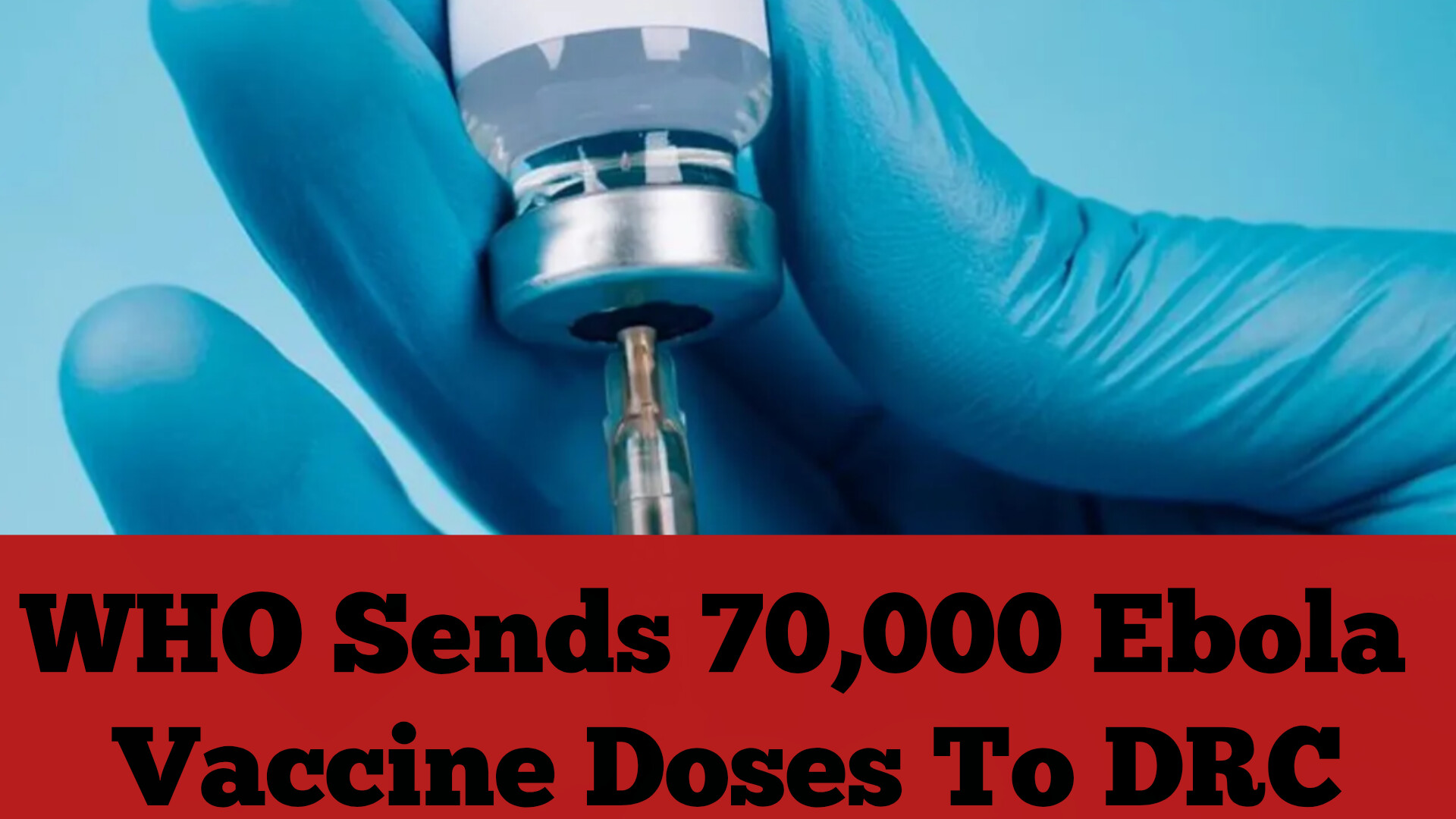
The Democratic Republic of Congo (DRC) has received its first batch of more than 16,000 doses of the Ervebo Ebola vaccine as the country battles its deadliest Ebola outbreak.
A total of 16,250 doses arrived in Kinshasa by plane, with the World Health Organization (WHO) saying the DRC will receive 70,000 doses of the vaccine.
The outbreak, the DRC’s 17th, has killed 2,516 people among 5,290 confirmed cases, according to the latest figures from Congolese health authorities.
UN senior Ebola coordinator Julien Harneis warned that the outbreak “is growing exponentially”.
The outbreak is affecting areas in northern and eastern DRC where health infrastructure is limited and armed groups have operated for years, making the response more difficult.
DRC Health Minister Samuel Roger Kamba said the Ervebo vaccine had already been used extensively during previous Ebola outbreaks.
“It has already been used several times, and in particular on a very large scale during the 2018–2020 outbreak,” Mr Kamba told reporters at Kinshasa airport.
However, the vaccine was developed and approved to protect against the Zaire strain of Ebola, while the strain currently circulating in the DRC is Bundibugyo.
WHO experts are still assessing whether Ervebo can protect people against the Bundibugyo strain. Early evidence, including animal studies, suggests it could provide some protection.
Of the 70,000 doses being made available to the DRC, 20,000 will be used in a clinical trial, while 50,000 will be given to frontline and health workers, according to the WHO.
WHO vaccine experts have recommended a full-scale human trial of Ervebo to determine whether it provides cross-protection against the Bundibugyo strain.
Researchers are also developing vaccines specifically targeting the strain. Moderna is testing an mRNA-based vaccine, while the University of Oxford is working on another candidate.
Hilleman Laboratories, based in Singapore, is also developing an “rVSV Bundibugyo” vaccine, which the WHO has described as the most promising candidate.
Ebola spreads through contact with infected bodily fluids and can cause fever and severe illness. The virus has killed more than 15,000 people in Africa over the past five decades.