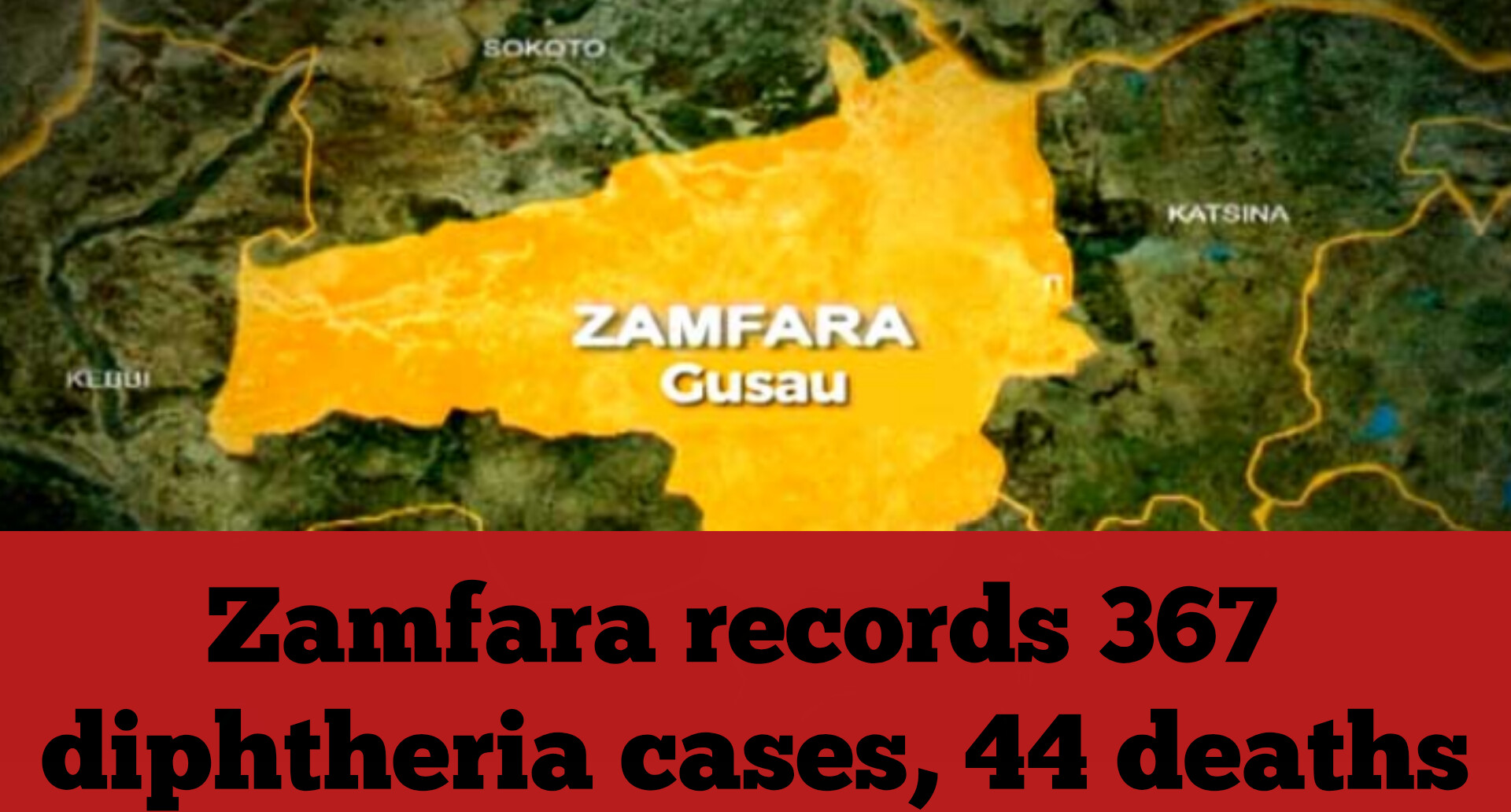
Zamfara State has recorded 367 confirmed cases of diphtheria, with more than 320 patients treated and discharged, the state Ministry of Health says.
The Director of Public Health, Dr Yusuf Haske, disclosed this while giving an update on the outbreak in Gusau.
Dr Haske said laboratory tests on samples from suspected patients confirmed the presence of the organism that causes diphtheria.
He added that additional samples sent to the National Reference Centre in Abuja further confirmed the diagnosis.
“Following the confirmation, the State Ministry of Health, on the directive of Governor Dauda Lawal, declared the outbreak and activated the Incident Management System,” he said.
The ministry also activated rapid response teams at state and local government levels and began case management across the state’s 14 local government areas.
According to Dr Haske, all general hospitals in the state have isolation centres for diphtheria patients, while Gusau, which recorded the highest number of cases, has about four treatment centres.
He said more than 320 patients had been treated and discharged, with oral medication provided for those continuing treatment at home.
However, the outbreak has claimed 44 lives, with Dr Haske attributing the continued spread partly to active community transmission.
Children aged between six and 10 years are among the most affected, prompting the Ministry of Health to advise the Ministry of Education on measures to contain the spread.
The advice contributed to the decision to extend the resumption of schools by two weeks, allowing health authorities more time to intensify case management, surveillance, community engagement and health education.
Dr Haske urged residents to remain vigilant and seek immediate medical attention when they notice symptoms associated with diphtheria.
He said disease notification officers across the 14 local government areas were also working to identify suspected cases and ensure prompt intervention.
The health official further urged residents to cooperate with health workers and use designated contact channels to report suspected cases and seek assistance.