
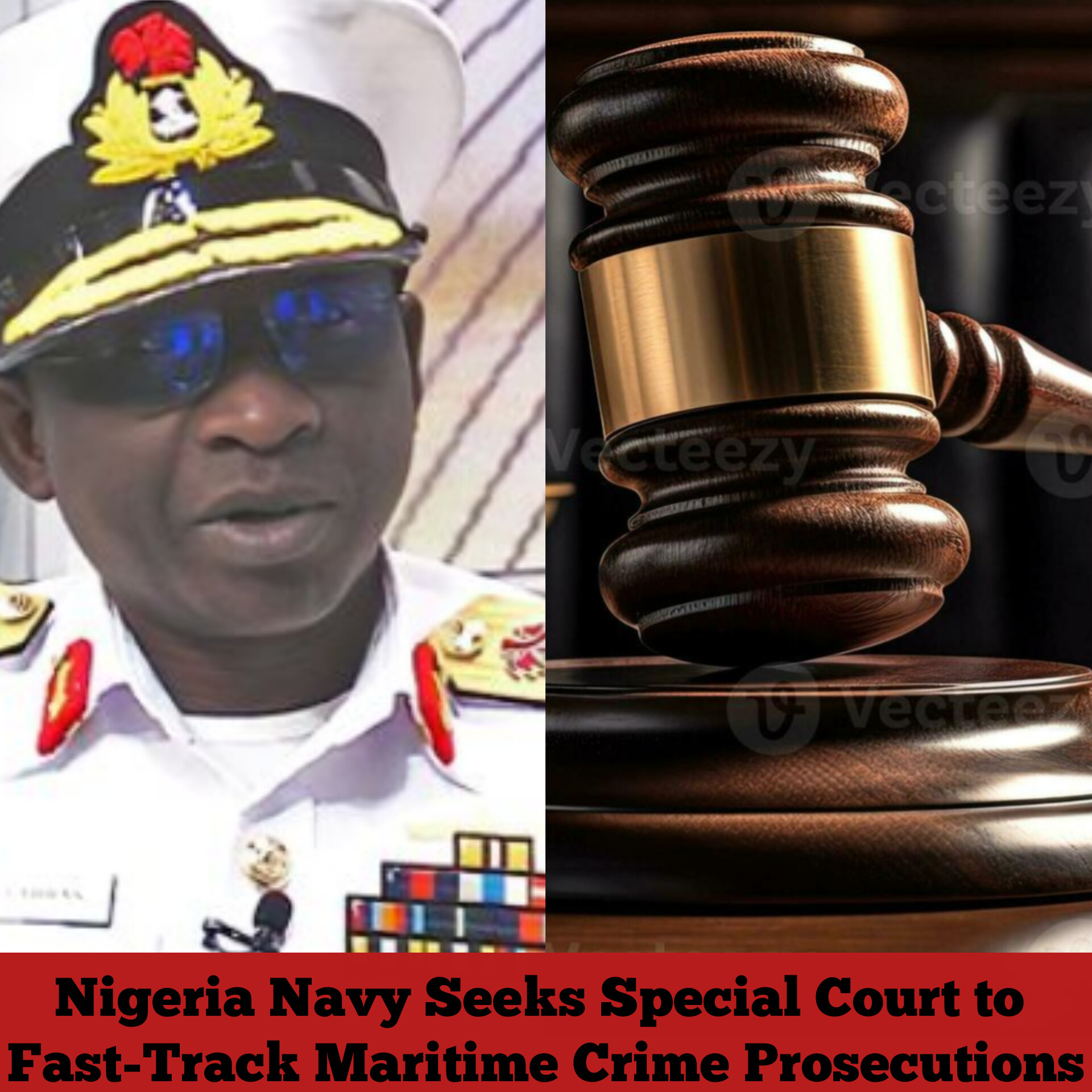
The Chief of the Naval Staff (CNS), Vice Admiral Idi Abbas, has called for the establishment of a special court dedicated to prosecuting maritime crimes, saying it would speed up justice delivery and strengthen efforts to combat crude oil theft and other illegal activities in Nigeria’s waters.
Speaking on the challenges of prosecuting maritime offences, the naval chief said a specialised court would focus solely on cases involving crude oil theft and related crimes, reducing delays often associated with the conventional judicial system.
“What we are pushing for is that we should have a special court that will try these maritime criminals,” Vice Admiral Abbas said.
He argued that a dedicated court would not only accelerate the prosecution of offenders but also ease the financial and operational burden on the Nigerian Navy, which is often required to maintain seized vessels for extended periods while awaiting court rulings.
“If we have that in place, I believe the dispensation of justice will be done much faster and then ease the burden of keeping and maintaining some of the arrested vessels, which will be taken off from us because we spend a lot to maintain those vessels under our custody,” he said.
According to the CNS, the Navy incurs significant costs securing and preserving vessels arrested for crude oil theft and other maritime offences pending the completion of lengthy legal proceedings.
Vice Admiral Abbas said the proposed court would complement ongoing efforts by the Navy to improve security across Nigeria’s territorial waters through enhanced patrol operations and investments in modern naval assets.
“What has changed operationally is constant presence at sea, and that’s as a result of the fleet recapitalisation we have undertaken. With more vessels now available to us, we have more ships out there patrolling our waters,” he said.
He also credited technological advancements for improving maritime surveillance and monitoring capabilities.
“Most importantly, the use of technology has also contributed to that, so we have almost total control of our maritime domain,” Abbas added.
The naval chief pointed to Nigeria’s removal from the global list of piracy-prone countries as evidence of progress in maritime security.
“If I may say, I think three years ago that was when Nigeria was delisted from the list of piracy-prone countries, and it has remained so to date,” he said.
Despite the gains, Abbas acknowledged that incidents of sea robbery still occur and stressed the need for continued vigilance.
“Even though we still have little pockets of sea robbery, we are not resting on our oars because if our own waters are relatively safe and those of our neighbours are not, then we cannot totally say we are also free,” he said.
He further emphasised the importance of regional collaboration in tackling maritime threats across the Gulf of Guinea, noting that criminal activities in neighbouring waters can easily spill across national boundaries.