

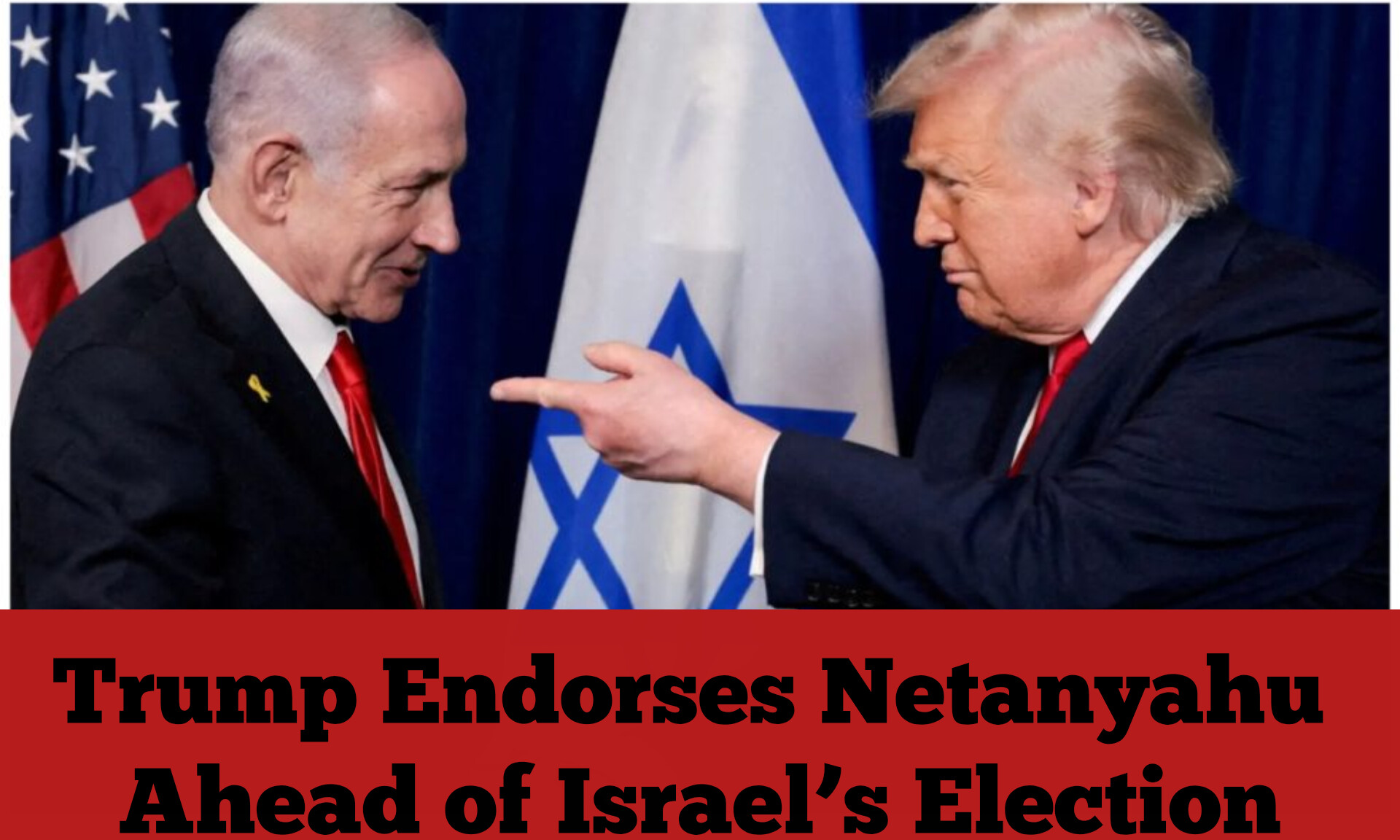
US President Donald Trump has endorsed Israeli Prime Minister Benjamin Netanyahu ahead of Israel’s closely contested parliamentary election, boosting the veteran leader’s bid for another term.
Trump declared his “Complete and Total Endorsement” of Netanyahu in a post on his Truth Social platform, praising the Israeli leader’s handling of security challenges despite domestic and international opposition.
“Bibi Netanyahu has been Strong, Brave, and Brilliant in the face of tremendous opposition, including that coming from even Israel, itself,” Trump wrote.
He added that Netanyahu was the kind of partner the United States wanted Israel to have.
Netanyahu welcomed the endorsement, saying his cooperation with Trump had produced significant results and urging voters to support his plans to address security threats.
“Thank you, President Trump, for your tremendous support and for our work together. Together we will complete the mission!” Netanyahu wrote on X.
In a video released by his Likud party, Netanyahu said the two leaders had “crushed Iran” and argued that another term would allow them to work together to “eliminate the Iranian threat over the next two years, or even sooner”.
Trump’s endorsement comes as opinion polls indicate a tight race, with neither Netanyahu’s political bloc nor the opposition led by former military chief Gadi Eisenkot projected to secure the 61 seats required to form a governing coalition in Israel’s 120-member parliament.
The election is widely viewed as a referendum on Netanyahu’s leadership, particularly his handling of security failures surrounding the Hamas-led attack on Israel three year’s ago.
Opposition politicians accuse Netanyahu of bearing personal responsibility for the attack, alleging that he ignored warnings before the assault.
Trump also warned Israelis against electing anyone other than Netanyahu, saying the United States might otherwise have to handle the security challenges itself.
“America will have to do this work ourselves, and I am not inclined to do so,” he wrote.
Eisenkot, however, insisted that Israel’s leadership should be determined by its citizens.
“I admire President Trump, but Israel is a democratic country, only Israelis can choose their leaders,” he said at a conference in Tel Aviv.
About seven million Israelis are eligible to vote in the parliamentary election.
The endorsement also comes amid continuing tensions between Israel and Iran following months of military confrontation involving the United States and Israel.
Iranian Foreign Minister Abbas Araghchi accused Netanyahu of pushing Washington towards another war.
“Last time you wanted to ‘finish the job’, Iran emerged even stronger. Want to try your luck again? Be our guest,” Araghchi wrote on X.
“But be careful; we have unfinished jobs too,” he added.
Trump previously joined Israel in military strikes against Iran before agreeing to a ceasefire in April, amid widespread opposition to the war in the United States and a surge in oil prices.
Although Trump and Netanyahu have cooperated closely on security matters, their positions have sometimes differed over whether diplomatic negotiations with Iran could end the conflict.
Netanyahu, who turns 77 this month, is Israel’s longest-serving prime minister, having held office for more than 19 years across several terms.
He returned to power four years ago with the support of ultra-nationalist parties and subsequently pursued controversial judicial reforms. He also faces corruption charges that could result in a prison sentence.
Meanwhile, Israel faces growing international criticism over violence in the occupied West Bank.
US Secretary of State Marco Rubio recently expressed concern after an American photojournalist working for The Washington Post was injured in an attack by Israeli settlers.
“We’re very disturbed by those images and what we’re seeing,” Rubio told reporters.
Netanyahu’s office said it was investigating the circumstances surrounding the incident.
Trump’s endorsement could strengthen Netanyahu’s campaign as he seeks another mandate, although the close polling suggests that forming a government may remain difficult.

