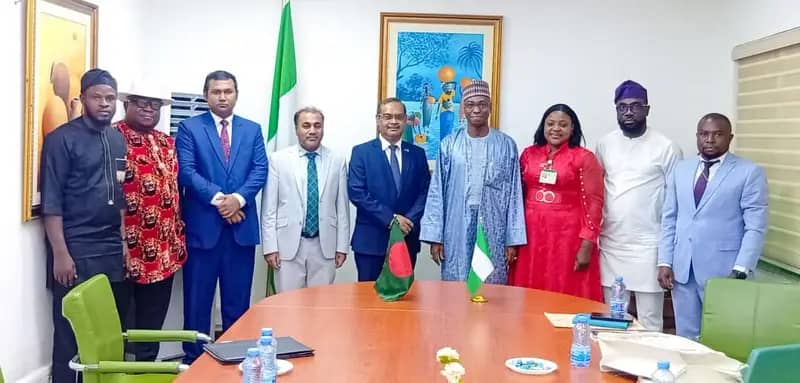
 Nigeria and Bangladesh have reaffirmed their commitment to strengthening bilateral relations, with both countries exploring closer cooperation in energy, trade, security and economic development.
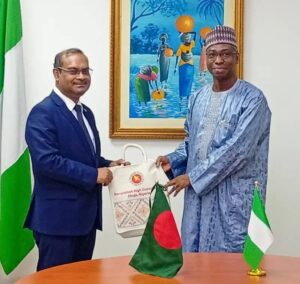
The commitment was made during a meeting between Nigeria’s Permanent Secretary of the Ministry of Foreign Affairs, Ambassador Dunoma Umar Ahmed, and Bangladesh’s High Commissioner to Nigeria, Miah Md. Mainul Kabir, in Abuja on Wednesday.
A major focus of the discussions was Bangladesh’s recent diplomatic success following the election of its Foreign Minister, Khalilur Rahman, as President of the 81st United Nations General Assembly (UNGA). The High Commissioner thanked Nigeria for its support and called for continued collaboration on issues of mutual interest.
Ambassador Ahmed congratulated Bangladesh on the achievement, describing it as a significant global recognition. He reaffirmed Nigeria’s readiness to support Bangladesh during its tenure and to work together on South-South cooperation and the achievement of the Sustainable Development Goals (SDGs).
The two sides also reviewed plans to strengthen diplomatic engagement through regular political consultations, exchange of high-level visits and the conclusion of pending bilateral agreements, including an agreement on the avoidance of double taxation.
Speaking during the meeting, Mr Kabir disclosed that Bangladesh was working to finalise a Memorandum of Understanding (MoU) for the importation of petroleum and gas products from Nigeria.
“Bangladesh seeks to diversify its energy import basket and views Nigeria as a key strategic partner,” he said.
In response, Ambassador Ahmed said the Ministry of Foreign Affairs was collaborating with the Federal Ministry of Petroleum to fast-track the agreement.
The Permanent Secretary also highlighted President Bola Tinubu’s economic diversification agenda and invited Bangladeshi investors to explore opportunities in Nigeria’s mining, agriculture, pharmaceuticals and information and communications technology sectors.
He further expressed Nigeria’s interest in partnering with Bangladeshi businesses to revive the country’s textile industry, saying such collaboration could boost industrial growth and create employment opportunities for young people.
On regional and global security issues, Ambassador Ahmed proposed stronger military and intelligence cooperation between both countries to address common threats, including terrorism. He also sought Bangladesh’s support for Nigeria’s bid for a non-permanent seat on the United Nations Security Council for the 2030–2031 term.
Both countries agreed to finalise arrangements for the inaugural session of their bilateral consultation mechanism, aimed at ensuring regular high-level engagement and advancing cooperation across key sectors.