

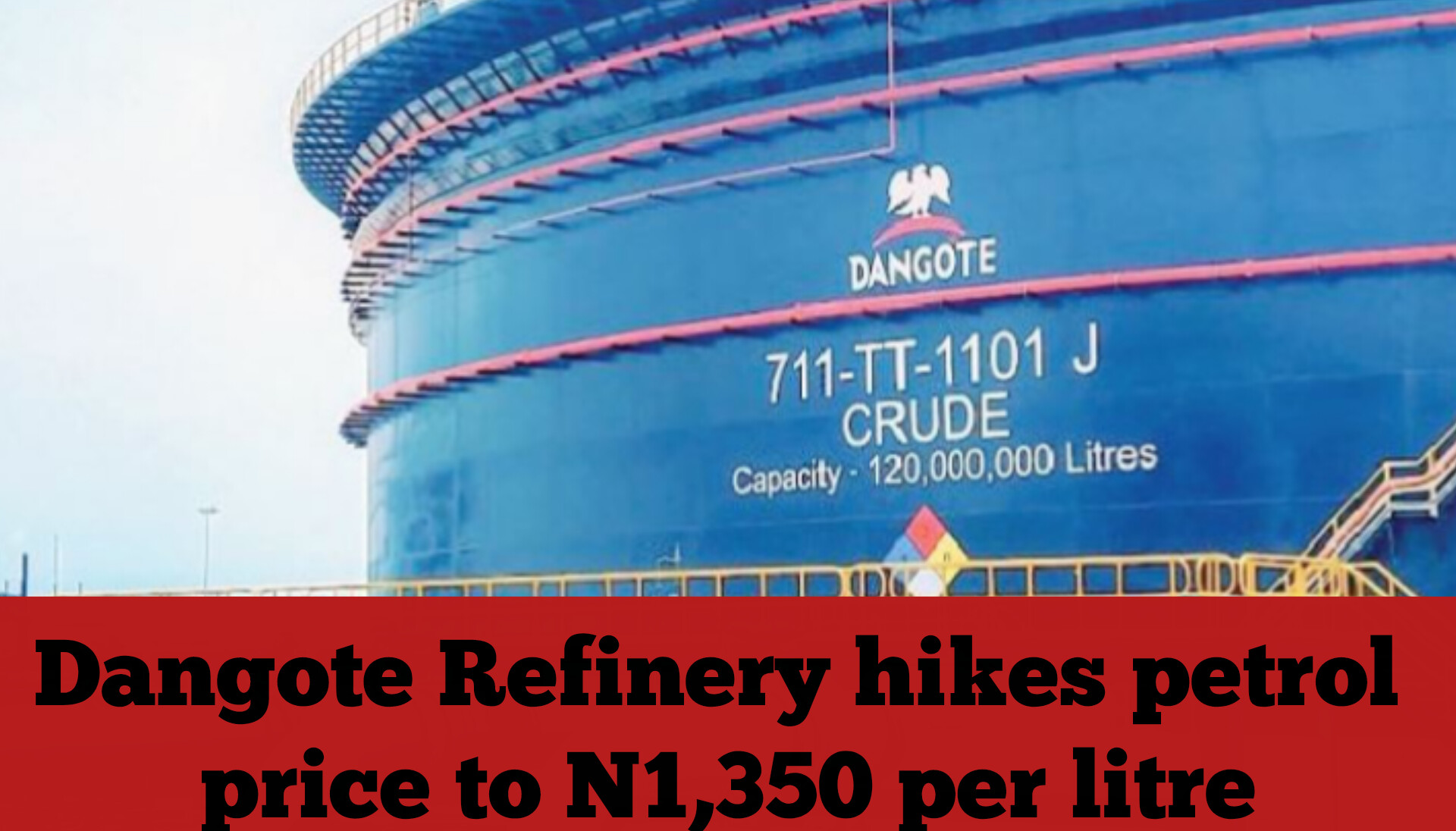
The Dangote Petroleum Refinery has again increased the ex-depot price of Premium Motor Spirit (PMS) to N1,350 per litre, intensifying pressure on Nigeria’s already volatile downstream petroleum market.
The latest adjustment represents a N75 increase from the previous N1,275 per litre, according to a senior refinery official and data from Petroleumprice.ng.
Confirming the development, a source within the refinery said the new gantry price has been fully implemented across all loading channels, compelling marketers to swiftly revise their pricing structures.
“The new pricing template has been activated across the board. All loading points have been updated, and marketers are already responding by adjusting their depot prices,” the official said.
“This is not an isolated change; it reflects prevailing supply and cost pressures in the system.”
The price hike comes barely a week after the refinery raised its ex-depot price from N1,200 to N1,275 per litre, marking the second N75 increase within seven days and underscoring the rapid pace of pricing adjustments in the sector.
Despite the repeated increases, a senior Dangote Group executive recently disclosed that the refinery has been subsidising petrol and diesel supplied to the domestic market.
Industry sources also linked the latest hike to a temporary suspension in the issuance of pro forma invoices (PFIs) earlier in the week, which tightened product availability and triggered upward price movements across the value chain.
“The suspension of PFI created a short-term supply squeeze,” another official familiar with the development explained.
“When you combine that with international crude price movements and logistics costs, it becomes inevitable that depot prices will adjust upward. What we are seeing is a direct market response to those realities.”
Over the past month, the refinery has adjusted petrol prices multiple times, reflecting shifts in crude oil sourcing costs, foreign exchange dynamics, and domestic distribution challenges.
Analysts say the frequent price changes highlight a transition phase in Nigeria’s deregulated fuel market, where increasing reliance on local refining is gradually replacing imports but remains vulnerable to global market forces.
The latest increase is expected to push pump prices higher nationwide, as marketers pass on additional costs to consumers already burdened by rising inflation and transportation expenses.
For many Nigerians, the immediate concern is the ripple effect on daily living, with another petrol price hike likely to drive up transport fares and the cost of goods and services.

