
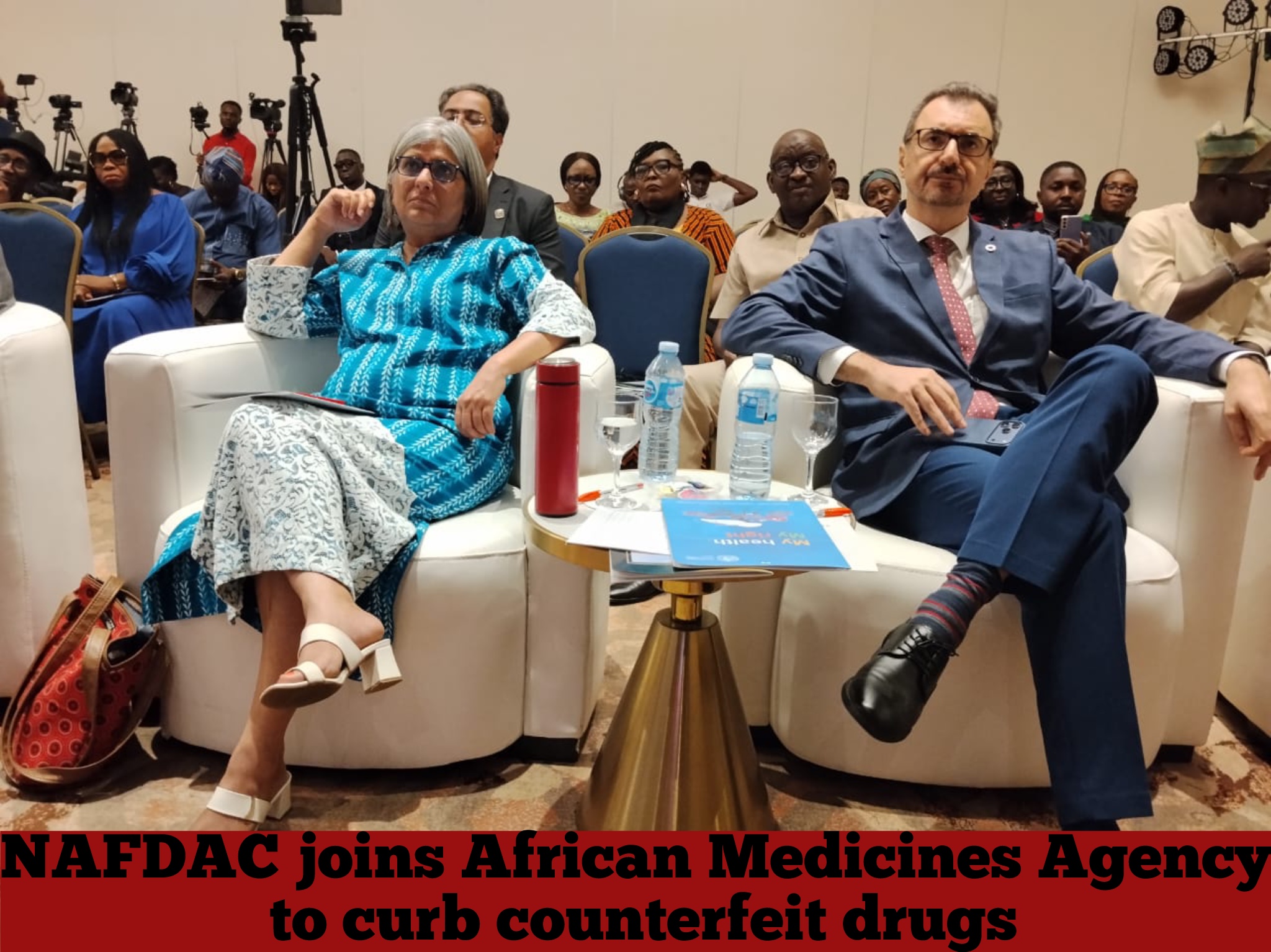
The National Agency for Food and Drug Administration and Control (NAFDAC) has joined the African Medicines Agency (AMA) in a move aimed at strengthening medicine regulation, combating substandard drugs and improving access to quality medical products across Africa.
The development was announced in Abuja during a one-day stakeholders’ engagement on NAFDAC’s regulatory transformation journey and Nigeria’s commitment to the AMA treaty.
Speaking at the event, NAFDAC Director-General, Prof. Mojisola Adeyeye, maintained that the agency’s participation in AMA would promote harmonised regulatory standards and deepen collaboration among African countries.
She noted that Nigeria’s pharmaceutical industry, with more than 200 pharmaceutical companies, has the capacity to support medicine production and distribution across the continent.
According to Adeyeye, ongoing reforms by NAFDAC are already reducing the prevalence of substandard and falsified medicines in the country, but she stressed that the fight against counterfeit drugs requires sustained vigilance and cooperation.
“Fake medicines pose serious health risks to the public. Nigerians must avoid buying medicines from unverified sources and should patronise only licensed pharmacies,” she said.
She also advised consumers to demand receipts when purchasing drugs, adding that manufacturers are being sensitised against distributing products through informal channels.
Also speaking, Director-General of the African Medicines Agency, Dr. Mimi Darko, described the agency as a continental framework established to harmonise the regulation of medical products and strengthen national regulatory authorities across Africa.
Darko said fragmented regulatory systems on the continent have slowed access to medicines and increased costs for both manufacturers and consumers.
She explained that the AMA would introduce a “one application, one regime” system to streamline medicine approvals and improve access to safe and effective medical products.
According to her, the agency will also establish a continental database for monitoring the quality and safety of medicines and focus on regulating complex medical products, including vaccines, biomedical devices and emerging technologies.
In her remarks, the African Union Commissioner for Health, Humanitarian Affairs and Social Development, Amma Twum-Amoah, commended Nigeria for joining the agency, describing the development as a major boost to Africa’s health security and pharmaceutical industrialisation.
She explained that the AMA would complement, rather than replace, national regulatory authorities by promoting shared expertise, collaboration and coordinated regulatory action across member states.
Twum-Amoah also urged African countries yet to ratify the treaty to do so, stressing that ratification must be followed by effective implementation.
Stakeholders at the engagement called for stronger collaboration among regulators, manufacturers and consumers to curb counterfeit medicines, improve regulatory efficiency and expand access to safe and affordable drugs across the continent.